

How to Teach Financial Literacy to Kids: Building Smart Money Habits from an Early Age

How to Teach Financial Literacy to Kids
20
Jun
2026

How to Teach Financial Literacy to Kids: Building Smart Money Habits from an Early Age

Introduction

Money is a part of everyday life, yet many children grow up without understanding how it works. Teaching children early about money is one of the most powerful life skills parents and educators can provide.

That’s why learning how to teach financial literacy to kids is so important. It helps children understand saving, spending, budgeting, and making smart financial decisions.

When kids learn financial literacy early, they grow into responsible, independent, and confident adults who can manage money wisely.

What Is Financial Literacy for Kids?

Financial literacy means understanding how money works and how to manage it effectively.

For children, it includes:

  • Earning money
  • Saving money
  • Spending wisely
  • Budgeting basics
  • Understanding value
  • Making smart choices

It is not about complex finance—it is about simple, real-life money understanding.

Why Financial Literacy Is Important for Kids

Teaching how to teach financial literacy to kids builds strong life skills:

Better Decision-Making

Children learn how to make thoughtful spending and saving choices.

Responsibility

Kids become more accountable for their money and choices.

Saving Habits

Early saving habits create long-term financial discipline.

Smart Spending

Children learn to avoid impulsive purchases.

Understanding Value

They begin appreciating the effort behind earning money.

Future Independence

Financial skills prepare children for adulthood.

Best Ways to Teach Financial Literacy to Kids

1. Introduce the Concept of Money Early

Start by explaining:

  • What money is
  • Why people use it
  • How things are bought and sold

Use simple real-life examples like grocery shopping.

2. Teach Saving Habits

Give children a simple piggy bank or savings jar.

Teach them:

  • Save part of their pocket money
  • Set saving goals
  • Track progress

This builds discipline and patience.

3. Involve Kids in Shopping Decisions

Take children shopping and explain:

  • Prices of items
  • Budget limits
  • Comparing products

This helps them understand real-world spending.

4. Teach the Difference Between Needs and Wants

One of the most important lessons.

  • Needs: Food, clothing, school supplies
  • Wants: Toys, games, entertainment

This helps children make smart decisions.

5. Give Small Allowances

Provide pocket money and let children manage it.

  • How to spend wisely
  • How to save
  • How to avoid wasting money

6. Use Money Games and Activities

Games make learning fun:

  • Monopoly (basic version)
  • Saving challenges
  • Budget planning games

This builds practical understanding.

7. Introduce Simple Earning Ideas

Teach kids they can earn money through:

  • Small chores
  • Selling handmade items
  • Helping neighbors

This builds an entrepreneurship mindset.

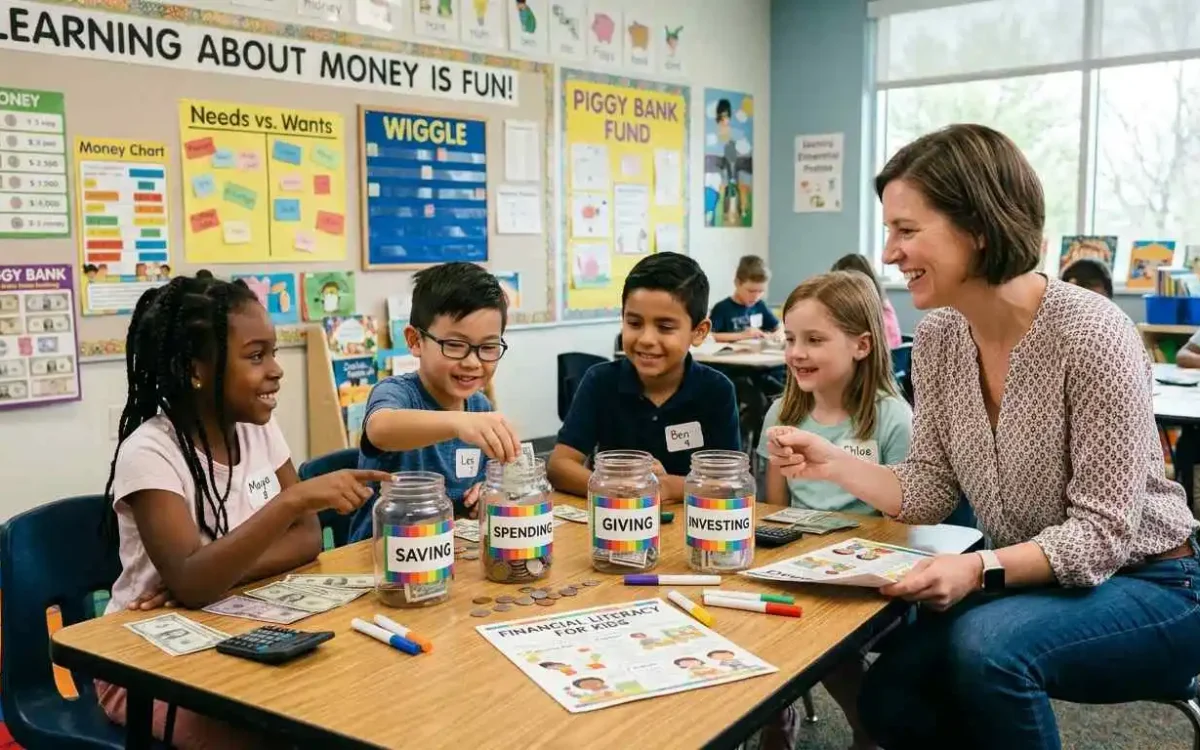
8. Teach Budgeting Basics

Help kids divide money into:

  • Saving
  • Spending
  • Giving

This teaches balance and responsibility.

9. Encourage Goal-Based Saving

Children should save for something specific:

  • Toy
  • Book
  • Game

This improves focus and patience.

10. Teach Sharing and Giving

Financial literacy is not only about saving—it is also about generosity.

  • Donate small amounts
  • Help others

This builds empathy and values.

Skills Developed Through Financial Literacy

  • Decision-making skills
  • Responsibility
  • Planning ability
  • Critical thinking
  • Entrepreneurial mindset
  • Independence

These skills prepare children for adulthood and future careers.

Financial Literacy and Future Success

Financial education is closely connected to:

  • Entrepreneurship
  • Business skills
  • Leadership development
  • Real-world problem solving
  • Independence

Children who understand money early are more confident in managing their future.

Kidspreneur Approach to Financial Learning

At Kidspreneur, we believe financial literacy is a core future skill.

We teach children how to teach financial literacy to kids through hands-on activities and real-world learning.

Our Programs Include:

The Oops Lab

Teaches logical thinking and problem-solving for real-life situations.

Time Travel with AI

Introduces future digital economy and smart financial awareness.

Eco Smart Kids

Teaches value creation and resource management.

Little Masters Studio

Encourages creativity and idea-based earning.

These programs help children connect learning with real-life money understanding.

Teaching how to teach financial literacy to kids is one of the most valuable life skills parents can provide.

It helps children understand money, make better decisions, and build a strong foundation for their future.

When kids learn to save, spend wisely, and understand value, they become responsible and financially smart adults.

FAQs

1. What is financial literacy for kids?

It is the ability to understand money, saving, spending, and budgeting in a simple way.

2. Why is financial literacy important for children?

It builds responsibility, decision-making, and smart money habits.

3. How can I teach kids about money at home?

Through pocket money, shopping activities, saving goals, and practical discussions.

4. At what age should kids learn financial literacy?

Children can start learning basic money concepts as early as 5–7 years old.

5. How does Kidspreneur help with financial education?

Kidspreneur teaches financial literacy through practical learning, entrepreneurship, and real-world activities.

Cart (0 items)
Cart (0 items)