

10 Fun STEM Activities for Kids to Try This Winter
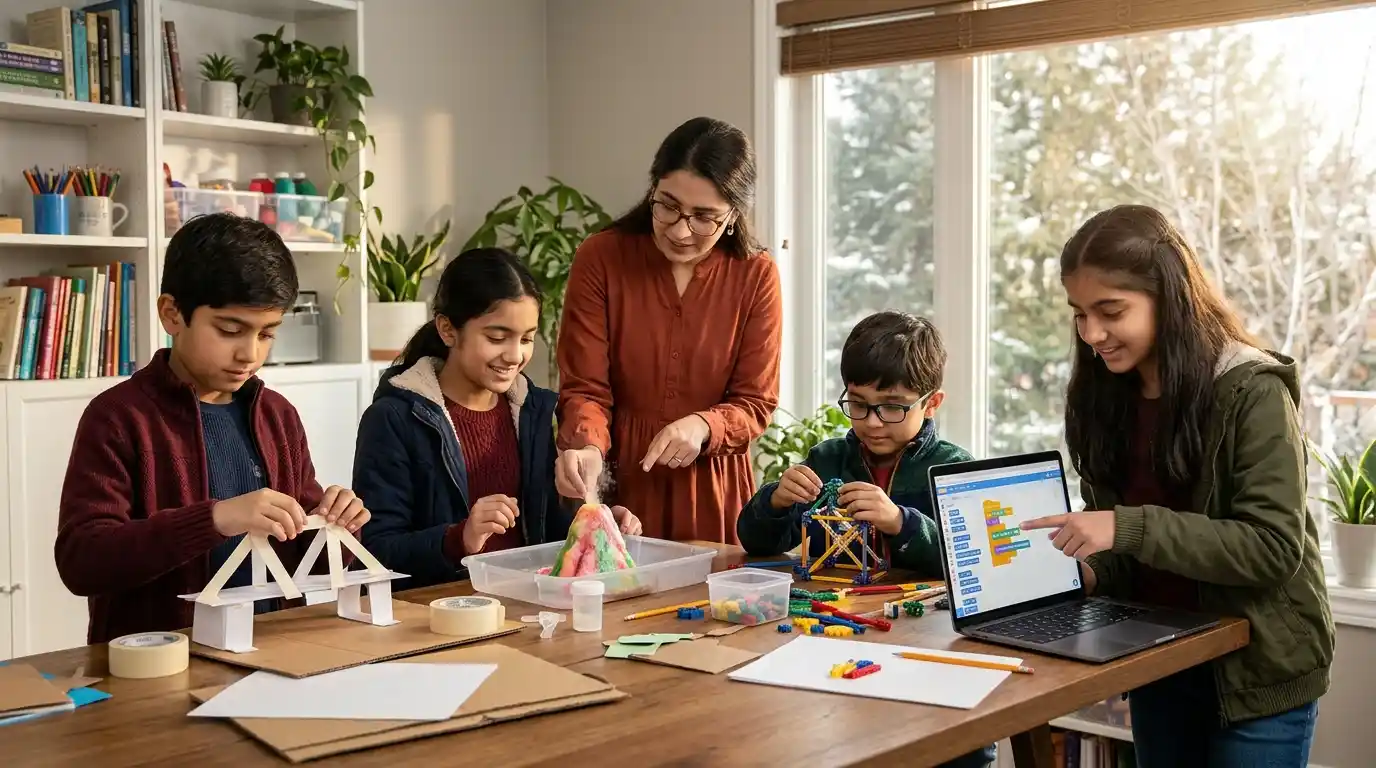
Winter is a wonderful time for children to slow down, explore their interests, and discover new ways to learn. With school holidays providing extra free time, parents can introduce activities that combine entertainment with creativity, curiosity, and practical learning.
One great way to make winter holidays more meaningful is through STEM activities. STEM stands for Science, Technology, Engineering, and Mathematics. These subjects help children understand how things work, experiment with ideas, and develop solutions to everyday challenges.
The best part? Many STEM activities for kids can be enjoyed at home using simple household materials. Here are ten fun ideas to inspire young learners this winter.
Explore These 10 STEM Activities
10 Fun STEM Activities for Kids to Try This Winter
These activities are designed to encourage children to observe, question, test, and improve their ideas. Parents can adapt the difficulty depending on the child's age and experience.
1. Create a Mini Baking Soda Volcano
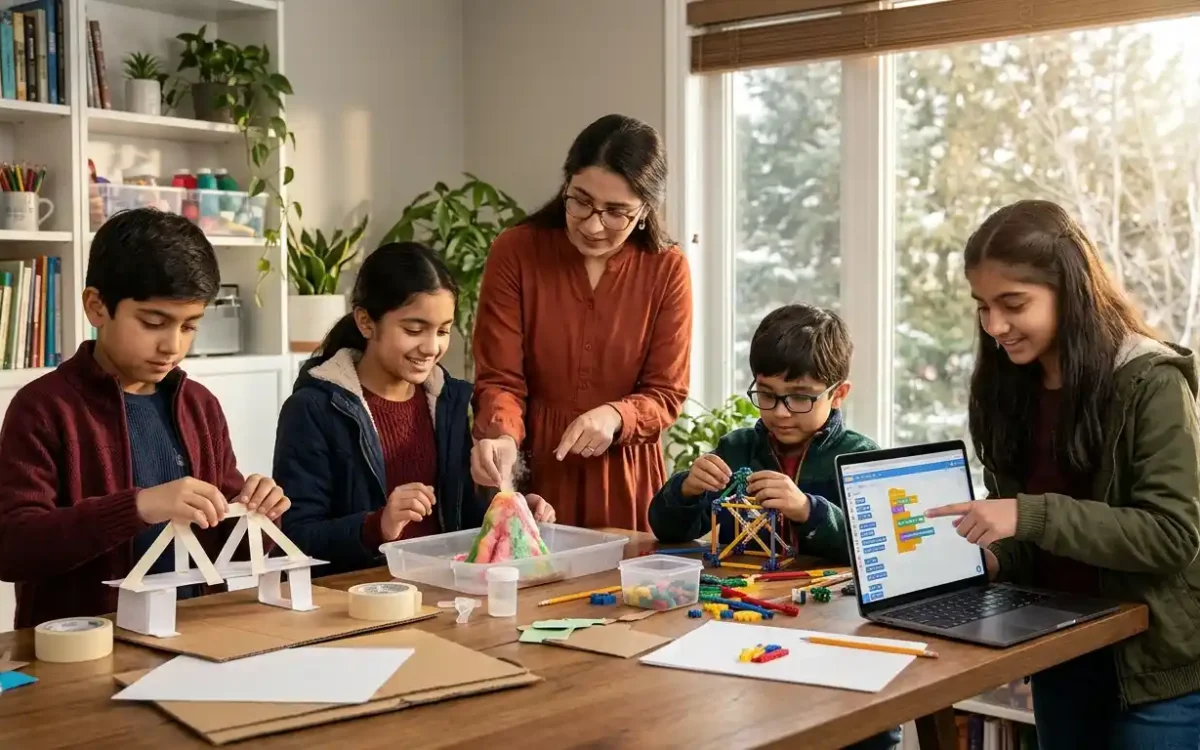
A baking soda volcano is a classic science activity that introduces children to simple chemical reactions. It is colourful, exciting, and a great way to start a conversation about how different materials interact.
- Baking soda
- Vinegar
- A small container or cup
- Dish soap and food colouring (optional)
- A tray to catch the mixture
How to try it: Place a small amount of baking soda in a container. Add a little dish soap and food colouring if desired. Slowly pour in vinegar and observe the bubbling reaction.
What children learn: They can observe how an acid and a base react and release carbon dioxide gas, which creates bubbles and foam.
Safety: Use small quantities, protect the work surface, avoid contact with eyes, and do not taste the mixture. Adult supervision is recommended.
2. Build a Paper Bridge
Can a simple sheet of paper hold the weight of several coins? This challenge introduces children to engineering, structural design, and the importance of shape.
- Sheets of paper
- Two stacks of books or sturdy supports
- Coins or small counters
- A flat table
How to try it: Place two supports a short distance apart. Lay a flat sheet of paper across them and add coins one at a time. Next, fold or accordion-pleat another sheet and test it in the same way.
What children learn: They discover how shapes, folds, and material distribution can affect strength and stability.
3. Grow Salt Crystals
Turn a quiet winter afternoon into a crystal-growing experiment. Children can observe how dissolved salt forms visible crystals as water evaporates.
- Warm water
- Table salt
- A clear glass or jar
- A spoon
- String and a pencil (optional)
How to try it: With adult help, dissolve salt into warm water until no more dissolves easily. Pour the solution into a clear jar. Suspend a piece of string from a pencil so it hangs in the solution. Leave it somewhere undisturbed and observe over several days.
What children learn: They explore solutions, evaporation, and how crystals can form as water slowly disappears.
Safety: Adults should handle warm water. Do not drink the solution or eat the crystals.
4. Design a Mini Parachute
Children can explore air resistance by designing a parachute for a lightweight toy or paper figure. This activity encourages creative thinking and simple testing.
- A lightweight plastic sheet or tissue paper
- String
- Paper clips
- Scissors
- A small lightweight paper figure
How to try it: Cut a square canopy, attach equal-length strings to its corners, and connect them to a lightweight paper figure. Drop it from a safe, low height and observe how it falls.
What children learn: They explore gravity, air resistance, design, and how changes in shape or size affect movement.
Safety: Use a low indoor drop point with clear space. Never drop objects from balconies, rooftops, or windows.
5. Make a Simple Water Filter Model
Introduce children to the idea of filtration with a simple model that demonstrates how layers of materials can trap some visible particles.
- A clear plastic bottle prepared by an adult
- Clean cotton or filter paper
- Clean sand and small gravel
- A container to collect water
- Water mixed with a little clean soil
How to try it: With adult help, prepare a cut bottle as a funnel. Place filter paper or cotton inside, followed by layers of clean sand and gravel. Pour the soil-water mixture through and observe the collected water.
What children learn: They explore filtration, material properties, and the importance of clean water.
Important: This is only a classroom-style demonstration. Filtered water may still contain harmful microorganisms or dissolved contaminants. Never drink it.
6. Explore Balloon-Powered Movement
Can air escaping from a balloon move an object? This playful experiment helps children explore forces and motion.
- A balloon
- A drinking straw
- String
- Tape
- Two fixed supports
How to try it: Thread the string through a straw and secure the string between two supports. Inflate a balloon without tying it, tape it to the straw, and release the opening. Watch the balloon travel along the string.
What children learn: They explore how escaping air produces a force that moves the balloon in the opposite direction.
Safety: Adults should supervise balloon use. Keep broken balloon pieces away from young children.
7. Build the Tallest Paper Tower
Give children a few sheets of paper and challenge them to build the tallest freestanding tower they can. This activity turns engineering into a fun winter competition.
- Newspaper or ordinary paper
- Tape
- Scissors
- A ruler or measuring tape
How to try it: Set a time limit and provide each participant with the same amount of paper and tape. Children can roll, fold, or layer the paper to build a tower that stands independently.
What children learn: They practise structural thinking, planning, measurement, teamwork, and learning through trial and error.
8. Try Beginner Coding Activities
Coding can help children understand how instructions, sequences, and logic work. They do not need advanced programming knowledge to get started.
- A computer or tablet
- A beginner-friendly visual coding platform
- A simple project idea, such as an animation or mini game
How to try it: Start with a beginner activity that uses visual blocks. Ask your child to move a character, create a short animation, or design a simple interactive story.
What children learn: They practise sequencing, logical thinking, pattern recognition, creativity, and debugging.
Choose age-appropriate tools and supervise online use. Keep sessions balanced with offline activities and breaks.
9. Create a Solar Oven Model
Use a sunny winter afternoon to explore how sunlight can be absorbed and converted into heat. A simple solar oven model introduces children to renewable energy concepts.
- A cardboard box
- Aluminium foil
- Black paper
- Clear plastic wrap
- Tape and scissors
How to try it: With adult help, line part of the box with foil to reflect sunlight. Place black paper inside and cover the opening with clear plastic wrap. Position it in direct sunlight and compare the temperature inside with the surrounding air using a thermometer.
What children learn: They explore sunlight, heat absorption, reflection, and insulation.
Safety: Do not use sharp tools without adult help. Avoid looking directly at reflected sunlight and do not use the model to cook food unless an adult has confirmed it is safe and suitable.
10. Go on a Winter Maths Challenge
Mathematics can become more enjoyable when children connect it with real-life situations. Turn an ordinary winter day into a collection of fun challenges.
- Paper and pencils
- A ruler or measuring tape
- Household objects
- A timer (optional)
How to try it: Ask children to estimate and measure objects around the house, calculate the number of minutes in their daily routine, compare shapes, or plan a pretend winter party within a fixed budget.
What children learn: They practise measurement, addition, subtraction, estimation, geometry, budgeting, and logical reasoning.
How Can Parents Make STEM Learning More Enjoyable?
Children learn best when they feel curious, supported, and free to explore. Parents do not need to turn every activity into a formal lesson. A few simple habits can make home-based STEM learning more engaging.
- Let children ask questions: Encourage them to wonder why something happens.
- Allow experimentation: Give them opportunities to test different ideas safely.
- Celebrate effort: Recognise creative thinking, not just successful results.
- Make it collaborative: Join the activity or invite siblings to work together.
- Connect learning to everyday life: Point out science, technology, engineering, and maths in ordinary situations.
- Keep activities age-appropriate: Adjust the difficulty to match your child's interests and abilities.
Take STEM Learning Beyond the Winter Holidays
Simple home experiments can be a great starting point, but children can also benefit from structured opportunities to explore STEM concepts with guidance, collaborative challenges, and creative projects.
Discover The Oops Lab at Kidspreneur Club
At Kidspreneur Club (KPC), The Oops Lab is a STEM learning theme that encourages children to explore, experiment, question ideas, and learn through practical challenges.
It connects naturally with the spirit of these winter activities: curiosity, creative problem-solving, and learning through doing.
Parents can explore the programme and check its current schedule, age suitability, and availability.
Explore The Oops Lab →Final Thoughts
Winter holidays do not have to be limited to television, mobile screens, or traditional indoor entertainment. With a little creativity, children can turn everyday materials into exciting learning opportunities.
From building paper bridges and growing crystals to exploring beginner coding and solar energy, these STEM activities for kids can make winter more engaging while encouraging curiosity and practical thinking.
Start with one simple experiment, let your child take the lead, and enjoy discovering new ideas together. Sometimes, one small activity can inspire a much bigger interest in science, technology, engineering, or mathematics.
Frequently Asked Questions
1. What are some easy STEM activities for kids at home?
Children can try paper bridges, baking soda volcanoes, salt crystals, balloon-powered movement, paper towers, and beginner coding activities.
2. At what age can children start STEM activities?
Children can explore simple STEM ideas from an early age. Choose activities and instructions that match their developmental stage and abilities.
3. Do STEM activities require expensive equipment?
No. Many beginner STEM activities use everyday materials such as paper, cardboard, salt, water, balloons, and household objects.
4. How do STEM activities help children?
They encourage curiosity, creativity, logical thinking, problem-solving, experimentation, teamwork, and an understanding of everyday science.
5. How can parents encourage STEM learning during winter holidays?
Set aside time for simple experiments, building challenges, creative projects, and age-appropriate technology activities while allowing children to explore their own ideas.
Little Experiments. Big Ideas. Bright Futures!
Encourage your child's curiosity with hands-on STEM learning and creative problem-solving. Explore The Oops Lab and discover learning opportunities at Kidspreneur Club.
Discover The Oops LabSearch
Recent Posts
14 November, 2026
Why Should Children Learn Artificial Intelligence at an Early Age?
14 November, 2026
10 Fun STEM Activities for Kids to Try This Winter