

The Science Behind Active Learning vs Passive Learning

Discover the science behind active learning vs passive learning and why active learning builds smarter, more confident, future-ready children.
2
May
2026

The Science Behind Active Learning vs Passive Learning

The education system has evolved dramatically, yet one fundamental question remains: how do children actually learn best?

The answer lies in understanding the science behind active learning vs passive learning. Research in cognitive psychology and neuroscience consistently shows that children retain more, understand deeply, and develop stronger thinking skills when they engage in active learning rather than passive listening.

At Kidspreneur Club, we apply this principle to every program—helping children become thinkers, creators, and problem-solvers instead of memorization machines.

In this blog, we will explore how both learning styles work, what science says about them, and why active learning is the foundation of future education.

What is Passive Learning?

Passive learning is the traditional method used in most classrooms where children receive information without engaging deeply with it.

Examples of Passive Learning:


  • Listening to lectures
  • Memorizing textbooks
  • Watching educational videos without interaction
  • Copying notes from the board

In passive learning, the brain acts like a “receiver,” not a “processor.”

Key Characteristics:


  • One-way communication
  • Low engagement
  • Minimal critical thinking
  • Focus on memorization

While passive learning can transfer information quickly, it does not guarantee understanding or long-term retention.

What is Active Learning?

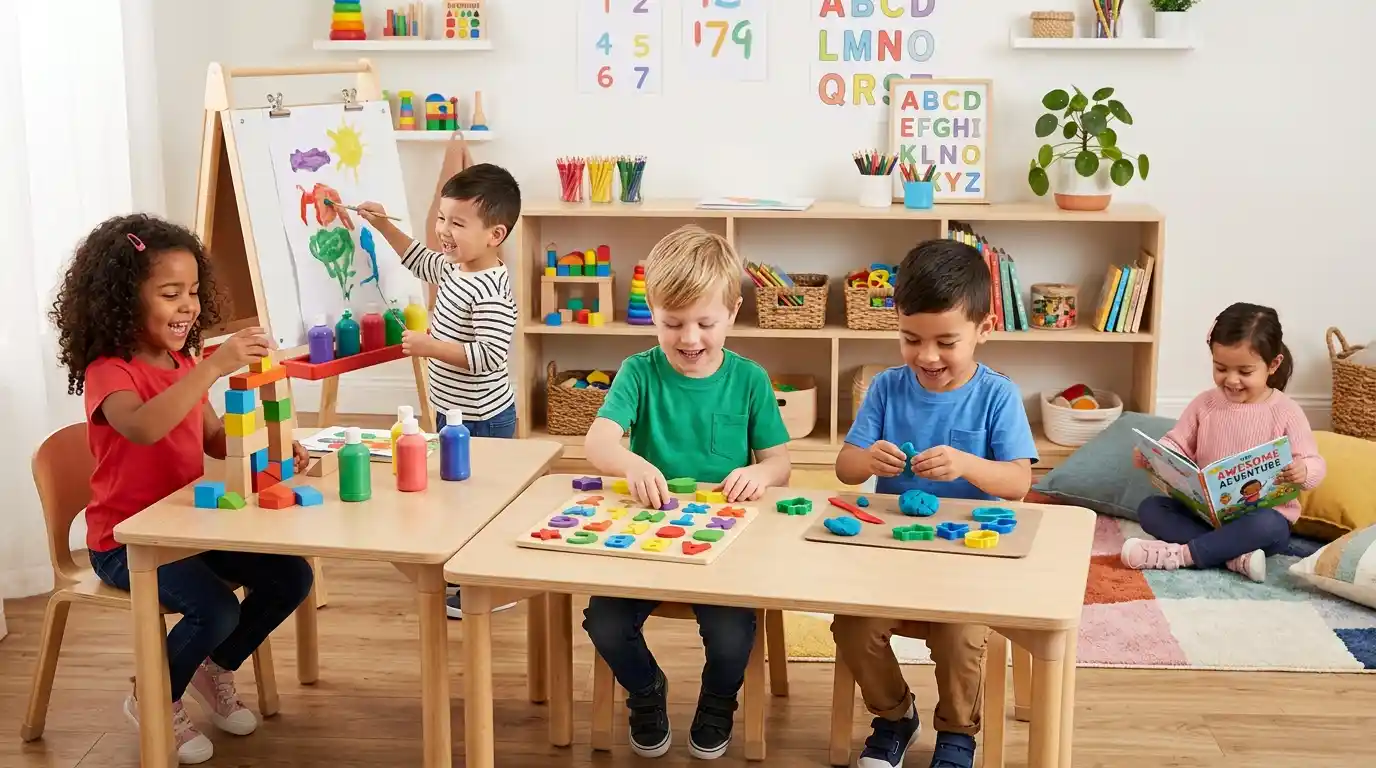
Active learning is a method where children participate directly in the learning process through interaction, problem-solving, and creativity.

Examples of Active Learning:


  • Building projects
  • Group discussions
  • Role-playing activities
  • Real-world problem-solving tasks
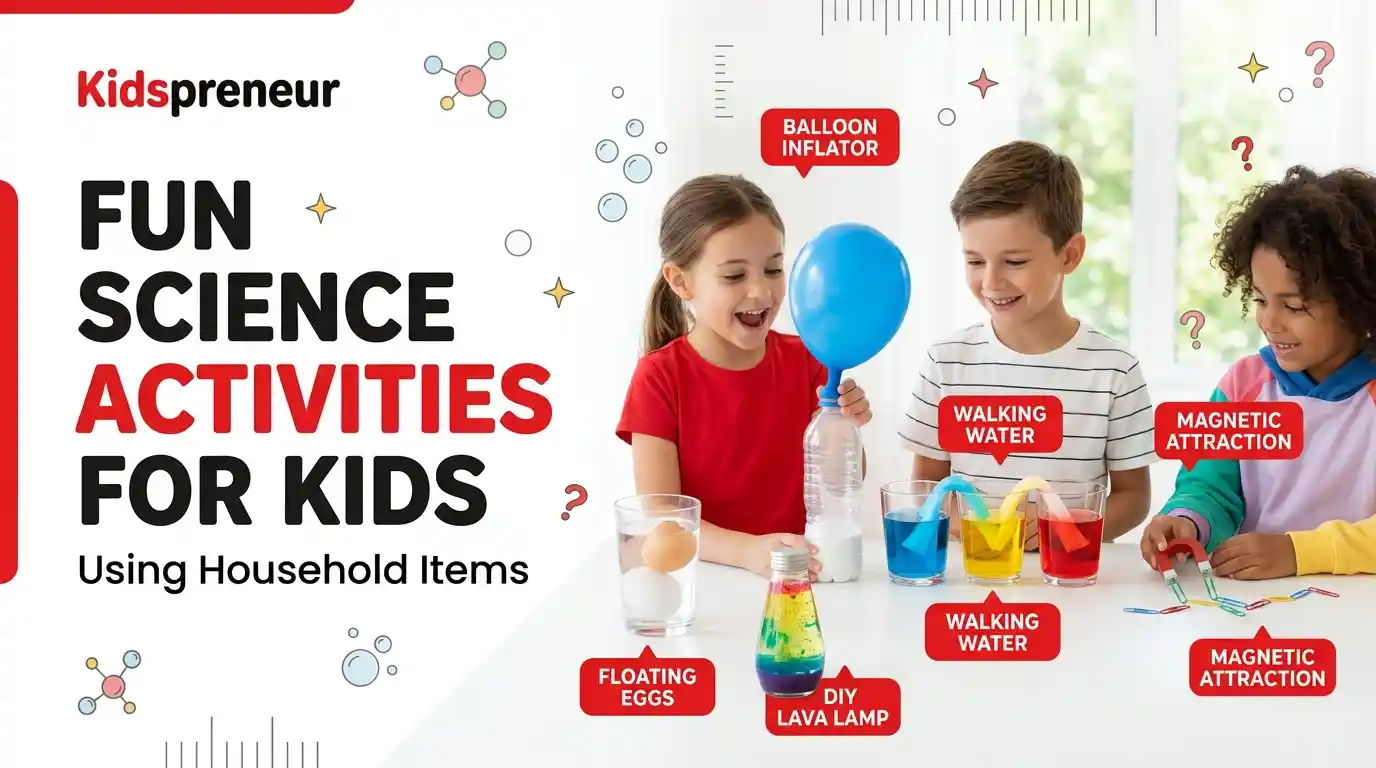
  • Experiments and hands-on learning

In this approach, the brain is fully engaged—it analyzes, questions, and applies knowledge.

Key Characteristics:


  • Two-way interaction
  • High engagement
  • Critical thinking development
  • Learning through experience

This is the core foundation of modern education systems and innovative programs like Kidspreneur Bootcamp.

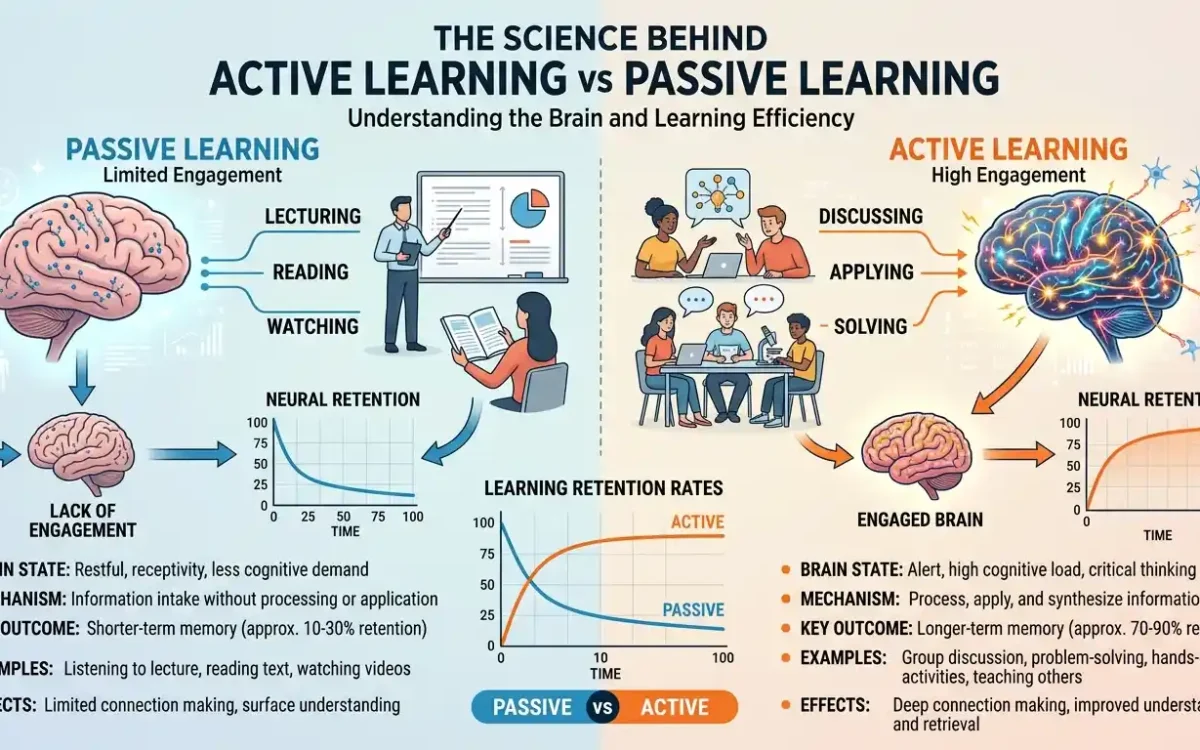
The Science Behind Active Learning vs Passive Learning

Neuroscience shows that the brain learns best when multiple regions are activated simultaneously.

Brain Activity in Passive Learning


During passive learning:

  • Only auditory and visual regions are active
  • Limited neural connections are formed
  • Information is stored in short-term memory

This is why students often forget 70% of lecture content within 24 hours.

Brain Activity in Active Learning


During active learning:

  • Multiple brain areas activate (thinking, movement, emotion)
  • Strong neural pathways are formed
  • Information transfers into long-term memory

This is why children remember experiences, projects, and experiments much longer than lectures.

Cognitive Psychology: Why Active Learning Wins

Cognitive science explains that learning happens in three stages:

Stage Passive Learning Active Learning
Attention Low High
Processing Surface-level Deep understanding
Retention Short-term Long-term

Active learning creates “meaningful learning experiences”, which strengthen memory and comprehension.

Comparison Table: Active Learning vs Passive Learning

Feature Passive Learning Active Learning
Engagement Low High
Memory Retention Weak Strong
Creativity Limited Strong
Problem Solving Rare Frequent
Student Role Listener Participant
Skill Development Theoretical Practical

Why Passive Learning Fails in Today’s World

The world is no longer based on memorization—it is based on skills, creativity, and innovation.

Problems with Passive Learning:


  • Students forget information quickly
  • No real-world application
  • No development of soft skills
  • Lack of creativity
  • Fear of making mistakes

In a world driven by AI and automation, passive learning is no longer enough.

Benefits of Active Learning for Children

Active learning builds essential life skills that prepare children for the future.

1. Strong Critical Thinking

Children learn how to analyze problems instead of memorizing answers.

2. Better Creativity

They explore multiple solutions instead of one fixed answer.

3. Improved Confidence

Children express ideas freely without fear of judgment.

4. Real-World Problem Solving

They learn how to connect knowledge with real-life situations.

5. Long-Term Knowledge Retention

Experiential learning stays in memory for years.

Real-Life Example: Learning Through Experience

Imagine teaching entrepreneurship:

Passive Learning:

A child reads a definition of “business” from a textbook.

Active Learning:

A child creates a small product, sets a price, and sells it in a classroom activity.

Which one do you think the child will remember for life?

Science clearly shows—it’s the second one.

How Kidspreneur Uses Active Learning

At Kidspreneur Club, we eliminate passive learning and replace it with immersive experiences.

Our Approach Includes:


  • Hands-on bootcamps
  • Real-world challenges
  • Creative workshops
  • Idea development sessions
  • Team-based problem solving

For example, in our Summer Bootcamp 2026, children don’t just learn about innovation—they practice it.

👉 Explore our programs here

The Role of Emotion in Learning

Neuroscience also shows that emotions play a huge role in memory formation.

Active Learning Triggers:


  • Curiosity
  • Excitement
  • Problem-solving satisfaction
  • Collaboration energy

These emotional triggers strengthen learning pathways in the brain.

Passive learning lacks emotional engagement, which is why it is less effective.

Why Active Learning Prepares Future Leaders

The future belongs to individuals who can:

  • Think independently
  • Solve complex problems
  • Adapt quickly
  • Innovate continuously

Active learning develops exactly these skills from an early age.

That’s why programs like Kidspreneur Club focus on building entrepreneurs, not just students.

Conclusion

The science behind active learning vs passive learning is clear—active learning is far more effective in building knowledge, skills, and confidence in children.

Passive learning may still exist in traditional systems, but it cannot prepare children for the future world.

Active learning, on the other hand:

  • Strengthens memory
  • Builds creativity
  • Encourages independence
  • Develops real-world skills

At Kidspreneur Club, we believe education should not be about memorizing answers—it should be about creating thinkers, innovators, and future leaders.

Frequently Asked Questions

1. What is the difference between active learning and passive learning?

Active learning involves participation, while passive learning is based on listening and memorization.

Because it improves creativity, memory retention, and problem-solving skills.

No, but it is not sufficient alone for modern skill development.

It activates multiple brain regions, strengthening neural connections.

Building projects, solving real-world problems, and group activities.

Cart (0 items)
Cart (0 items)