

What Happens When Kids Learn Through Real-World Problem Solving
In today’s fast-changing world, education is no longer just about memorizing facts—it’s about applying knowledge in real situations. This is where real-world problem solving for kids becomes a game-changer.
When children are exposed to real-life challenges, they don’t just learn—they think, analyze, and create solutions. This method goes far beyond traditional education and helps children develop skills that truly matter in the future.
At Kidspreneur Club, real-world problem solving is at the core of every program. Instead of passive learning, children actively engage with challenges, turning ideas into real outcomes.
In this blog, we’ll explore what actually happens when kids learn through real-world problem solving—and why it’s essential for their growth.
What is Real-World Problem Solving for Kids?
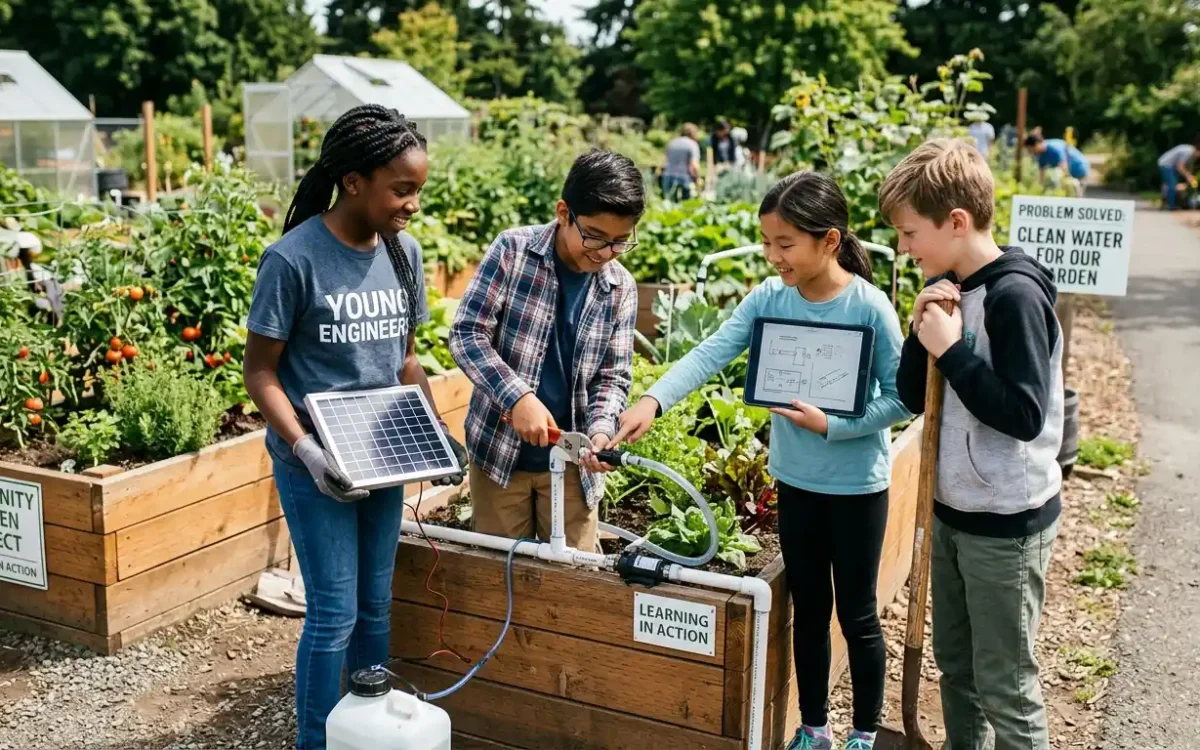
Real-world problem solving is a learning approach where children tackle actual challenges instead of theoretical exercises.
Examples:
- Designing a solution to reduce plastic waste
- Creating a small business idea
- Solving community-related issues
- Building a product or prototype
This method connects learning with real life, making education meaningful and impactful.
How It Differs from Traditional Learning
| Feature | Traditional Learning | Real-World Problem Solving |
|---|---|---|
| Focus | Memorization | Application |
| Learning Style | Passive | Active |
| Outcome | Grades | Skills |
| Thinking | Linear | Creative & Critical |
| Engagement | Low | High |
Traditional learning often limits thinking, while real-world problem solving expands it.
What Happens in a Child’s Brain?
Scientific research shows that when children solve real problems:
Multiple Brain Areas Activate
- Logical thinking (prefrontal cortex)
- Creativity (right hemisphere)
- Emotional engagement (limbic system)
Strong Neural Connections Form
This leads to:
- Better memory retention
- Faster learning
- Deeper understanding
Learning Becomes Long-Term
Children remember experiences far more than theoretical lessons.
Key Benefits of Real-World Problem Solving for Kids
1. Builds Critical Thinking Skills
Children learn how to ask questions, analyze situations, and evaluate solutions.
2. Encourages Creativity
There is no single correct answer—kids explore multiple possibilities.
3. Boosts Confidence
When children solve real problems, they feel capable and empowered.
4. Develops Decision-Making Skills
Kids learn to weigh options and make informed choices.
5. Improves Communication
They present ideas, discuss solutions, and work in teams.
6. Teaches Responsibility
Children understand the impact of their decisions in real-life scenarios.
Real-Life Example
Scenario: Learning About Business
Traditional Method:
A child reads about “supply and demand” in a book.
Real-World Method:
A child creates a product, sets a price, and sells it to others.
👉 Result: The child understands business concepts deeply and remembers them for life.
How Kidspreneur Applies Real-World Problem Solving
At Kidspreneur Club, we design programs that simulate real-life experiences.
Our Approach Includes:
- Hands-on projects
- Business simulations
- Creative challenges
- Team collaboration
- Idea pitching sessions
For example, in the Summer Bootcamp 2026, children work on real-world themes like:
- Sustainability (Eco Smart Kids)
- Innovation (Oops Lab – STEM)
- Creativity (Little Masters Studio)
- AI concepts (Time Travel with AI)
The Role of Failure in Learning
One of the most powerful aspects of real-world problem solving is learning through failure.
What Kids Learn:
- Failure is part of growth
- Mistakes improve thinking
- Persistence leads to success
Unlike traditional systems, this method removes fear and builds resilience.
Skills Developed Through Real-World Learning
| Skill | How It Develops |
|---|---|
| Problem Solving | Facing real challenges |
| Creativity | Generating ideas |
| Leadership | Team collaboration |
| Confidence | Taking action |
| Adaptability | Handling uncertainty |
| Innovation | Building solutions |
These are the exact skills needed for future careers.
Why This Matters in Today’s World
The future job market is evolving rapidly due to:
- Artificial Intelligence
- Automation
- Global competition
Children who only memorize information will struggle.
Children who can solve problems, think creatively, and adapt will thrive.
The Role of Emotion in Learning
Neuroscience also shows that emotions play a huge role in memory formation.
Active Learning Triggers:
- Curiosity
- Excitement
- Problem-solving satisfaction
- Collaboration energy
These emotional triggers strengthen learning pathways in the brain.
Passive learning lacks emotional engagement, which is why it is less effective.
Signs Your Child Needs This Learning Approach
- Gets bored with traditional studies
- Has ideas but doesn’t know how to apply them
- Lacks confidence in decision-making
- Struggles with practical thinking
- Shows curiosity about real-world issues
If you notice these signs, real-world learning can transform their growth.
Why Kidspreneur Stands Out
At Kidspreneur, we don’t teach children what to think—we teach them how to think.
What Makes Us Different:
- Non-linear learning approach
- Hands-on experiences
- Focus on innovation
- Real-world application
- Confidence building
Our mission is to turn young minds into future innovators.
Conclusion
So, what happens when kids learn through real-world problem solving?
They become:
- Thinkers instead of memorizers
- Creators instead of followers
- Confident instead of hesitant
This approach transforms education into a meaningful journey—one where children don’t just learn, but grow.
At Kidspreneur Club, we believe every child has the potential to innovate—the right learning method simply unlocks it.
Frequently Asked Questions
1. What is real-world problem solving for kids?
It is a learning method where children solve real-life challenges instead of theoretical problems.
2. Why is real-world learning important?
It helps children develop practical skills, confidence, and critical thinking.
3. At what age can kids start problem-solving learning?
Children as young as 7 years old can start with guided real-world activities.
4. How does this method improve confidence?
Kids gain confidence by solving problems and seeing real results.
5. Is this better than traditional learning?
It complements traditional learning but is far more effective for skill development.