



School Entrepreneurship Activities: Fun Ways to Build Future Business Leaders
Modern education is evolving rapidly, and schools are now focusing more on practical learning experiences that prepare children for the future. One of the most effective approaches is introducing school entrepreneurship activities that help students develop creativity, leadership, communication, and problem-solving skills.
Entrepreneurship activities teach children how to think independently, generate ideas, work in teams, and understand real-world challenges. These activities make learning more interactive, exciting, and meaningful.
What Are School Entrepreneurship Activities?
School entrepreneurship activities are hands-on learning experiences designed to help students understand business concepts, leadership, innovation, and teamwork in a fun and practical way.
- Think creatively
- Solve real-world problems
- Develop leadership abilities
- Work collaboratively
- Build confidence and communication skills
Why Entrepreneurship Activities Are Important in Schools
Understanding the value of school entrepreneurship activities helps schools prepare students for future careers and real-life challenges.
- Encourages independent thinking
- Improves creativity and innovation
- Builds confidence and communication
- Develops teamwork abilities
- Introduces financial literacy concepts
Traditional Learning vs Entrepreneurship Activities
| Traditional Learning | Entrepreneurship Activities |
|---|---|
| Memorization-focused | Creativity-focused |
| Passive classrooms | Interactive participation |
| Exam-centered | Skill-centered learning |
| Individual learning | Team collaboration |
Best School Entrepreneurship Activities for Students
Student Business Projects
Students create business ideas, plan products, and learn marketing and teamwork skills.
Creative Product Design Challenges
Students design eco-friendly products and develop innovative thinking skills.
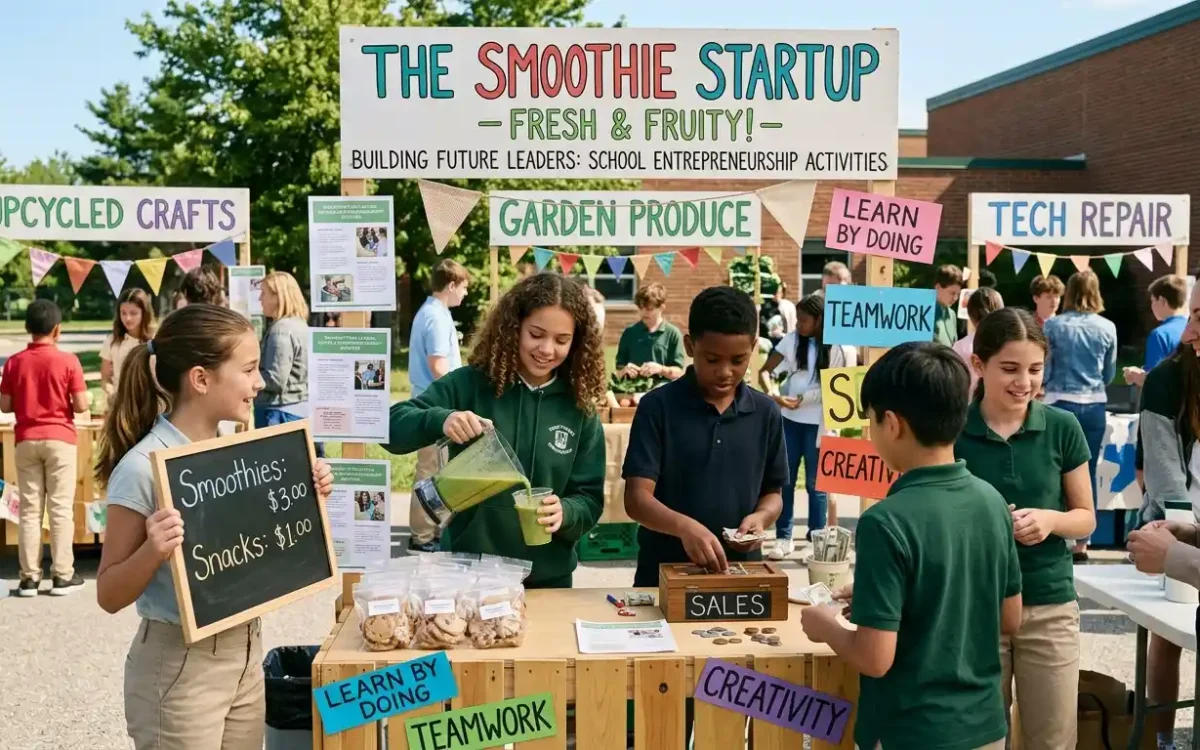
Mini Market Day Activities
Students sell products, manage budgets, and practice real-world business communication.
Team-Based Problem Solving
Group challenges improve collaboration, leadership, and critical thinking skills.
Public Speaking & Pitching
Students present ideas confidently to develop communication and leadership skills.
STEM and Entrepreneurship Activities
Combining STEM with entrepreneurship creates powerful learning experiences that build innovation and future skills.
Real-World Skills Students Learn
- Communication abilities
- Financial understanding
- Team collaboration
- Critical thinking
- Innovation mindset
Kidspreneur Approach to Business Education
At Kidspreneur, we strongly believe in the importance of business education in schools and future-focused learning.
Oops Lab (STEM Learning)
Improves innovation thinking, logical reasoning, and problem-solving skills.
Time Travel with AI
Children explore artificial intelligence, future technologies, and innovation awareness.
Little Masters Studio
Focuses on creativity, self-expression, and design thinking development.
Eco Smart Kids
Teaches sustainability, responsible innovation, and creative reuse concepts.
Journey Through Quran and Science
Children explore the connection between Quranic knowledge and modern scientific discoveries, helping them develop curiosity, critical thinking, and a deeper understanding of the world.
Final Thoughts
School entrepreneurship activities are not just about business—they are about building future-ready children who are confident, creative, and capable of solving real-world problems.
Frequently Asked Questions (FAQs)
1. What are school entrepreneurship activities?
Hands-on activities that teach creativity, leadership, teamwork, and business thinking.
2. Why are they important?
They build confidence, communication, and real-world problem-solving skills.
3. What are examples?
Business fairs, STEM projects, pitching ideas, and team challenges.
4. Do they improve leadership?
Yes, they teach decision-making, teamwork, and responsibility.
5. How does Kidspreneur help?
It provides STEM, AI, creativity, and entrepreneurship-based learning programs.