



Screen Time vs Productive Learning Activities
In today’s digital world, children spend more time on screens than ever before. Mobile phones, tablets, gaming devices, and social media have become part of everyday life. While technology offers educational benefits, excessive screen use has raised concerns among parents and educators.
This is why understanding screen time vs productive learning activities is extremely important for modern parenting and child development.
Children need balanced experiences that encourage creativity, communication, problem-solving, and real-world learning—not just passive screen consumption.
What Is Screen Time?
Screen time refers to the amount of time children spend using digital devices and technology.
- Smartphones
- Tablets
- Computers
- Television
- Gaming devices
Screen time can be educational or entertainment-based depending on how technology is used.
Positive Effects of Limited Screen Time
- Educational learning
- Creativity apps
- STEM exploration
- Interactive problem-solving
- Digital awareness
Educational videos and learning platforms can help children gain knowledge when used in moderation.
Negative Effects of Excessive Screen Time
- Reduced attention span
- Lower physical activity
- Sleep problems
- Social communication difficulties
- Reduced creativity and imagination
Excessive screen use may also affect emotional development and focus.
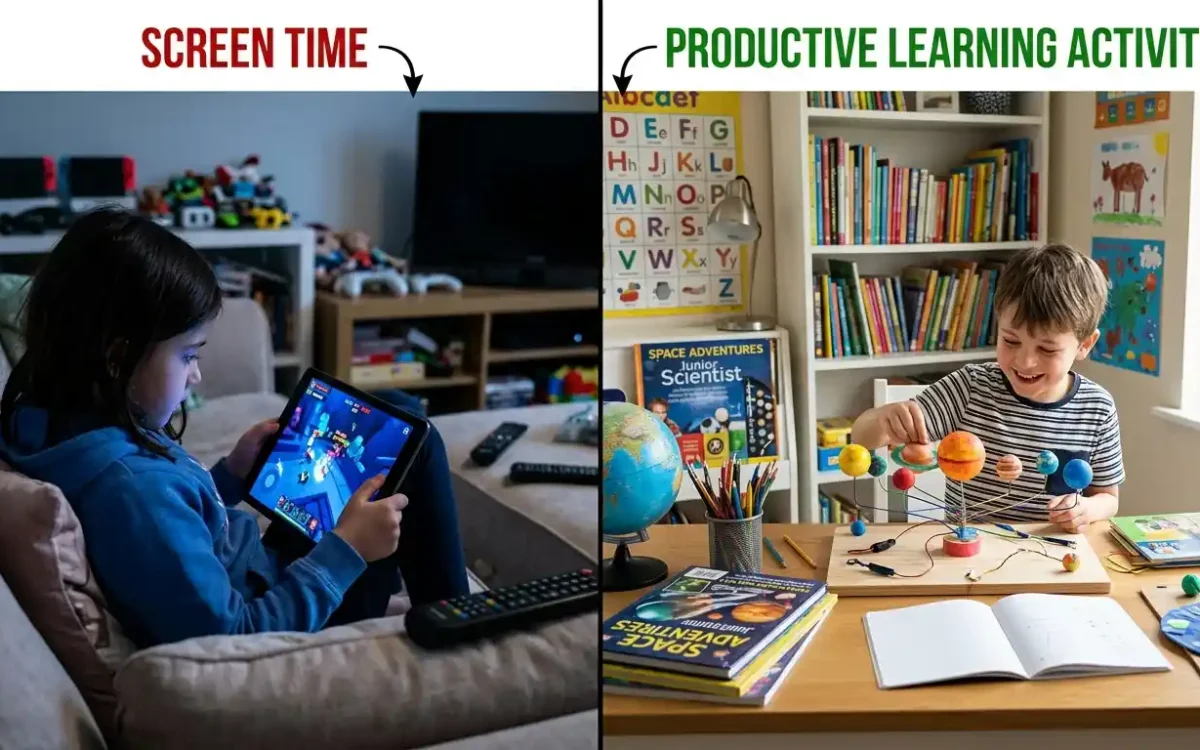
Screen Time vs Productive Learning Activities
| Excessive Screen Time | Productive Learning Activities |
|---|---|
| Passive entertainment | Active participation |
| Reduced social interaction | Team collaboration |
| Limited creativity | Innovation and imagination |
| Short attention span | Better focus and engagement |
| Instant gratification | Long-term skill development |
What Are Productive Learning Activities?
Productive learning activities are hands-on experiences that help children build real-life skills while actively participating.
- STEM learning projects
- Art and craft activities
- Entrepreneurship games
- Public speaking exercises
- Problem-solving challenges
- Outdoor learning experiences
Benefits of Productive Learning Activities
- Improves creativity
- Builds communication skills
- Encourages teamwork
- Develops confidence
- Enhances critical thinking
Children learn best when they actively explore and participate.
STEM Learning vs Passive Screen Entertainment
STEM learning activities encourage scientific thinking, engineering creativity, and innovation mindset. Unlike passive entertainment, STEM learning keeps children mentally engaged and active.
Healthy Screen Time Habits for Kids
- Set screen time limits
- Encourage outdoor activities
- Promote educational content only
- Schedule family interaction time
- Introduce hands-on learning experiences
Kidspreneur Programs Encourage Active Learning
At Kidspreneur, we believe children learn best through creativity, exploration, and real-world experiences—not passive screen use.
The Oops Lab (STEM Learning)
Children participate in science experiments, engineering challenges, and hands-on innovation activities.
Time Travel with AI
Introduces Artificial Intelligence concepts and future technology learning in an engaging way.
Little Masters Studio
Improves creativity, self-expression, and fine motor skills through design activities.
Eco Smart Kids
Encourages sustainability awareness, teamwork, and creative recycling projects.
Final Thoughts
The discussion around screen time vs productive learning activities is not about removing technology completely—it is about creating healthy balance.
Productive learning activities help children become more confident, creative, and future-ready in today’s digital world.
Frequently Asked Questions (FAQs)
1. Why is excessive screen time harmful for children?
Too much screen time can reduce focus, creativity, social interaction, and physical activity.
2. What are productive learning activities for kids?
STEM projects, art activities, teamwork exercises, and hands-on learning experiences.
3. How can parents balance screen time?
By setting limits and encouraging educational and physical activities.
4. Are educational apps better than entertainment content?
Yes, when used in moderation and combined with active learning.
5. How does Kidspreneur encourage productive learning?
Through STEM, AI, creativity, and entrepreneurship-based programs.