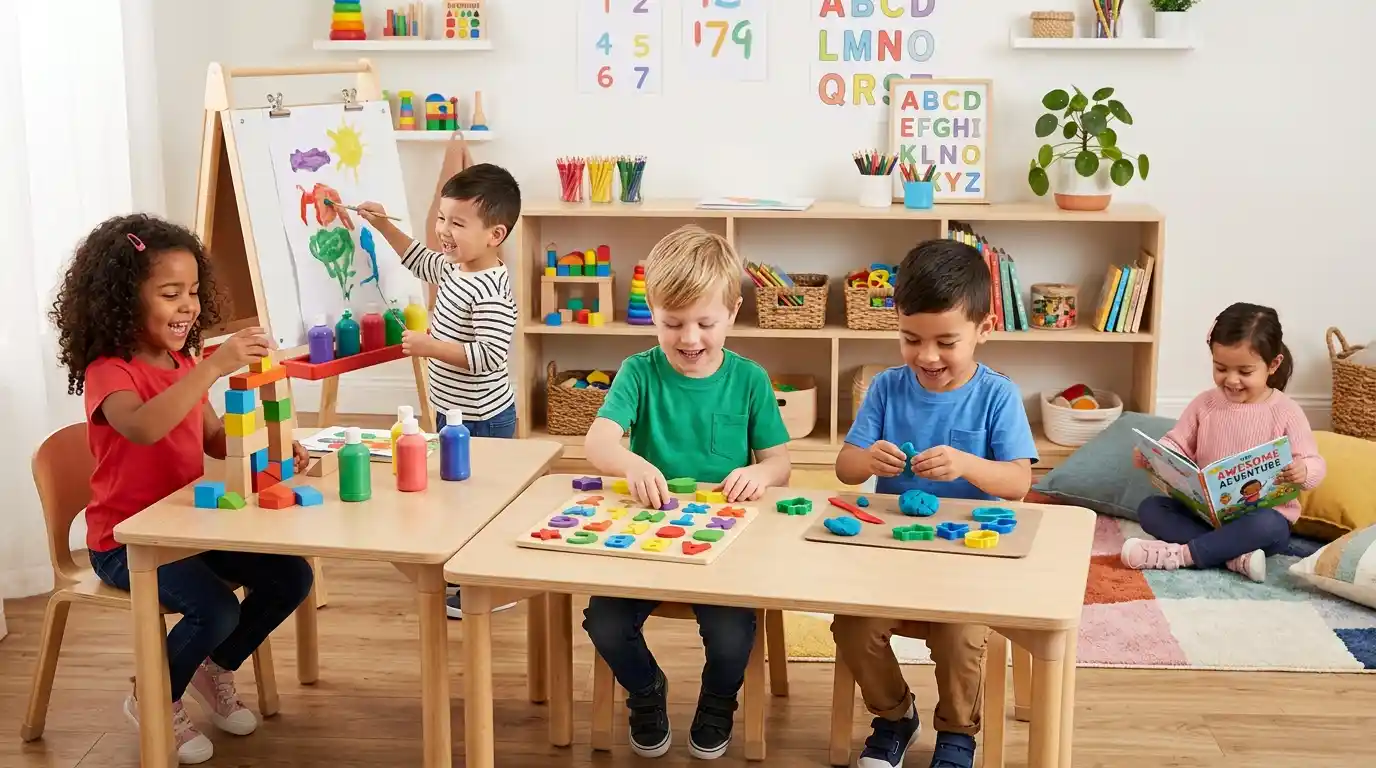




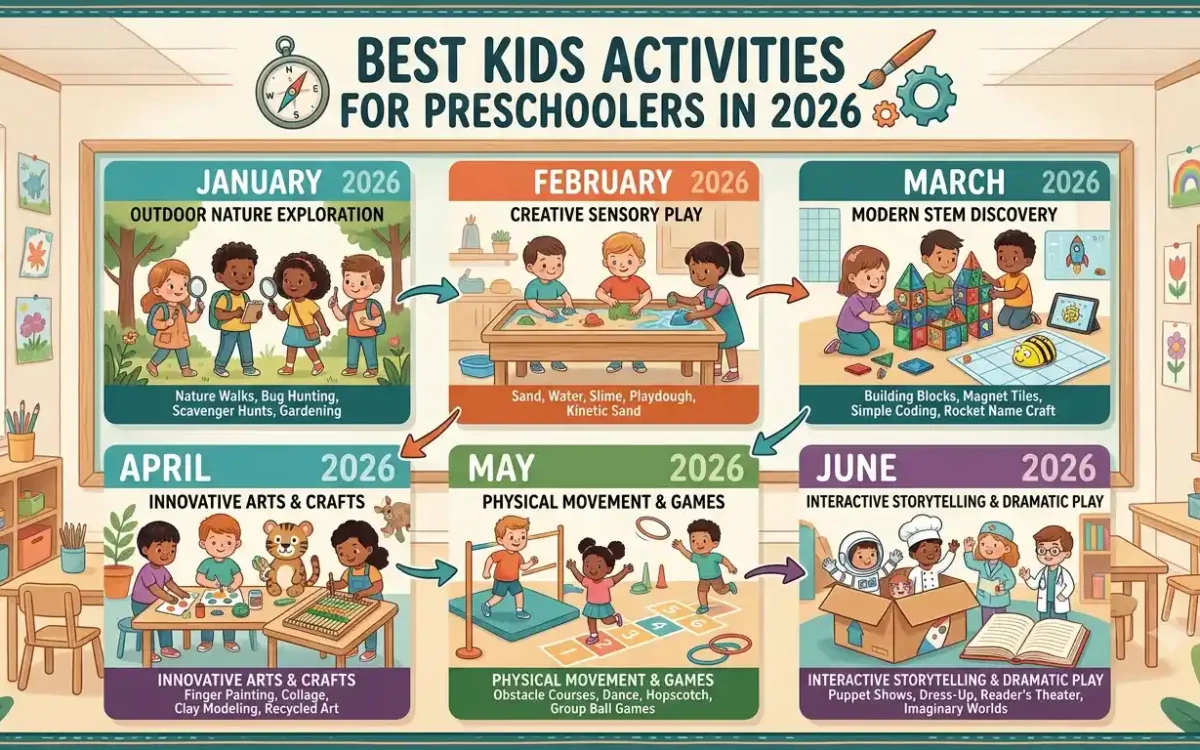
The preschool years might be the busiest stretch of a child's whole development—and they don't even know it's happening. Somewhere between ages 3 and 5, kids are soaking up the world at an almost unbelievable rate, and they're doing it through the simplest things: play, poking around, and everyday experiences.
Every crayon drawing, every wobbly puzzle piece, and every made-up story helps children think, communicate, solve problems, and build confidence.
Heading into 2026, more parents and teachers are embracing hands-on, screen-free activities that encourage creativity, curiosity, and lifelong learning. Rather than relying on digital devices, preschoolers learn best by moving, building, imagining, and interacting with the people around them.
This guide explores some of the best preschool activities for 2026 that are simple to organize at home or in the classroom while delivering meaningful educational benefits.
Why These Little Activities Actually Matter
Preschoolers learn through experience. They understand the world by touching, exploring, moving, observing, and pretending.
Regular activity-based learning helps children:
- Build language and communication skills
- Develop fine and gross motor skills
- Improve problem-solving abilities
- Strengthen creativity and imagination
- Learn teamwork and sharing
- Build confidence and independence
- Increase concentration
- Prepare for primary school
Every activity is an opportunity to learn while having fun.
25 Activities Worth Trying With Your Preschooler
1. Color Sorting Games
Use coloured paper, toys, or bottle caps and encourage children to group matching colours together.
Skills: Colour recognition, observation, sorting
2. Sensory Bins
Fill a container with rice, beans, sand, or pasta and hide small toys for children to discover.
Skills: Sensory exploration, curiosity, fine motor skills
3. Finger Painting
Allow children to create colourful artwork using washable paints and their hands.
Skills: Creativity, hand coordination
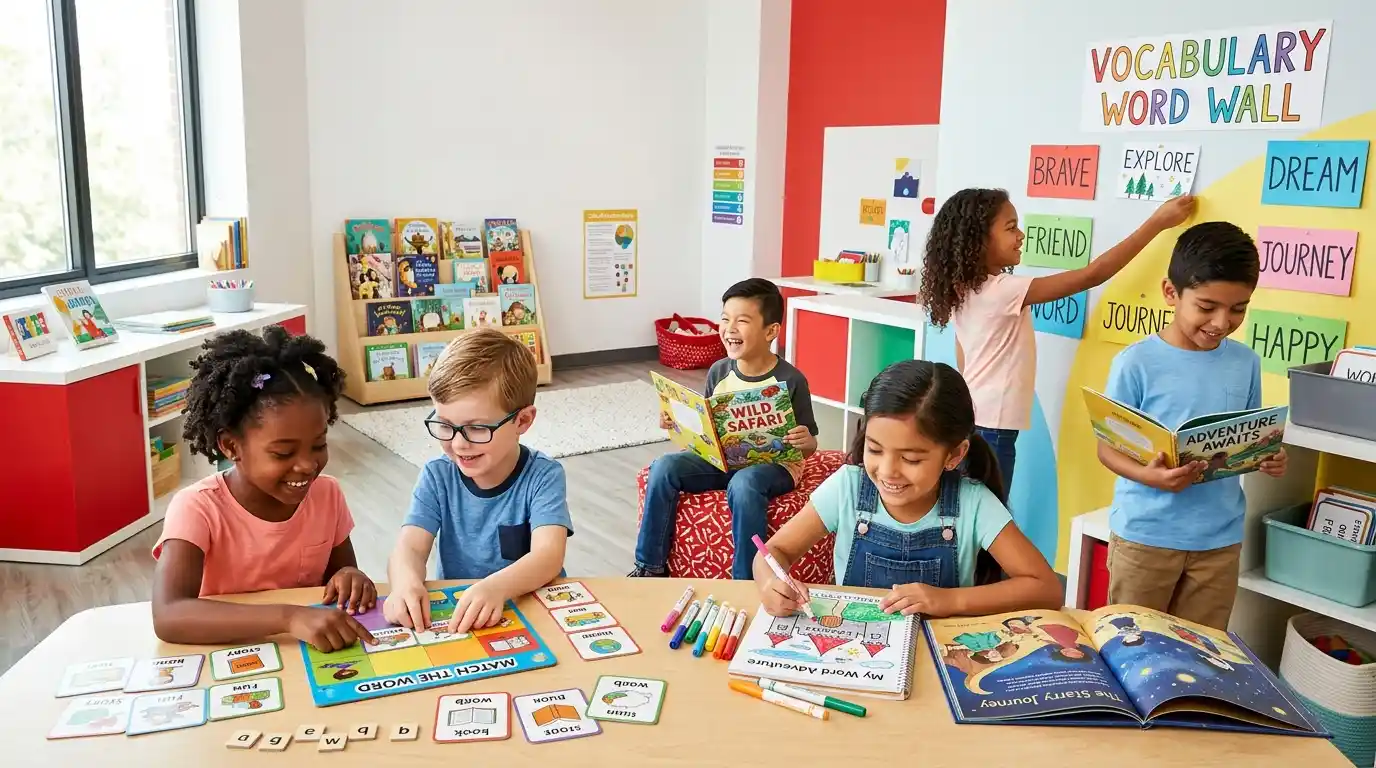
4. Story Time Adventures
Read picture books together and ask questions like, "What do you think happens next?"
Skills: Vocabulary, listening, imagination
5. Nature Walks
Collect leaves, flowers, stones, and sticks while discussing colours, textures, and shapes.
Skills: Observation, science, curiosity
6. Building Blocks
Create towers, bridges, and houses using building blocks.
Skills: Engineering, spatial awareness, creativity
7. Alphabet Treasure Hunt
Hide alphabet cards around the room and let children search for them.
Skills: Letter recognition, movement, memory
8. Shape Matching
Cut circles, squares, triangles, and rectangles from paper for matching games.
Skills: Shape recognition, logical thinking
9. Dance and Freeze Game
Play music and freeze whenever it stops.
Skills: Coordination, balance, listening
10. DIY Puppet Show
Create puppets using socks or paper bags and perform imaginative stories.
Skills: Storytelling, creativity, communication
11. Counting with Household Objects
Use buttons, spoons, toy blocks, or other household items for counting practice.
Skills: Early mathematics, observation
12. Play Dough Creations
Create letters, fruits, animals, and numbers using homemade play dough.
Skills: Fine motor skills, creativity
13. Water Transfer Activity
Practice transferring water between containers using cups and spoons.
Skills: Coordination, concentration
14. Obstacle Course
Create an indoor obstacle course using pillows, chairs, cushions, and tape. Encourage children to crawl, jump, balance, and climb safely.
Skills: Gross motor skills, balance, coordination
15. Bubble Chasing
Blow bubbles and let your child run, jump, and pop them.
Skills: Physical activity, coordination, focus
16. Recycled Craft Projects
Turn cardboard boxes, paper rolls, and plastic bottles into fun creative projects.
Skills: Creativity, sustainability, problem-solving
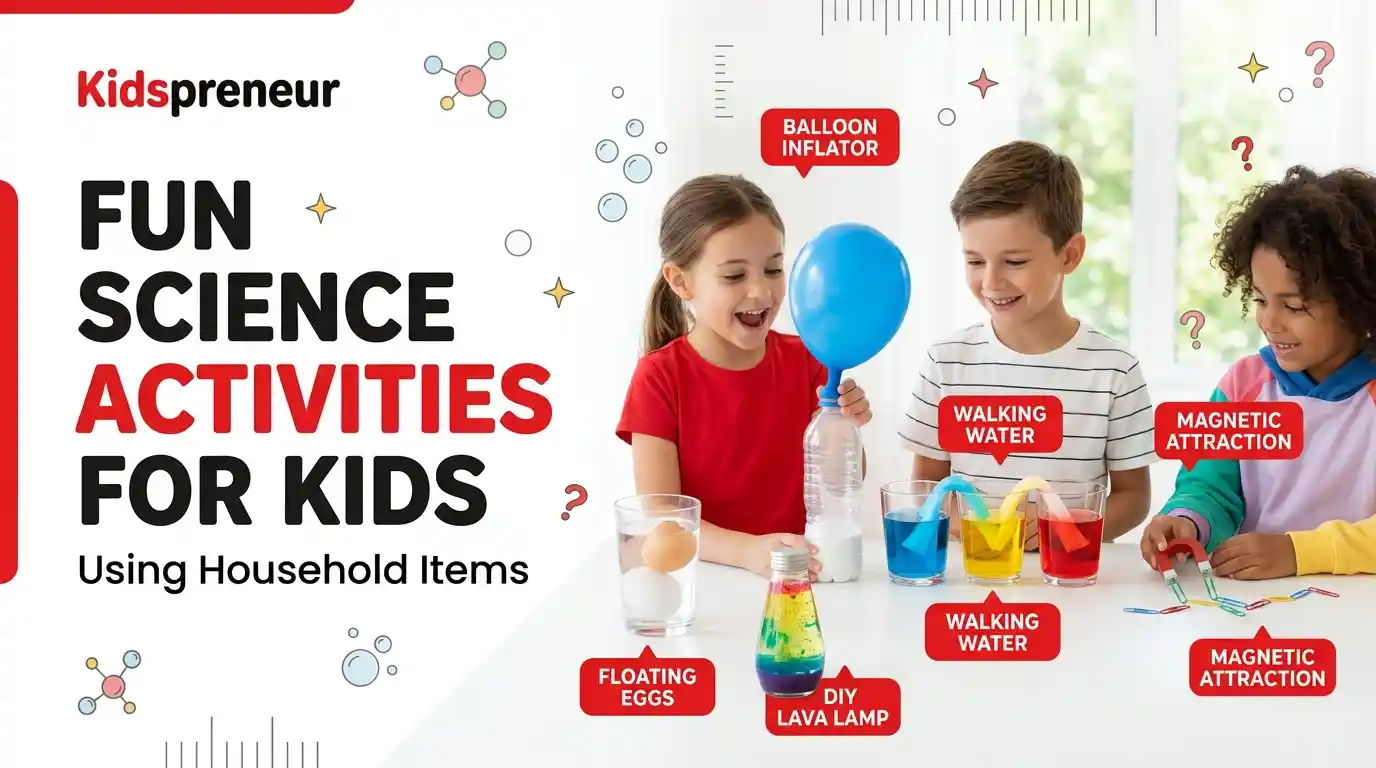
17. Beginner Science Experiments
Explore floating and sinking objects, colour mixing, growing beans, or melting ice.
Skills: Scientific thinking, curiosity, observation
18. Musical Fun
Create music using homemade instruments or kitchen utensils.
Skills: Rhythm, listening, coordination
19. Gardening Together
Plant herbs or flowers in small pots and observe them grow over time.
Skills: Patience, responsibility, observation
20. Animal Role Play
Hop like a bunny, stomp like an elephant, or waddle like a duck while acting out different animals.
Skills: Imagination, movement, confidence
21. Picture Puzzles
Use large-piece puzzles to improve concentration and logical thinking.
Skills: Problem-solving, patience
22. Family Cooking Time
Invite children to wash vegetables, stir ingredients, or decorate healthy snacks.
Skills: Independence, counting, teamwork
23. Ball Toss Games
Throw soft balls into buckets or baskets placed at different distances.
Skills: Hand-eye coordination, focus
24. Simple Yoga
Practice child-friendly yoga poses that improve flexibility while promoting calmness.
Skills: Balance, mindfulness, flexibility
25. Mini Entrepreneur Play
Set up a pretend grocery shop or lemonade stand where children can count, share, and interact with customers.
Skills: Communication, confidence, financial awareness
What Preschoolers Actually Pick Up From These Activities
| Activity Type | Skills Developed |
|---|---|
| Storytelling | Communication, vocabulary |
| Building Blocks | Problem-solving, engineering |
| Arts & Crafts | Creativity, fine motor skills |
| Sensory Play | Exploration, observation |
| Gardening | Responsibility, patience |
| Science Activities | Curiosity, critical thinking |
| Music & Dance | Coordination, rhythm |
| Pretend Play | Confidence, imagination |
Why Screen-Free Time Still Matters in 2026
Many child development experts continue to recommend balancing technology with hands-on learning experiences. While technology has its place, preschoolers benefit most from active, real-world exploration.
Screen-free activities help children:
- Explore the world through movement and touch.
- Develop stronger communication and social skills.
- Improve focus and concentration.
- Think independently and creatively.
- Reduce dependence on digital entertainment.
- Develop healthier daily routines.
Technology can support learning, but meaningful play remains one of the most effective ways for preschoolers to build lifelong skills.
A Few Tips for Parents
Help your preschooler enjoy learning every day with these simple ideas:
- Create a flexible daily activity routine.
- Keep learning sessions short—around 15 to 20 minutes.
- Praise effort and creativity rather than perfection.
- Rotate activities regularly to maintain interest.
- Use everyday household materials whenever possible.
- Join the activities and learn alongside your child.
A supportive and encouraging environment gives children the confidence to keep exploring, experimenting, and learning.
How Kidspreneur Supports Early Learning
At Kidspreneur, we believe young children learn best by exploring, creating, experimenting, and participating in meaningful hands-on experiences. Our programs are designed to nurture children's natural curiosity while developing essential skills they will use throughout their lives.
Creative Learning
Children express themselves through art, storytelling, imaginative play, and collaborative activities that strengthen creativity and confidence.
STEM Exploration
Simple science experiments, engineering projects, and interactive challenges introduce children to science, technology, engineering, and mathematics in a fun and engaging way.
Early Entrepreneurship
Pretend shops, role-playing activities, and money games help preschoolers develop responsibility, communication, sharing, and basic financial awareness.
Communication & Leadership
Storytelling, presentations, teamwork, and group discussions encourage children to express their ideas confidently while building leadership and social skills.
Sustainability
Creative recycling projects and nature-based activities help children understand environmental responsibility while learning how everyday materials can be reused in exciting ways.
Why Activity-Based Learning Matters More Than Ever
Modern education is moving beyond memorization toward learning through exploration and experience. Activity-based learning gives preschoolers opportunities to discover, experiment, and solve problems naturally while enjoying the learning process.
These activities encourage children to:
- Ask thoughtful questions.
- Find creative solutions to everyday problems.
- Work together with others.
- Communicate ideas with confidence.
- Develop imagination and creativity.
- Build resilience by learning from mistakes.
By learning through play, children develop skills that prepare them not only for school but also for future success in life.
"The best learning happens when children are curious, engaged, and free to explore the world around them."
Final Thoughts
The best preschool activities in 2026 combine learning with fun. Whether children are painting, reading, building, gardening, dancing, experimenting, or running a pretend shop, every activity helps develop important life skills.
Parents don't need expensive toys or complicated lesson plans. Everyday experiences, simple household materials, and quality time together provide the strongest foundation for learning.
By encouraging creativity, communication, curiosity, and confidence from an early age, families help children become lifelong learners who are ready to explore the future with enthusiasm.
Frequently Asked Questions
Sensory play, storytelling, building blocks, arts and crafts, nature walks, simple science experiments, pretend play, music, dancing, puzzles, and counting games are all excellent activities that combine learning with fun.
Educational activities support early brain development, improve communication, strengthen fine and gross motor skills, encourage creativity, and prepare children for school through hands-on experiences.
Recommendations vary, but many child development experts encourage limiting recreational screen time while balancing it with active play, reading, outdoor exploration, and meaningful family interaction.
Simple household materials such as paper, cardboard, recycled containers, books, building blocks, and kitchen utensils can be transformed into engaging learning activities that encourage creativity and problem-solving.
Kidspreneur offers activity-based programs focused on creativity, STEM, entrepreneurship, communication, leadership, and sustainability. These experiences help young children build confidence, curiosity, and essential life skills through hands-on learning.