



12 Nature Activities That Help Kids Connect With the Environment
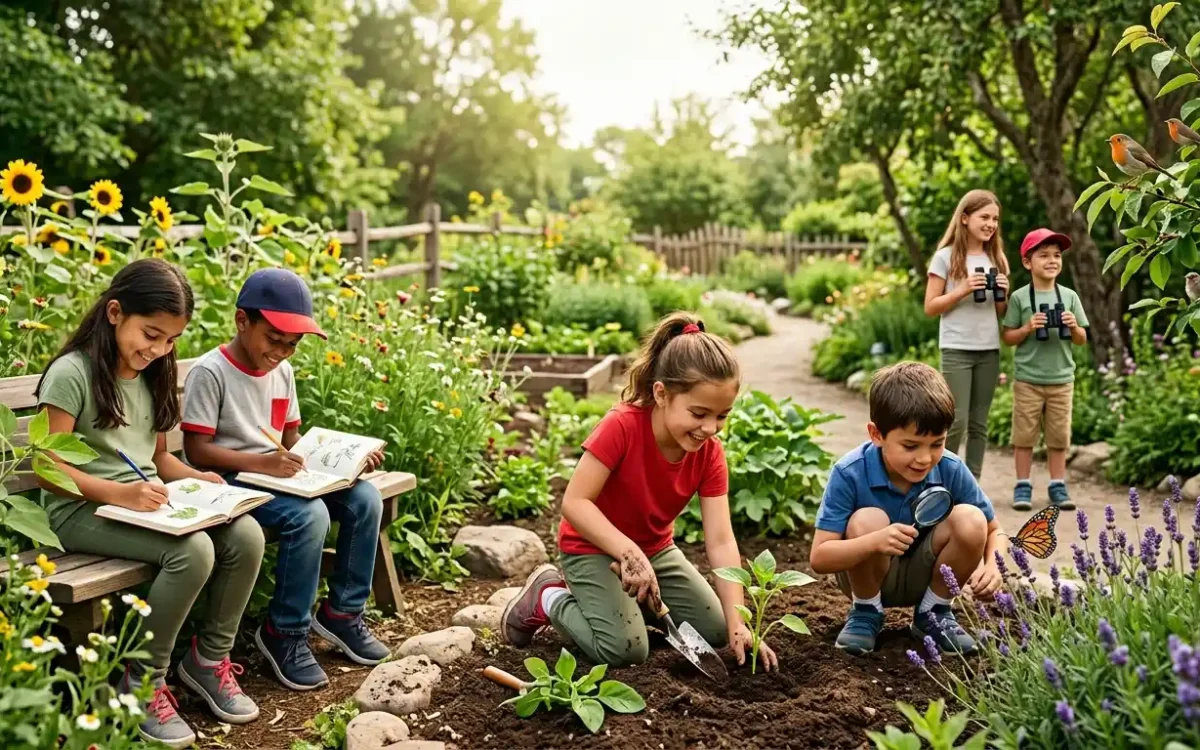
Children naturally love to explore. Give them a garden, park, beach, backyard, or even a few plants at home, and the world around them becomes a classroom.
In a time when children increasingly spend their free time with digital devices, nature activities for kids provide an opportunity to step outside, observe the environment, ask questions, and learn through direct experience.
Nature-based activities don't have to be complicated or expensive. A simple nature walk can become a science investigation. Planting a seed can become a lesson about ecosystems. Collecting fallen leaves can inspire an art project.
Here are 12 fun and educational nature activities that can help kids connect with the environment.
1. Go on a Nature Scavenger Hunt
Turn an ordinary outdoor walk into an exciting exploration game.
Create a simple checklist of things children might find in nature, such as:
- A yellow flower
- A fallen leaf
- A smooth stone
- A bird
- An insect
- A pinecone
- A tree with rough bark
- A feather
- Something shaped like a circle
- Something that makes a sound
Give children a notebook or checklist and let them explore.
Skills children develop
- Observation
- Attention to detail
- Curiosity
- Vocabulary
- Environmental awareness
2. Plant a Mini Garden
Gardening is one of the simplest ways to help children understand where plants and food come from.
You don't need a large garden. Children can grow herbs or small plants in containers, pots, or recycled household containers.
Let them participate in:
- Choosing seeds.
- Preparing soil.
- Planting seeds.
- Watering plants.
- Observing growth.
- Recording changes.
Children can keep a plant growth journal and draw or photograph their plant each week.
This activity helps them understand that living things require care, patience, water, sunlight, and suitable conditions.
3. Create a Nature Journal
Give children a notebook and encourage them to document what they see outdoors.
Their journal could include:
- Drawings of plants
- Pictures of insects
- Weather observations
- Bird sightings
- Leaf sketches
- Interesting rocks
- Questions about nature
They don't need to be professional artists.
The goal is to encourage children to slow down and observe their surroundings.
Over time, their journal can become a personal record of the natural world around them.
4. Make Leaf Art
Fallen leaves can become excellent art materials.
Children can collect a small number of fallen leaves from the ground and use them to create pictures.
They could make:
- Animals
- Trees
- Faces
- Patterns
- Landscapes
- Collages
Encourage children to use fallen materials rather than picking living plants whenever possible.
"What type of tree do you think this leaf came from?"
This turns a creative activity into an opportunity for nature observation.
5. Become a Backyard Wildlife Detective
Children can investigate the animals and insects that share their environment.
Give them a notebook and encourage them to look for signs of wildlife such as:
- Bird nests from a safe distance
- Ant trails
- Butterfly visits
- Spider webs
- Insect activity
- Bird calls
- Animal footprints
Children can record what they saw, where they saw it, and what the animal was doing.
This activity introduces children to the idea that even urban environments can contain diverse ecosystems.
6. Build a Simple Bird Feeder
A supervised bird-feeding project can help children observe local birds.
Children can create a simple feeder using suitable reusable materials and place it somewhere where birds can be observed safely.
Once the feeder is installed, children can record:
- Which birds visit?
- What time do they arrive?
- How many different birds appear?
- What behaviors do they show?
They can create a bird observation chart and compare their observations over several days.
Local wildlife guidance should be followed when choosing whether and how to feed birds.
7. Go on a Cloud-Watching Adventure
You don't need special equipment to explore the sky.
Find a safe outdoor location and encourage children to observe clouds.
- What shapes do you see?
- Are the clouds moving quickly or slowly?
- Do they look thin, thick, dark, or white?
- How does the sky change throughout the day?
Children can draw the clouds they see and record the weather.
This simple activity encourages observation and can become an introduction to weather and Earth science.
8. Create a Mini Composting Project
Composting can introduce children to decomposition and the natural recycling of organic materials.
With appropriate adult supervision and a suitable composting setup, children can learn about materials that can break down naturally.
They can explore examples such as:
- Fruit and vegetable scraps
- Dry leaves
- Plant material
- Certain untreated paper products
Children can observe the process over time and discuss an important environmental question:
"What happens to organic waste after we throw it away?"
This can help them understand natural cycles and waste reduction.
9. Try a Water Conservation Challenge
Water is an important natural resource, and children can learn about conservation through a simple household challenge.
For one week, ask children to identify ways their family can avoid unnecessary water use.
For example:
- Turn off taps when not needed.
- Use only the water required for an activity.
- Check for dripping taps with an adult.
- Reuse suitable water where appropriate.
- Avoid unnecessary water waste while cleaning.
Children can create a "Save Water" poster and track the conservation habits they practiced.
10. Create a Nature Sound Map
Take children outside and ask them to listen carefully.
Instead of focusing on what they can see, focus on what they can hear.
They might hear:
- Birds
- Wind
- Leaves
- Insects
- Rain
- Water
- People
- Traffic
Give them paper and ask them to draw a simple map showing where different sounds came from.
Bird → tree
Wind → left side
Water → nearby stream
This activity develops listening skills while helping children become more aware of their surroundings.
11. Conduct a Simple Nature Science Experiment
Nature provides endless opportunities for scientific investigation.
Try a simple experiment such as observing how different conditions affect plant growth.
For example, children can observe plants placed in different environments under adult guidance.
They can record:
- Height
- Number of leaves
- Color
- Changes over time
The important part is encouraging children to make a prediction before observing the results.
"What do you think will happen?"
Then compare the prediction with what actually happened.
This introduces children to the basic scientific process of question → prediction → observation → result.
12. Organize a Family Nature Clean-Up
Turn environmental responsibility into a team activity.
Choose a safe outdoor area and, with adult supervision and appropriate protective equipment, collect litter that can be safely handled.
Children can separate collected materials where local recycling systems allow it.
Afterward, discuss:
- Where did the waste come from?
- Which items could have been reused?
- Which materials can be recycled?
- How does litter affect animals?
- How can we reduce waste?
The activity teaches children that protecting the environment isn't only about learning facts—it is also about making responsible choices.
Why Nature Activities Matter for Kids
Nature-based activities can provide benefits that go beyond environmental education.
Encourage Curiosity
Children learn by asking questions about what they see, hear, and experience.
Improve Observation Skills
Nature encourages children to notice small details that they might otherwise overlook.
Support Problem-Solving
Outdoor challenges give children opportunities to investigate problems and think about possible solutions.
Inspire Creativity
Leaves, flowers, rocks, clouds, and natural landscapes can become inspiration for art and storytelling.
Build Environmental Awareness
Hands-on experiences can help children understand why plants, animals, water, soil, and clean environments matter.
Encourage Family Time
Many nature activities can become shared experiences between parents, children, siblings, and teachers.
Nature and STEM Learning
Nature activities can also become an excellent introduction to STEM education.
A simple gardening project can teach children about biology.
A cloud observation activity can introduce weather science.
A bird-counting project can involve data collection.
A composting experiment can introduce decomposition and ecosystems.
A water conservation challenge can introduce measurement and resource management.
This means children can learn science and environmental concepts without feeling like they are sitting through another traditional lesson.
Make Nature Exploration a Habit
Children don't need a major outdoor adventure every weekend.
Small experiences can make a difference.
Try creating a simple weekly routine:
Over time, children may begin noticing changes in their environment without being asked.
That is one of the most valuable outcomes of nature-based learning: developing curiosity that continues beyond the activity itself.
Encourage Questions About the Environment
When exploring nature with children, don't worry about having every answer.
"Why are some leaves different colors?"
Instead of immediately answering, ask:
"What do you think?"
"Why do birds live in trees?"
Encourage them to observe bird behavior and investigate together.
This transforms nature exploration into an ongoing process of discovery.
Final Thoughts
Children don't need expensive equipment or elaborate programs to develop a connection with the environment.
A nature walk, small garden, nature journal, bird observation activity, leaf-art project, cloud-watching session, or family clean-up can become a meaningful learning experience.
The key is to give children opportunities to observe, ask questions, experiment, create, and care.
When children spend time understanding the natural world around them, they can begin to see the environment not as something distant, but as something they are part of and have a responsibility to protect.
Let curiosity lead the way. Sometimes the best classroom is simply the world outside the door.
Frequently Asked Questions
1. What are nature activities for kids?
Nature activities for kids are hands-on experiences that encourage children to explore plants, animals, weather, water, soil, and their surrounding environment through play and observation.
2. Why are nature activities important for children?
Nature activities can help children develop curiosity, observation skills, creativity, problem-solving abilities, environmental awareness, and an appreciation for the natural world.
3. What nature activities can kids do at home?
Children can grow a mini garden, keep a nature journal, make leaf art, observe birds and insects, watch clouds, create a nature sound map, or start a supervised composting project.
4. How can nature activities teach children about the environment?
Hands-on activities such as gardening, recycling, composting, wildlife observation, and water conservation can help children understand ecosystems, natural resources, waste, and environmental responsibility.
5. Can nature activities help with STEM learning?
Yes. Nature activities can introduce children to biology, weather science, data collection, observation, measurement, ecosystems, and the scientific method in an engaging way.
Search
Recent Posts
16 September, 2026
Top Kids Activities for Preschoolers: Fun & Educational Ideas
16 September, 2026
Fun Science Activities for Kids Using Household Items