

What Is a Good Age to Start Entrepreneurship?
There is no single best age to start entrepreneurship. Children can begin with simple play at ages 5 to 7, while more structured learning can work well from ages 7 to 15.
For kids, entrepreneurship is not about running a company or making money. It is about spotting problems, creating ideas, making decisions, and turning ideas into useful solutions.
A child who sets up a pretend shop is already learning basic business ideas. An older child who designs a product, works out its cost, and pitches it to others is building those skills further.
“Which entrepreneurial skills suit my child's age?”
Instead of only asking “What age should my child start?”, parents can ask which entrepreneurial skills are appropriate for their child's current stage.
At Kidspreneur, learning is built around creativity, problem-solving, leadership, and real-world activities. Its current programs are mainly designed for children aged 7 to 15.
Quick Answer: Best Age to Start Entrepreneurship
There is no fixed starting age. Entrepreneurial thinking can begin through play and simple activities, then become more structured as children grow.
Entrepreneurship Learning by Age
| Age | Stage | What Kids Do |
|---|---|---|
| 5–7 | Explore & Imagine | Pretend shops, drawing products, simple inventions and imagination games. |
| 8–10 | Create & Experiment | Solve problems, build prototypes, and learn basic cost and price concepts. |
| 11–13 | Develop Business Thinking | Research customers, create budgets, develop products and build brands. |
| 14–15+ | Apply & Build | Market research, pricing, pitching, digital business and product testing. |
Each stage builds on the one before it.
Can Young Children Learn Entrepreneurship?
Yes. Young children already ask questions, try things out, and imagine new ideas. That is the foundation of entrepreneurial thinking.
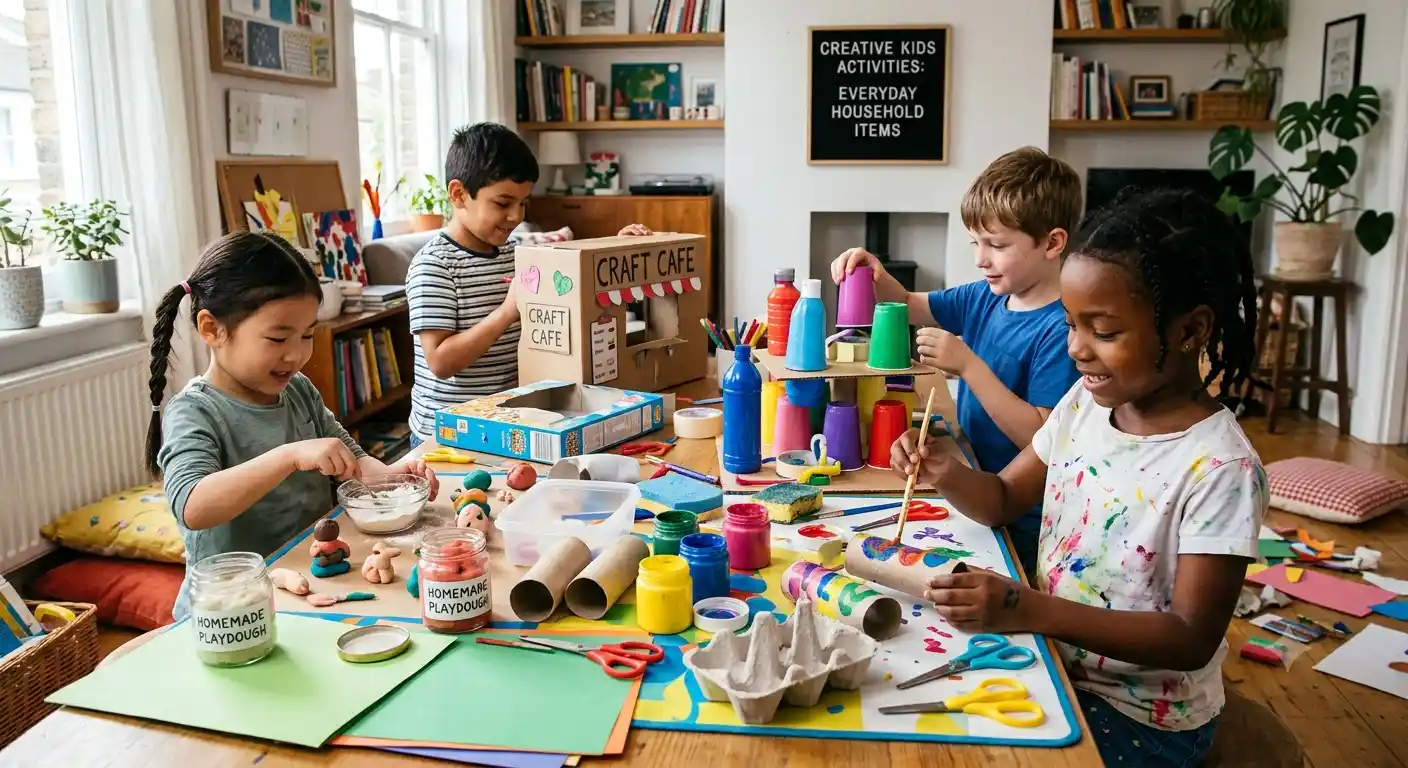
Pretend Shop
Set up a pretend store and let children explore products, prices and customer roles.
Design a Toy
Ask your child to imagine and draw a new toy that solves a simple problem.
Build Something
Use recycled materials to create something useful or imaginative.
- Set up a pretend store at home
- Design a new toy
- Make greeting cards
- Build something from recycled materials
- Find a fix for a household problem
- Explain an idea to parents
- Use pretend money in a game
None of this needs real money. The goal is to help children understand value, creativity, decision-making, communication and responsibility.
Ages 5–7: Explore and Imagine
At this age, entrepreneurship should feel like play. Children can explore ideas without needing complicated business concepts.
- Pretend shops
- Drawing products
- Simple invention challenges
- Story-based problem-solving
- Simple money games
- Creating imaginary brands
“What can I make? Who could use it? What problem does it solve?”
Ages 8–10: Create and Experiment
Kids can begin following a simple entrepreneurial process.
They can also begin learning about cost, price, saving, budgeting, customer needs and teamwork.
Keep the Focus on Learning
At this age, the goal should be learning and experimentation—not profit.
Ages 11–13: Develop Business Thinking
- Research a problem
- Find possible customers
- Compare different solutions
- Build a product idea
- Work out basic costs
- Make a simple budget
- Create a brand
- Collect feedback and improve
Example: A child designs an eco-friendly product and asks: “What problem does it solve? Who will use it? What materials do I need? How much will it cost? How will people hear about it?”
Ages 14–15+: Apply and Build
Business Models
Explore how products and services can create value.
Market Research
Understand customers, competitors and real-world needs.
Pricing
Learn how costs, pricing and budgeting connect.
Marketing
Explore branding, advertising and digital marketing.
Pitching
Present an idea clearly and confidently.
Product Testing
Collect feedback and improve a product or idea.
Why Learn Entrepreneurship Early?
Does My Child Need to Start a Business?
No.
Entrepreneurship education does not mean every child must become a business owner.
These skills can help whether your child eventually becomes a doctor, engineer, teacher, scientist, designer, developer, artist, athlete or business owner.
Explore More Children's Learning Resources
School of Scholars also focuses on curiosity, independence, problem-solving, teamwork and confidence. Parents can explore its Knowledge Hub for more resources about children's learning and development.
7 Easy Entrepreneurship Activities for Kids
Pretend Shop
Use play money, signs, prices and roles.
Design a New Product
Invent something that could make life easier.
Create a Business Name
Make a name and logo for an imaginary business.
Solve a Family Problem
Ask how one household problem could be solved.
Make an Advertisement
Create a poster, video or presentation.
Run a Mini Market
Present simple crafts to family with adult supervision.
Pitch an Idea
Try a fun Shark Tank-style presentation.
Do not focus on choosing a “best” child or idea. The learning comes from creating, presenting, receiving feedback and improving.
How Parents Can Encourage Entrepreneurial Thinking
You do not need expensive tools or courses. Ask open questions instead of solving every problem for your child.
Ask “Why?”
Encourage your child to explain why they chose an idea.
Ask “What Else?”
Help children think of more than one possible solution.
Allow Mistakes
Let children discover that ideas can be changed and improved.
“What do you think we could do?”
“Can you think of another solution?”
“Who would this help?”
“What would you change?”
“What did you learn from trying it?”
Should Parents Focus on Making Money?
Not at First
For younger children, focus on learning, creativity, problem-solving and responsibility.
A cardboard prototype, pretend shop or family presentation can provide valuable entrepreneurship practice.
As children grow, parents can gradually introduce pricing, costs, revenue, savings and budgeting.
What If My Child Is Not Interested in Business?
That is completely fine. Do not force entrepreneurship. Instead, connect entrepreneurial activities to what your child already loves.
| Child Loves | Try This |
|---|---|
| Art | Create and brand an imaginary art studio. |
| Technology | Design an app that solves a simple problem. |
| Science | Invent a product that helps the environment. |
| Cooking | Plan a pretend food business and menu. |
| Sports | Design a sports product or organise a mini event. |
What Is a Good Age to Start Entrepreneurship Classes?
Structured classes can work well once a child can join group activities, follow instructions, share ideas and work on projects.
Kidspreneur focuses many programs on ages 7 to 15, covering entrepreneurship, creativity, leadership, STEM, design thinking, makerspaces and real-world problem-solving.
Look Beyond Age
Parents should also consider:
- Interests
- Communication ability
- Confidence
- Learning style
- Comfort working in groups
- Readiness for structured activities
- Existing skills
- Curiosity
Do Kids Need Certain Skills First?
No.
Entrepreneurship can actually help children build the skills they need.
How Kidspreneur Builds Entrepreneurial Skills
Kidspreneur uses practical, activity-based learning. Children explore ideas, solve problems, build projects and share their thinking.
Programs cover entrepreneurship, design thinking, STEM, makerspaces, creativity, leadership, problem-solving and innovation.
Children learn by doing, presenting, getting feedback and trying again.
Help Your Child Turn Ideas Into Action
Entrepreneurship starts with curiosity. Give children opportunities to explore problems, create ideas, build solutions and learn from experience.
Explore KidspreneurFrequently Asked Questions
What is a good age to start entrepreneurship?
There is no fixed age. Young children can start with pretend shops and invention games, while more structured entrepreneurship learning can work well from ages 7 to 15.
Can a 7-year-old learn entrepreneurship?
Yes. Through games and hands-on activities, a 7-year-old can explore creativity, problem-solving, product ideas, simple money awareness, communication and teamwork.
Is entrepreneurship suitable for young children?
Yes, when it matches their developmental level. Use play, storytelling and simple challenges rather than complicated business theory.
Does my child need money to learn entrepreneurship?
No. Pretend businesses, invention projects, prototypes and presentations can teach many entrepreneurial skills without real money.
Should every child become an entrepreneur?
No. Entrepreneurship education develops transferable skills that can be useful across many different careers.
What entrepreneurship skills should kids learn?
Children can gradually learn creativity, problem-solving, communication, teamwork, decision-making, money awareness, product design, presentation, customer thinking and resilience.
How can parents teach entrepreneurship at home?
Give children simple challenges such as designing a product, running a pretend shop, solving a household problem, making an advertisement or presenting an idea.
What age group does Kidspreneur support?
Kidspreneur's core programs are mainly designed for children aged 7 to 15.
Can entrepreneurship be taught in schools?
Yes. School programs can teach creativity, innovation, problem-solving, leadership, communication and teamwork through practical projects.
What is the first step in teaching entrepreneurship?
Start with curiosity. Ask your child to identify a problem, imagine a solution, make something and explain how it could help someone. Focus on thinking rather than making money.
What Is a Good Age to Start Entrepreneurship?
There is no single correct age to start entrepreneurship. Young children can begin with play and problem-solving, while structured learning can become more advanced as children grow.
Ages 7 to 15 can be a useful period for structured entrepreneurship learning, especially when activities match the child's age, interests and readiness.
What matters most is not how early a child starts a business. It is how early they learn to ask questions, spot problems, take initiative, learn from mistakes and turn ideas into useful solutions.
That is where entrepreneurial thinking begins.
Search
Recent Posts
12 October, 2026
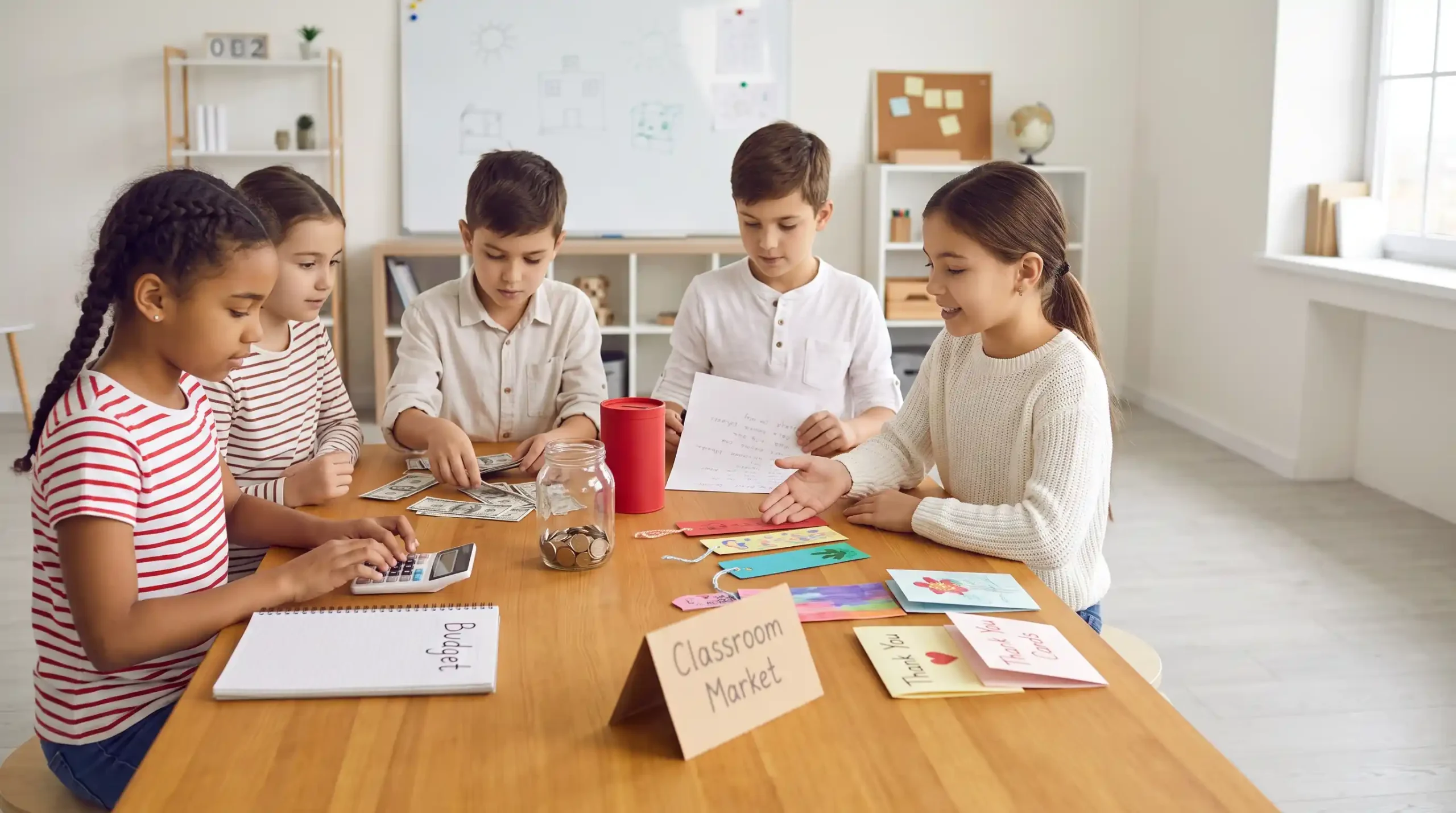
From Pocket Money to Profit: Teaching Kids Basic Business Skills