What Is Profit for Kids? Simple Business Lesson

Profit for Kids
24
Sep
2026

What Is Profit for Kids? Simple Business Lesson

Ever wondered how kids can understand profit without getting lost in grown-up business talk? Here's a simple, fun way to explain it — with real examples your child can actually try.

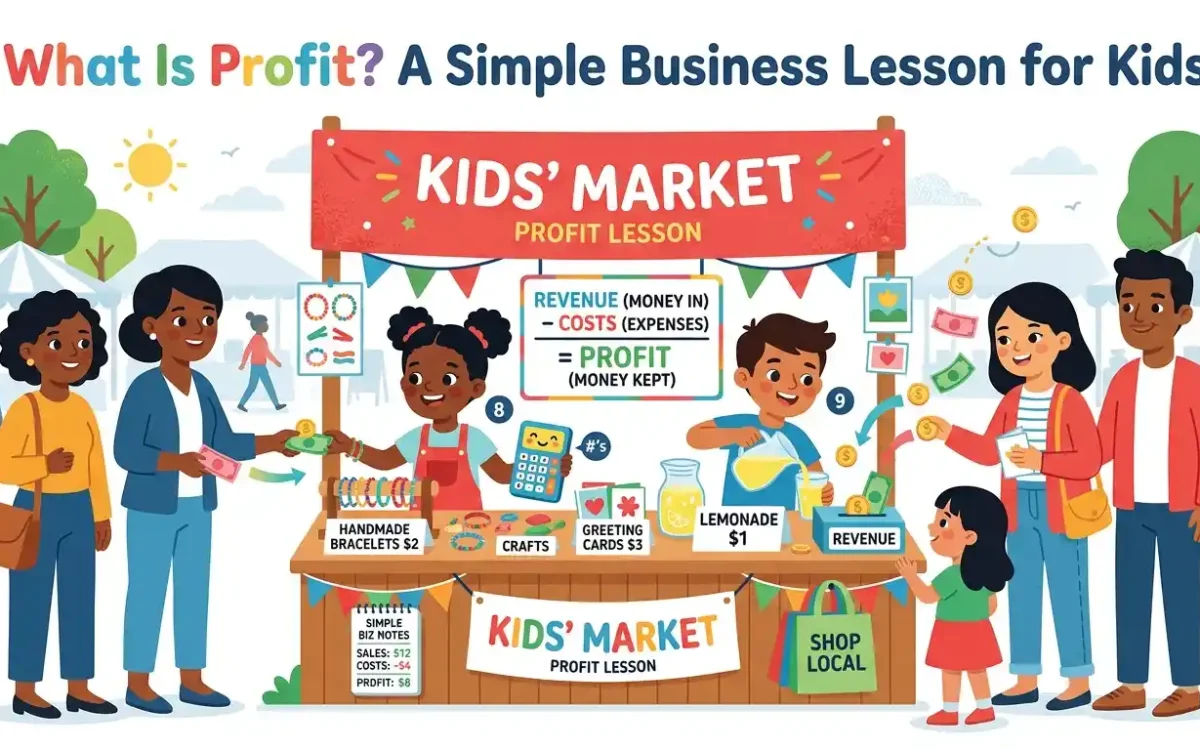
Quick Answer: Profit is simply the money left over after a business pays for everything it needed to make or sell its product. The formula is easy: Profit = Money Earned − Money Spent.

So, What Does "Profit" Actually Mean?

Think of it this way: profit is what's left in your pocket after you've paid for everything that went into making and selling something.

THE SIMPLE PROFIT FORMULA
Profit = Money Earned − Money Spent

🎯 Let's Try an Example

Sara spends Rs. 500 buying beads and string to make handmade bookmarks. She sells them all for Rs. 800.

Rs. 800 − Rs. 500 = Rs. 300 profit

That Rs. 300 is hers to keep, save, or spend — she earned it!

Why Bother Teaching Kids About Profit?

Because it's one of the easiest ways to teach real-life skills without it feeling like a lecture. Kids naturally pick up budgeting, planning, decision-making, and a bit of entrepreneurial thinking — all through one simple idea.

Get your child thinking like a young entrepreneur: How much does it cost to make? Who's going to buy it? What price feels fair? And after all that — will there be any profit left?

Profit vs. Revenue — What's the Difference?

These two get mixed up a lot, so here's the simple version: revenue is everything a business earns from sales. Profit is what's left after paying for the stuff it took to make that sale happen.

Term What It Really Means
Revenue All the money coming in from sales
Costs Everything the business had to spend
Profit What's left after costs are paid
Loss When you spend more than you earn

How Do You Actually Work Out Profit?

Profit = Revenue − Total Costs

💰 Another Quick Example

Revenue: Rs. 2,000

Total Costs: Rs. 1,200

Profit: Rs. 800

Simple subtraction — that's really all profit is!

What If a Business Spends More Than It Earns?

This happens more often than you'd think, even to real businesses. It's called a loss — and it's a great thing for kids to understand too, so they're not afraid of mistakes.

Example of a Loss

Costs = Rs. 1,000

Revenue = Rs. 700

Rs. 700 − Rs. 1,000 = −Rs. 300

That means the business lost Rs. 300 — not a disaster, just a lesson for next time.

A Fun Way to Practice: The Mini Business Challenge

🚀 Try This at Home

Give your child a pretend budget of Rs. 1,000 and let them build a tiny "business" from scratch.

  • Pick a product to sell.
  • Work out how much it costs to make.
  • Decide on a selling price.
  • Add up the total revenue.
  • Calculate the profit.
  • Talk about what to do with it — save, spend, or reinvest?

5 Questions Every Young Entrepreneur Should Ask

  1. What am I selling?
  2. Who would actually want to buy it?
  3. How much will it cost me to make?
  4. What price should I charge?
  5. Will I actually make a profit?

Frequently Asked Questions

What is profit, in really simple words?

It's the money left over after a business pays for everything it needed to spend on.

Can you give a kid-friendly example of profit?

Sure — if a child spends Rs. 300 on craft supplies and sells the finished crafts for Rs. 500, they've made a Rs. 200 profit.

What's the difference between revenue and profit?

Revenue is all the money coming in from sales. Profit is what's left after subtracting the costs of running the business.

What happens if costs are higher than revenue?

That means the business made a loss — it spent more than it earned.

Why is it worth teaching kids about profit?

It builds real financial literacy early — budgeting, planning, decision-making, and a bit of entrepreneurial confidence, all through one simple, hands-on idea.

Help Your Child Think Like a Young Entrepreneur

At Kidspreneur, kids learn by doing — through creativity, hands-on projects, and real-world challenges that make lessons like this one stick.

Explore Kidspreneur Programs →
Cart (0 items)
Cart (0 items)