



20 Hands-On Activities That Turn Gen Alpha Kids Into Problem Solvers
Discover creative, practical, and engaging activities that help Gen Alpha children build critical thinking, creativity, teamwork, decision-making, and real-world problem-solving skills.
Problem-solving is a skill that develops when children have opportunities to experiment, make decisions, test ideas, learn from mistakes, and try again.
That's why hands-on learning is so valuable. Instead of simply reading about a concept or watching someone else demonstrate it, children become active participants in the learning process.
From building bridges with household materials to designing a pretend business, simple activities can transform everyday play into meaningful learning experiences.
Here are 20 hands-on activities parents, teachers, and educators can use to help Gen Alpha kids strengthen their problem-solving skills.
Why Problem-Solving Skills Matter for Gen Alpha
Gen Alpha children will enter a future where technology, automation, artificial intelligence, and changing workplaces are likely to play an important role.
While technical knowledge can be valuable, children also need transferable skills that help them adapt to unfamiliar situations.
🧠 Critical Thinking
Children learn to examine information, compare options, and make thoughtful decisions.
💡 Creativity
Kids learn that there can be multiple ways to approach the same challenge.
🤝 Collaboration
Group challenges encourage children to communicate, listen, and work toward shared goals.
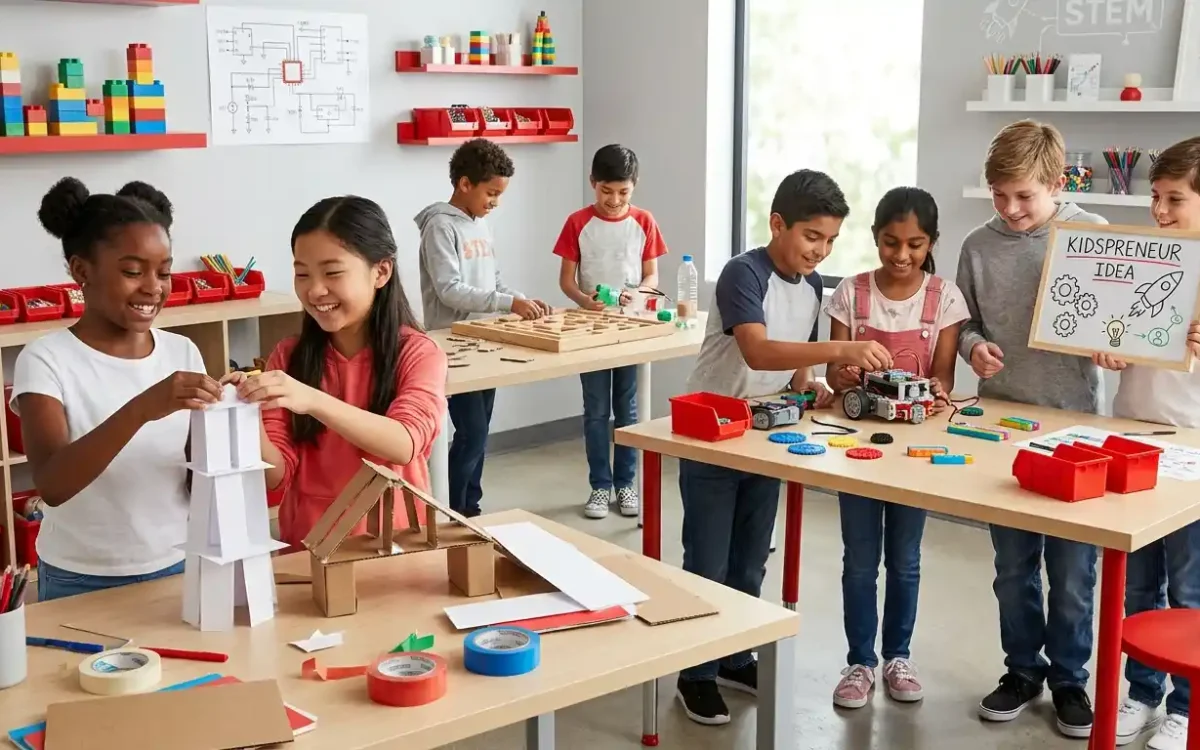
Build the Tallest Paper Tower
Give children paper, tape, and a few minutes to build the tallest freestanding tower possible.
Don't provide the solution. Let them experiment with different shapes and structures.
Create a Bridge With Household Materials
Challenge children to build a bridge that can support a small toy or stack of books.
Use items such as cardboard, paper cups, craft sticks, paper, tape, or recycled packaging.
After testing the bridge, ask: “What could make it stronger?”
Design a Marble Maze
Give children cardboard, paper rolls, tape, and a marble. Challenge them to create a maze that guides the marble from one point to another.
They can test the maze repeatedly and change sections that don't work.
Invent a Solution to a Real-Life Problem
Ask children to identify an everyday problem.
Examples include:
- Keeping school supplies organized
- Remembering homework
- Reducing food waste
- Keeping toys organized
- Saving water
Have them draw or build a solution.
Create a DIY Coding Game
Create a grid on the floor using paper or tape. One child becomes the “robot” while another gives instructions.
Add obstacles and a destination point.
Children must figure out the correct sequence of instructions to reach the destination.
Solve a Mystery Challenge
Create a simple mystery using clues around the house or classroom.
Children must examine each clue, eliminate possibilities, and determine the final answer.
Build a Balloon-Powered Car
Use lightweight recycled materials to build a small car powered by air released from a balloon.
Test different designs and see which one travels the farthest.
Create a Water Filter Experiment
With adult supervision, children can explore how different materials affect water clarity using a simple educational filtration experiment.
Discuss why water that looks clearer is not necessarily safe to drink.
Design a Sustainable City
Give children paper, cardboard, blocks, or recycled materials and ask them to build a city of the future.
Their city should include solutions for transportation, recycling, energy, water, parks, and housing.
Run a Mini Business
Let children create a small pretend business.
They can choose a product, identify customers, set a price, design packaging, and create a short sales pitch.
Create a Rescue Mission
Create an imaginary rescue scenario.
For example, a toy animal is stuck on the other side of a pretend river. Children must design a safe way to rescue it.
They can use blocks, string, cardboard, cups, and other safe materials.
Make an Egg-Drop Protection System
With appropriate adult supervision and a safe setup, children can design protective packaging around an egg or another fragile object.
The goal is to protect it during a controlled drop from a modest height.
Create a Future Robot
Ask children to design a robot that solves a specific problem.
It could help elderly people, clean parks, assist farmers, organize classrooms, or explore space.
Children can draw their robot and explain how it works.
Solve a Limited-Supplies Challenge
Give children a small number of materials and a challenge.
For example: “Build something that can carry five toy blocks using only ten sheets of paper and a limited amount of tape.”
Create Your Own Escape Room
Children can design a simple escape-room-style challenge for friends or family.
They can create clues, puzzles, codes, and a final challenge.
Plan a Zero-Waste Lunch
Ask children to design a lunch that minimizes unnecessary packaging and food waste.
Let them compare different options and explain their choices.
Design a Board Game
Ask children to create their own board game.
They need to develop rules, objectives, challenges, scoring, and a winning condition.
Build a Weather Station
Children can create a simple observation station using safe household materials.
They can record temperature, clouds, wind observations, or rainfall and look for patterns over time.
Invent a Helpful App on Paper
Children don't need to know programming to think like app designers.
Ask them to design an app that solves a problem. They can draw the home screen, buttons, menus, and features.
Create a “Shark Tank” Style Solution
Give children a real-world problem and challenge them to invent a product or service that solves it.
They can create a prototype from household materials and then present their idea to parents, teachers, or classmates.
Encourage them to explain the problem, their solution, who would use it, and why it is useful.
How Parents Can Encourage Problem-Solving at Home
Children don't become better problem solvers simply because they complete activities. The way adults respond to their ideas also matters.
When a child gets stuck, avoid immediately giving them the answer. Instead, ask questions that help them think.
“What have you tried so far?”
“What do you think might happen if you change this?”
“Is there another way to solve it?”
“What could you improve?”
“What did you learn from that attempt?”
Let Kids Learn From Mistakes
One of the most valuable parts of hands-on learning is that things don't always work the first time.
A tower might fall. A bridge might collapse. A maze might be too difficult. A business idea might need improvement.
These moments are not failures. They are opportunities for children to test, rethink, redesign, and try again.
This process is sometimes called iteration, and it is an important part of design thinking and problem-solving.
Why Hands-On Learning Complements Technology
Gen Alpha children are naturally familiar with digital devices, apps, games, and interactive technology. However, hands-on learning provides experiences that screens cannot completely replace.
- Children physically manipulate materials.
- They experience cause and effect.
- They learn to collaborate face-to-face.
- They practice patience and persistence.
- They see how ideas work in the physical world.
The best approach isn't necessarily choosing between technology and hands-on learning. Instead, children can benefit from combining both.
Hands-On Activities by Age
| Age Group | Recommended Focus | Example Activities |
|---|---|---|
| 5–7 | Exploration and simple problem-solving | Paper towers, sorting, simple mazes, building challenges |
| 8–10 | Logic, creativity, STEM, and teamwork | Bridges, coding games, inventions, mystery challenges |
| 11–13 | Innovation, entrepreneurship, and complex challenges | Business projects, app design, escape rooms, future inventions |
Future Skills Children Can Develop Through These Activities
Problem-Solving
Children learn how to identify challenges and develop possible solutions.
Critical Thinking
Kids learn to evaluate information, compare choices, and think before deciding.
Creativity
Open-ended challenges encourage children to generate original ideas.
Communication
Children explain their ideas, listen to others, and present their solutions.
Teamwork
Group projects teach children how to collaborate and share responsibilities.
Resilience
Trial and error teaches children to keep working when an initial idea doesn't succeed.
Final Thoughts
Gen Alpha children don't need every learning experience to happen on a screen. Some of the most valuable lessons can happen when they are building, designing, testing, creating, and figuring things out with their own hands.
These 20 activities can turn ordinary materials and everyday challenges into opportunities for meaningful learning.
The goal isn't always to find the perfect answer. It's to help children learn how to ask better questions, explore different possibilities, learn from mistakes, and keep trying.
When children learn to approach challenges with curiosity rather than frustration, they begin developing a mindset that can help them at school, at home, and eventually in the world of work.
Give children a challenge, give them room to experiment, and let them discover what they can create.
Frequently Asked Questions
1. Why are hands-on activities important for Gen Alpha kids?
Hands-on activities allow children to actively experiment, make decisions, test ideas, solve problems, and learn from mistakes. They can complement digital learning by giving children practical experiences.
2. What activities help children develop problem-solving skills?
Building challenges, DIY coding games, mystery puzzles, engineering projects, invention challenges, board-game design, entrepreneurship activities, and real-world problem-solving projects can help children practice problem-solving.
3. Can hands-on activities be done at home?
Yes. Many hands-on activities can be completed using simple household or recycled materials such as paper, cardboard, tape, blocks, cups, string, and craft supplies.
4. How can parents help children become better problem solvers?
Parents can give children open-ended challenges, ask guiding questions instead of immediately providing answers, encourage experimentation, and help children view mistakes as opportunities to improve.
5. Do hands-on activities need technology?
No. Many problem-solving activities can be completed without screens or digital devices. Building, designing, sorting, experimenting, role-playing, and creating physical prototypes can all develop valuable problem-solving skills.