



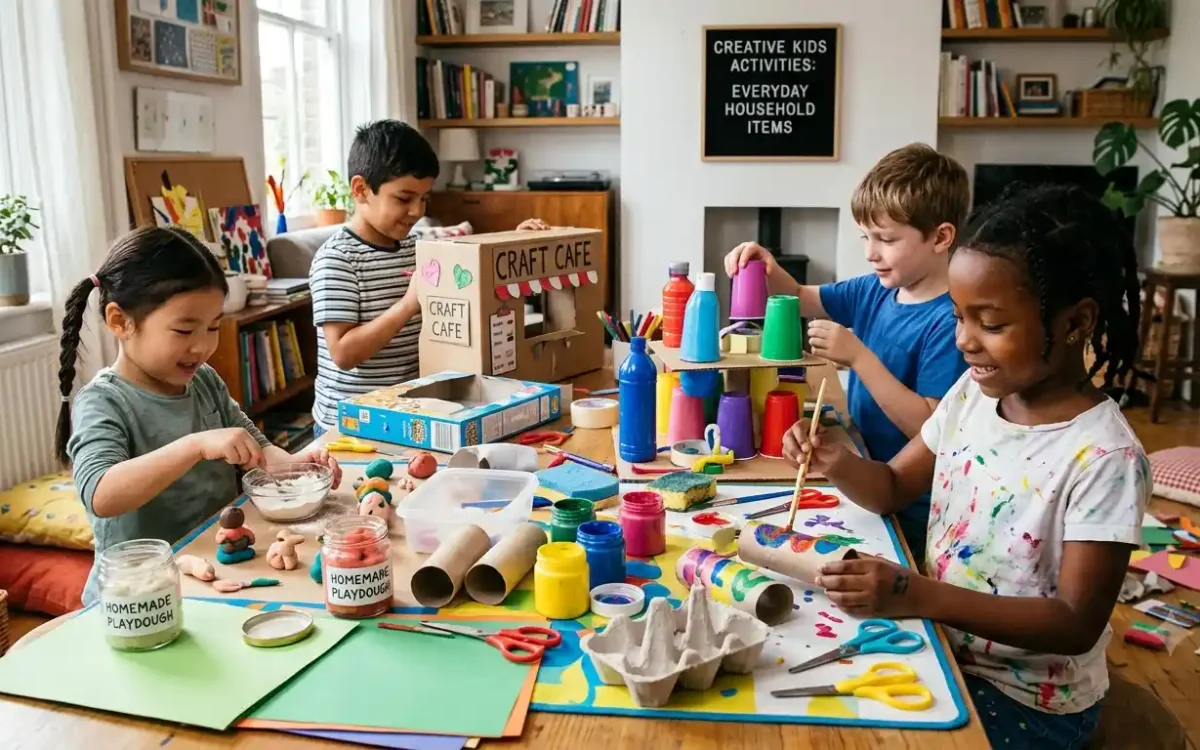
Parents often think they need expensive toys, learning kits, or the latest gadgets to keep children entertained. In reality, some of the most meaningful learning experiences come from ordinary items already found around the house.
Cardboard boxes, paper rolls, plastic bottles, newspapers, kitchen utensils, old magazines, and even socks can become tools for creativity, innovation, and problem-solving. These simple materials encourage children to imagine, build, experiment, and learn while having fun.
Whether you're looking to reduce screen time, save money, or encourage hands-on learning, everyday household items offer endless possibilities for educational play.
In this guide, we'll explore 30 creative kids activities that transform ordinary objects into exciting learning experiences.
Why Creativity Matters for Children
Creative play helps children think independently and explore new ideas. Instead of following instructions, they learn to ask questions, solve problems, and express themselves confidently.
Creative activities also improve:
- Critical thinking
- Communication
- Imagination
- Fine motor skills
- Confidence
- Teamwork
- Emotional intelligence
- Decision-making
These are essential skills for lifelong learning.
Household Items You Can Use
Before buying craft supplies, look around your home.
- Cardboard boxes
- Toilet paper rolls
- Newspapers
- Plastic bottles
- Bottle caps
- Egg cartons
- Paper cups
- Ice cream sticks
- Rubber bands
- Socks
- String
- Aluminium foil
- Empty jars
- Magazines
- Old clothes
- Kitchen spoons
- Buttons
- Shoeboxes
Most of these items would otherwise be thrown away, making them perfect for eco-friendly activities.
30 Creative Kids Activities Using Household Items
1. Build a Cardboard Castle
Transform large boxes into castles, spaceships, or playhouses.
Skills: Creativity, teamwork
2. Create Sock Puppets
Decorate old socks with buttons, yarn, and paper to create funny characters.
Skills: Storytelling, imagination
3. Build a Marble Maze
Use cardboard and drinking straws to design an exciting maze.
Skills: Engineering, problem-solving
4. Newspaper Fashion Show
Design creative outfits using newspapers and tape.
Skills: Innovation, teamwork
5. Bottle Bowling
Turn empty plastic bottles into bowling pins.
Skills: Coordination, physical activity
6. Egg Carton Caterpillars
Paint egg cartons and transform them into colourful insects.
7. DIY Musical Instruments
Create shakers, drums, and guitars using recycled materials.
8. Paper Roll Binoculars
Perfect for pretend adventures indoors or outdoors.
9. Build a Paper Bridge
See how much weight your bridge can hold.
10. Make a Time Capsule
Fill a container with drawings, letters, and favourite memories.
11. Recycled Robot Challenge
Build robots using boxes, bottle caps, and foil.
12. Family Story Dice
Write words or draw pictures on paper cubes to inspire stories.
13. Homemade Puzzle
Draw a picture and cut it into puzzle pieces.
14. Kitchen Band
Use pots, pans, and wooden spoons to create music.
15. Treasure Hunt
Write clues and hide them around the house.
16. Paper Airplane Tournament
Experiment with different airplane designs.
17. Shadow Puppet Theatre
Use a flashlight and paper cut-outs to perform stories.
18. Balloon Tennis
Use paper plates and sticks as paddles.
19. DIY Bird Feeder
Reuse bottles or cartons to create feeders for birds.
20. Build a Mini Garden
Plant herbs in old containers or jars.
21. Family Newspaper
Create news stories, interviews, weather reports, and cartoons.
22. Design Your Dream Shop
Use cardboard to create a pretend business.
23. Recycling Sorting Game
Teach children to separate recyclable materials correctly.
24. Create Greeting Cards
Use old magazines and coloured paper.
25. Make Paper Flowers
A relaxing craft that develops patience and creativity.
26. Indoor Obstacle Course
Use cushions, tape, and chairs to create movement challenges.
27. Bottle Cap Art
Arrange colourful bottle caps into creative pictures.
28. DIY Memory Game
Create matching cards using paper and markers.
29. Invent a Household Gadget
Challenge children to solve a simple everyday problem using recycled materials.
30. Family Innovation Challenge
Give everyone the same household items and see who creates the most useful invention.
Educational Benefits of Household Activities
These activities help children learn through experience rather than memorisation.
- Creativity
- Critical thinking
- Communication
- Engineering skills
- Financial awareness
- Leadership
- Collaboration
- Scientific curiosity
Encouraging Sustainability Through Creativity
Using household materials teaches children an important lesson: not everything needs to be thrown away.
- Recycling
- Waste reduction
- Environmental responsibility
- Resourcefulness
- Creative problem-solving
How Kidspreneur Inspires Creative Learning
At Kidspreneur, creativity is at the heart of every learning experience. We encourage children to think beyond textbooks and explore real-world challenges through hands-on projects.
Entrepreneurship
Children create products, design brands, and solve problems like young entrepreneurs.
STEM Learning
Interactive experiments introduce science, technology, engineering, and mathematics through practical exploration.
Artificial Intelligence
Young learners explore AI concepts in a simple, engaging way that sparks curiosity about future technologies.
Communication & Leadership
Presentations, storytelling, and collaborative activities help children express ideas with confidence.
Sustainability
Recycling and eco-friendly innovation projects teach children how creativity can make a positive impact on the environment.
Tips for Parents
- Keep a creativity box filled with safe recycled materials.
- Let children lead the activity instead of giving step-by-step instructions.
- Ask open-ended questions like, "What else could you build?"
- Celebrate original ideas rather than perfect results.
- Encourage teamwork between siblings or friends.
- Display finished creations to boost confidence.
Final Thoughts
Creative activities don't require expensive craft kits or high-tech gadgets. Everyday household items can become powerful tools for learning, imagination, and innovation.
From cardboard castles and sock puppets to recycled robots and DIY inventions, these activities help children develop essential life skills while having fun.
Every box, bottle, newspaper, or paper roll has the potential to become something extraordinary in the hands of a curious child.
Frequently Asked Questions
Cardboard boxes, toilet paper rolls, plastic bottles, newspapers, egg cartons, bottle caps, paper cups, old socks, magazines, jars, and kitchen utensils are excellent materials for creative children's activities.
Creative activities improve imagination, critical thinking, communication, confidence, fine motor skills, teamwork, and problem-solving while encouraging children to explore new ideas.
Parents can provide recycled materials, ask open-ended questions, allow children to experiment freely, praise effort and originality, and participate in creative projects together.
Yes. Hands-on creative activities provide engaging alternatives to digital devices, helping children stay active, focused, and socially connected while learning valuable skills.
Kidspreneur combines entrepreneurship, STEM, artificial intelligence, leadership, sustainability, and communication into interactive programs that inspire children to solve problems, think creatively, and develop future-ready skills.