

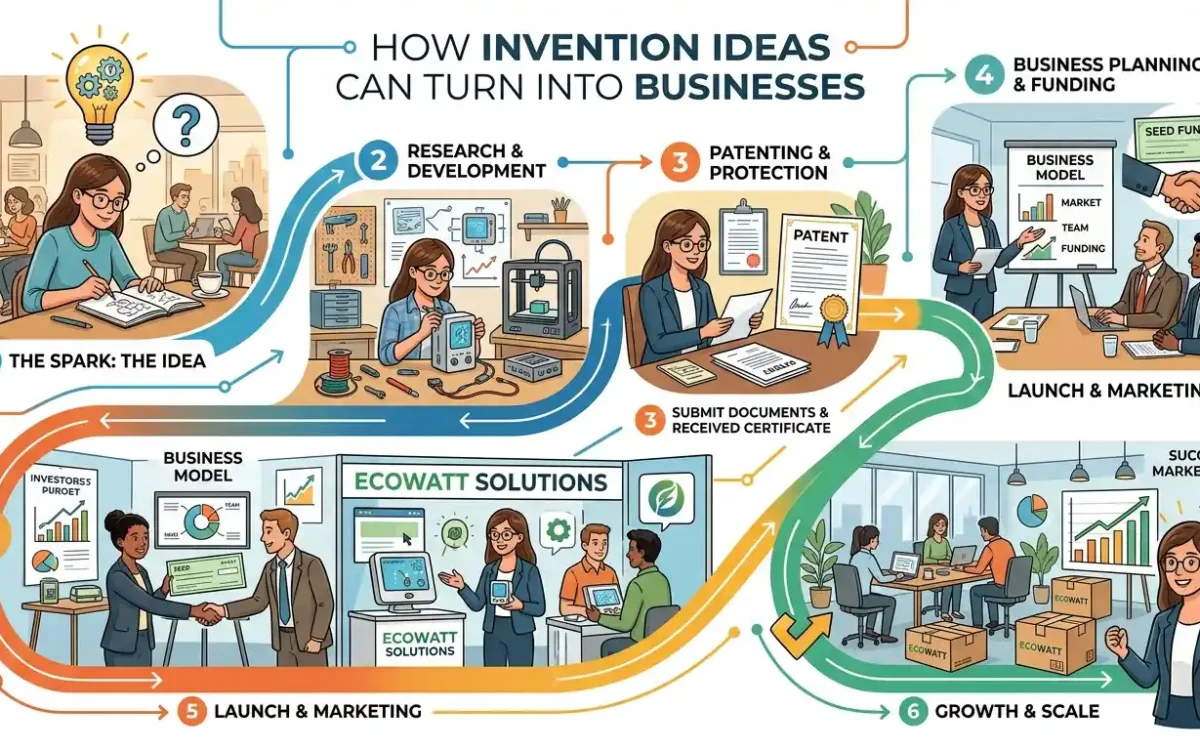
How Invention Ideas Can Turn Into Businesses
Introduction
Every successful business in the world started with a simple idea. From smartphones to everyday household tools, innovation has always been the foundation of entrepreneurship.
For young learners, understanding how invention ideas can turn into businesses is a powerful way to develop creativity, confidence, and real-world thinking. When children learn that their ideas have value, they start thinking like problem-solvers and future entrepreneurs.
This mindset helps them move beyond imagination and into action—turning ideas into solutions that people can actually use.
Why Invention Ideas Are the Start of Every Business
An invention is simply a new solution to a problem. A business is what happens when that solution is shared with others.
Many global companies started exactly like this. Someone noticed a problem, created an invention, and then built a business around it.
This is why invention thinking is such an important skill for children and students.
How Invention Ideas Become Real Businesses
1. Identifying a Real Problem
Every business starts with a problem people face.
For example:
- Too much homework stress
- Messy study tables
- Wasted water or electricity
- Lack of organization tools
When kids learn to observe problems, they unlock business thinking.
2. Creating a Simple Invention Idea
Once a problem is identified, the next step is idea generation.
Children can ask:
- How can this be solved?
- Can this be made easier?
- Can I design something new?
Even simple ideas can become powerful inventions.
3. Building a Prototype
A prototype is a basic model of the invention.
Kids can use:
- Cardboard
- Paper
- Plastic bottles
- Tape and glue
This helps them turn imagination into something real.
4. Testing the Idea
Testing helps improve the invention.
- Does it solve the problem?
- Is it easy to use?
- Can it be improved?
Every test makes the idea stronger.
5. Turning the Idea Into a Product
When the invention works, it becomes a product.
- Improve design
- Make it more attractive
- Add useful features
This is where creativity meets business thinking.
6. Understanding Value and Customers
A business only works when people find value in it.
Kids learn:
- Who will use this product?
- Why do they need it?
- How does it help them?
This introduces basic entrepreneurship skills for kids.
7. Marketing the Idea
Even great inventions need promotion.
- How to explain their idea
- How to present it confidently
- How to “sell” their concept
This builds communication and confidence.
8. Scaling Into a Small Business
If the idea works well, it can grow.
Examples:
- Selling handmade products
- Creating school projects for others
- Starting small home-based services
This is how invention ideas grow into real businesses.
Skills Kids Learn Through This Process
Creativity & Imagination
Generating innovative ideas and solutions.
Problem-Solving Skills
Finding practical answers to real-world challenges.
Entrepreneurial Mindset
Understanding value creation and innovation.
Confidence & Leadership
Taking initiative and sharing ideas confidently.
Communication Skills
Presenting ideas clearly and effectively.
Financial Awareness
Learning basic concepts of products, value, and customers.
Real-Life Example of Invention Turning Into Business
Many successful companies started as simple ideas:
- A better way to connect people → Social media platforms
- A solution for transport → Ride-sharing apps
- A simple communication tool → Messaging apps
These started small but became global businesses because someone believed in their idea.
Why Kids Should Learn Entrepreneurship Early
Teaching children business thinking early helps them:
- Think independently
- Solve real problems
- Understand value creation
- Become future innovators
- Build confidence in their ideas
Instead of only being consumers, they become creators.
Kidspreneur Approach to Innovation & Business Thinking
At Kidspreneur, we focus on teaching children how invention ideas can turn into businesses through practical learning.
We help kids move from idea → creation → innovation → entrepreneurship.
Our Programs Include:
The Oops Lab (STEM Learning)
Children learn how inventions work through experiments and engineering challenges.
Time Travel with AI
Introduces future technology and innovation-based thinking.
Eco Smart Kids
Teaches how eco-friendly ideas can become sustainable businesses.
Little Masters Studio
Builds creativity and product design thinking.
Entrepreneurship & Bootcamp Programs
Helps children turn ideas into real-world business concepts.
Understanding how invention ideas can turn into businesses helps children realize that their creativity has real value.
Every big company started with a small idea, and every young inventor has the potential to become a future entrepreneur.
When children learn to observe problems, create solutions, and think like innovators, they develop skills that last a lifetime.
👉 “My idea can make a difference.”
❓ FAQs
1. How can invention ideas turn into businesses?
By identifying a problem, creating a solution, building a product, and offering it to users.
2. Can kids start a business from invention ideas?
Yes, children can start small projects or home-based businesses with simple ideas.
3. Why are invention ideas important for entrepreneurship?
They help develop creativity, problem-solving, and value creation skills.
4. Do invention businesses require money to start?
No, many ideas can begin with simple and low-cost materials.
5. How does Kidspreneur help children in business thinking?
Kidspreneur provides STEM, AI, and entrepreneurship programs that teach real-world innovation skills.