

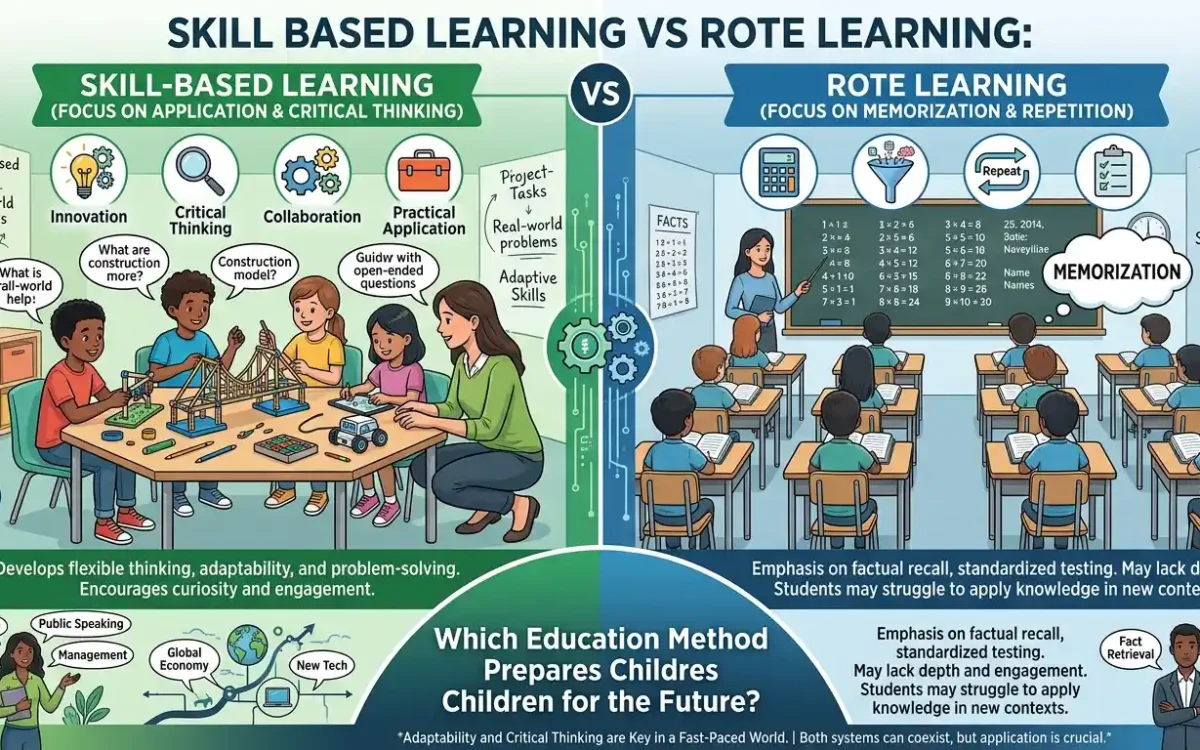
Skill Based Learning vs Rote Learning: Which Education Method Prepares Children for the Future?
The debate around skill based learning vs rote learning has become one of the biggest discussions in modern education. Parents, educators, and schools are increasingly realizing that memorization alone is no longer enough to prepare children for the future.
Today’s world requires creativity, communication, leadership, problem-solving, and innovation. This is why many education systems are shifting from traditional rote learning toward skill-based education.
What is Rote Learning?
Rote learning is a traditional teaching method where students memorize information through repetition without deeply understanding concepts.
Common Examples:
- Memorizing answers
- Repeating textbook definitions
- Learning formulas without practical application
- Focusing mainly on exams and grades
Rote learning has been widely used in traditional classrooms for many years.
What is Skill Based Learning?
Skill based learning focuses on practical understanding and real-world application of knowledge.
Instead of only memorizing information, children learn how to:
- Solve problems
- Think critically
- Communicate ideas
- Work in teams
- Apply concepts practically
This learning approach helps children become active participants in education.
Skill Based Learning vs Rote Learning
| Skill Based Learning | Rote Learning |
|---|---|
| Focuses on understanding | Focuses on memorization |
| Encourages creativity | Encourages repetition |
| Real-world application | Exam-focused learning |
| Develops critical thinking | Limited problem-solving |
| Hands-on activities | Passive learning |
Why Modern Education is Shifting Toward Skill Based Learning
The modern world demands skills that rote learning often fails to develop.
Future Skills Include:
- Communication
- Leadership
- Creativity
- Innovation
- Problem-solving
This is why understanding skill based learning vs rote learning is important for parents and educators.
Disadvantages of Rote Learning
While memorization can help in some situations, relying only on rote learning has limitations.
Common Problems:
- Reduces creativity
- Weakens independent thinking
- Increases exam pressure
- Limits real-world understanding
- Makes learning less engaging
Children may remember information temporarily but struggle to apply it practically.
Benefits of Skill Based Learning
Skill based education helps children become confident and future-ready learners.
Major Benefits:
- Better problem-solving abilities
- Improved communication skills
- Higher creativity and innovation
- Stronger confidence
- Practical understanding of concepts
Children learn by doing, exploring, and experimenting.
How Schools Use Skill Based Learning
Modern schools are introducing:
- Activity-based learning
- STEM education
- Project-based learning
- Entrepreneurship programs
- Group discussions and teamwork
These methods make education more interactive and meaningful.
Importance of Hands-On Learning
Hands-on learning is one of the strongest parts of skill-based education.
Children participate in:
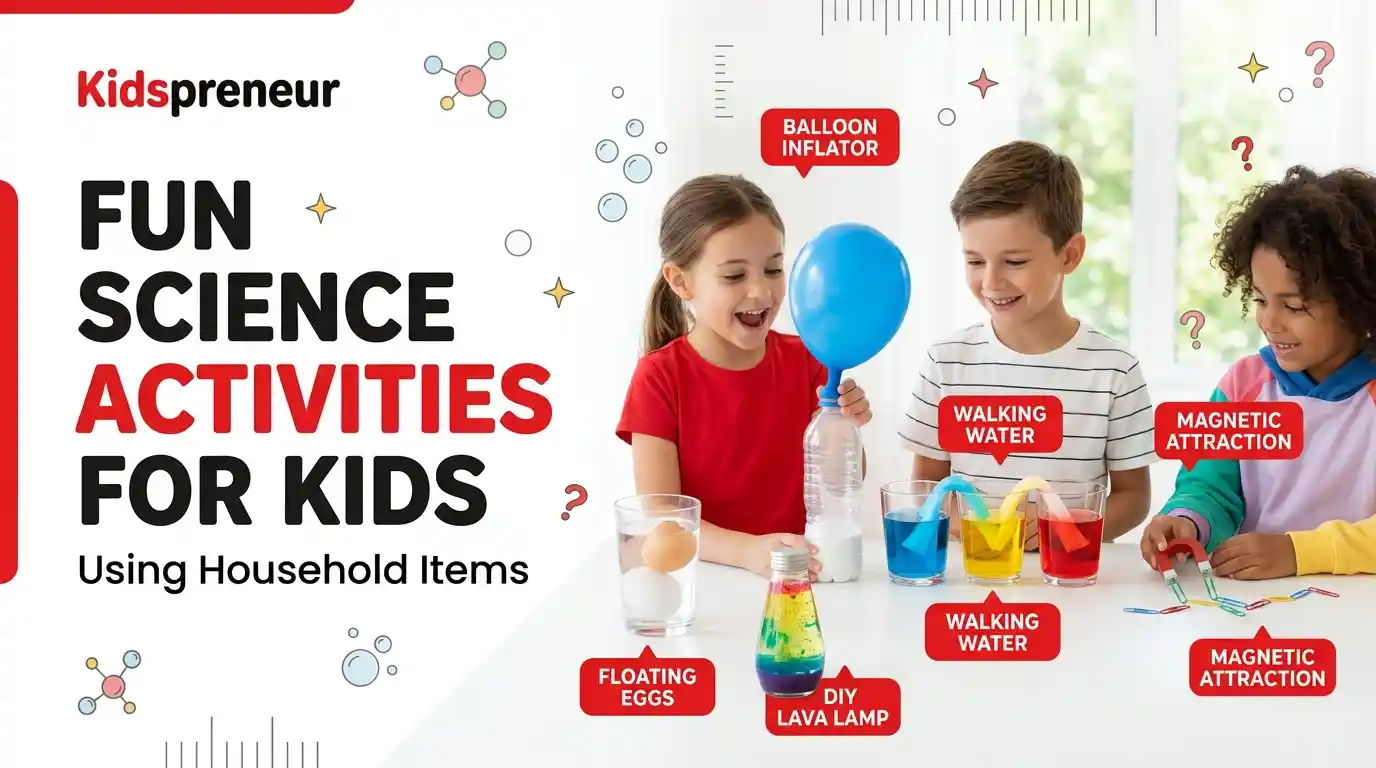
- Science experiments
- Creative projects
- Real-life simulations
- Team challenges
This practical involvement improves memory, understanding, and engagement.
Skill Based Learning Builds Soft Skills
Another major advantage in the debate of skill based learning vs rote learning is soft skill development.
Children improve:
- Leadership abilities
- Communication skills
- Emotional intelligence
- Teamwork and collaboration
These are essential for future careers and personal success.
Future Careers Need Skills, Not Just Grades
Technology and automation are changing the global job market rapidly.
Future employers increasingly value:
- Innovation
- Adaptability
- Creativity
- Critical thinking
This makes skill-based learning more important than ever before.
Kidspreneur Approach to Skill Based Learning
At Kidspreneur, we strongly believe in practical, hands-on education instead of passive memorization.
Our programs focus on:
- Entrepreneurship learning
- STEM education
- AI awareness
- Creativity development
- Problem-solving activities
We help children become:
- Independent thinkers
- Confident communicators
- Future innovators
All Theme Bundles
The All Theme Bundle is a complete learning journey that combines all Kidspreneur programs in one powerful experience.
Children gain exposure to:
- Entrepreneurship skills
- STEM learning
- AI awareness
- Creativity and innovation
- Real-world thinking
Journey Through Quran and Science
This course focuses on:
- Moral development
- Ethics and character building
- Positive values and responsibility
👉 Children learn how strong character supports leadership and success.
The Oops Lab (STEM Learning)
One of the most exciting STEM learning programs for children.
Kids explore:
- Science experiments
- Engineering activities
- Problem-solving challenges
- Logical thinking exercises
Time Travel with AI
A future-focused course introducing children to:
- Artificial Intelligence basics
- Future technology awareness
- Smart digital tools
👉 This program helps children understand the future of technology and innovation.
Little Masters Studio
A creativity-focused course that improves:
- Artistic thinking
- Design skills
- Imagination
- Fine motor abilities
Eco Smart Kids
This course teaches:
- Sustainability concepts
- Environmental awareness
- Recycling innovation
- Eco-friendly problem solving
Final Thoughts
The discussion around skill based learning vs rote learning clearly shows that modern education needs to move beyond memorization.
Children today need:
- Creativity
- Confidence
- Communication
- Leadership
- Problem-solving abilities
Skill-based learning prepares children not only for exams, but for life itself.
Frequently Asked Questions
1. What is the difference between skill based learning and rote learning?
Skill based learning focuses on practical understanding, while rote learning focuses on memorization.
2. Why is skill based learning important?
It helps children develop creativity, confidence, communication, and real-world problem-solving skills.
3. What are the disadvantages of rote learning?
Rote learning limits creativity, critical thinking, and practical understanding.
4. How does skill based learning help children?
It improves leadership, teamwork, communication, and future-ready abilities.
5. How does Kidspreneur support skill based learning?
Kidspreneur offers hands-on STEM, AI, creativity, and entrepreneurship programs focused on practical learning experiences.