

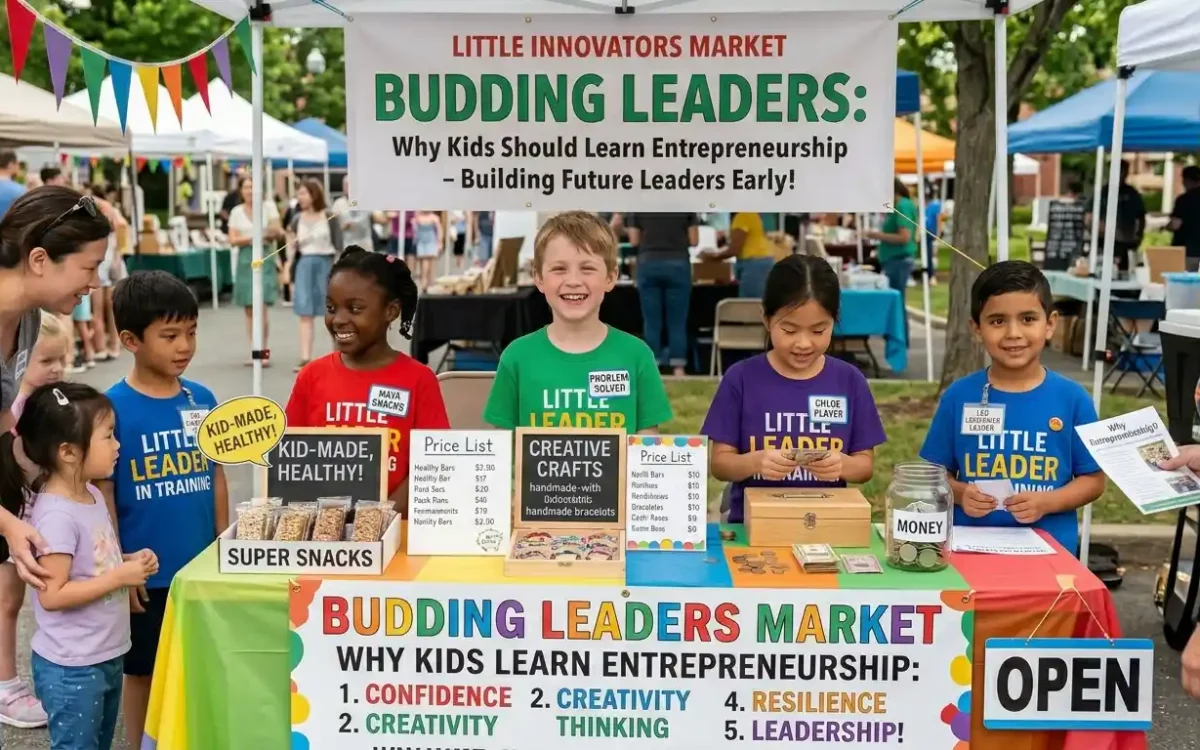
Why Kids Should Learn Entrepreneurship: Building Future Leaders from an Early Age

Why kids should learn entrepreneurship and how it builds confidence, creativity, leadership, and future-ready skills for lifelong success.
11
May
2026

Why Kids Should Learn Entrepreneurship: Building Future Leaders from an Early Age

Understanding why kids should learn entrepreneurship is becoming more important than ever in today’s fast-changing world. Children are growing up in an environment where creativity, innovation, and problem-solving are more valuable than memorization alone.

Entrepreneurship education helps children develop the mindset of a creator, thinker, and leader—not just a learner.

What is Entrepreneurship for Kids?

Entrepreneurship for kids is not about running big companies. It is about learning how to:

  • Identify problems
  • Think creatively
  • Build solutions
  • Take initiative
  • Learn from mistakes

It focuses on building a growth mindset from an early age.

Why Kids Should Learn Entrepreneurship Early

There are many strong reasons behind why kids should learn entrepreneurship in today’s education system.

1. Builds Confidence

Children learn to trust their ideas and express themselves without fear.

2. Encourages Creativity

Entrepreneurship allows kids to think outside the box and explore new ideas.

3. Develops Problem-Solving Skills

Kids learn how to analyze problems and find practical solutions.

4. Improves Decision-Making

They start making small decisions and understanding consequences.

5. Builds Independence

Children become more responsible and self-reliant.

How Entrepreneurship Shapes a Child’s Mindset

Entrepreneurship changes how children think.

Instead of:


  • “I can’t do it”

They learn:


  • “How can I do it?”

This shift is called an entrepreneurial mindset, and it is one of the most important skills for future success.

Traditional Learning vs Entrepreneurship Learning

Traditional Education Entrepreneurship Learning
Memorization-based Creativity-based
Fixed answers Open thinking
Exam-focused Skill-focused
Passive learning Active learning

Skills Kids Develop Through Entrepreneurship

When we understand why kids should learn entrepreneurship, we see many skill benefits:

Cognitive Skills:


  • Critical thinking
  • Problem-solving
  • Innovation

Practical Skills:


  • Basic financial understanding
  • Communication skills
  • Leadership skills

Personal Skills:


  • Confidence
  • Responsibility
  • Resilience

Real-Life Importance of Entrepreneurship for Kids

In the real world, success is not only about degrees—it is about skills.

Children who learn entrepreneurship early:

  • Adapt better to challenges
  • Think independently
  • Become future job creators instead of job seekers

Entrepreneurship and Future Jobs

The future job market is changing rapidly due to technology and automation.

Future needs:


  • Creative thinkers
  • Innovators
  • Problem solvers

This is another strong reason why kids should learn entrepreneurship today.

How Schools and Programs Support Entrepreneurship

Modern programs now include:

  • Activity-based learning
  • Project-based learning
  • Business simulations
  • Innovation labs

These methods help children learn by doing, not just reading.

Kidspreneur Approach to Entrepreneurship Learning

At Kidspreneur, we focus on answering why kids should learn entrepreneurship through practical learning experiences.

We help children:

  • Build real-world projects
  • Develop creative ideas
  • Learn through hands-on activities
  • Gain confidence through action

Our goal is to create future-ready innovators and leaders.

Frequently Asked Questions

1. Why should kids learn entrepreneurship?

Because it builds creativity, confidence, leadership, and problem-solving skills for the future.

Children can start learning basic entrepreneurial skills from age 7 onwards.

Yes, it helps every child develop essential life and thinking skills.

No, it is about developing a mindset of innovation and problem-solving.

It improves engagement, creativity, and real-world understanding of concepts.

Cart (0 items)
Cart (0 items)