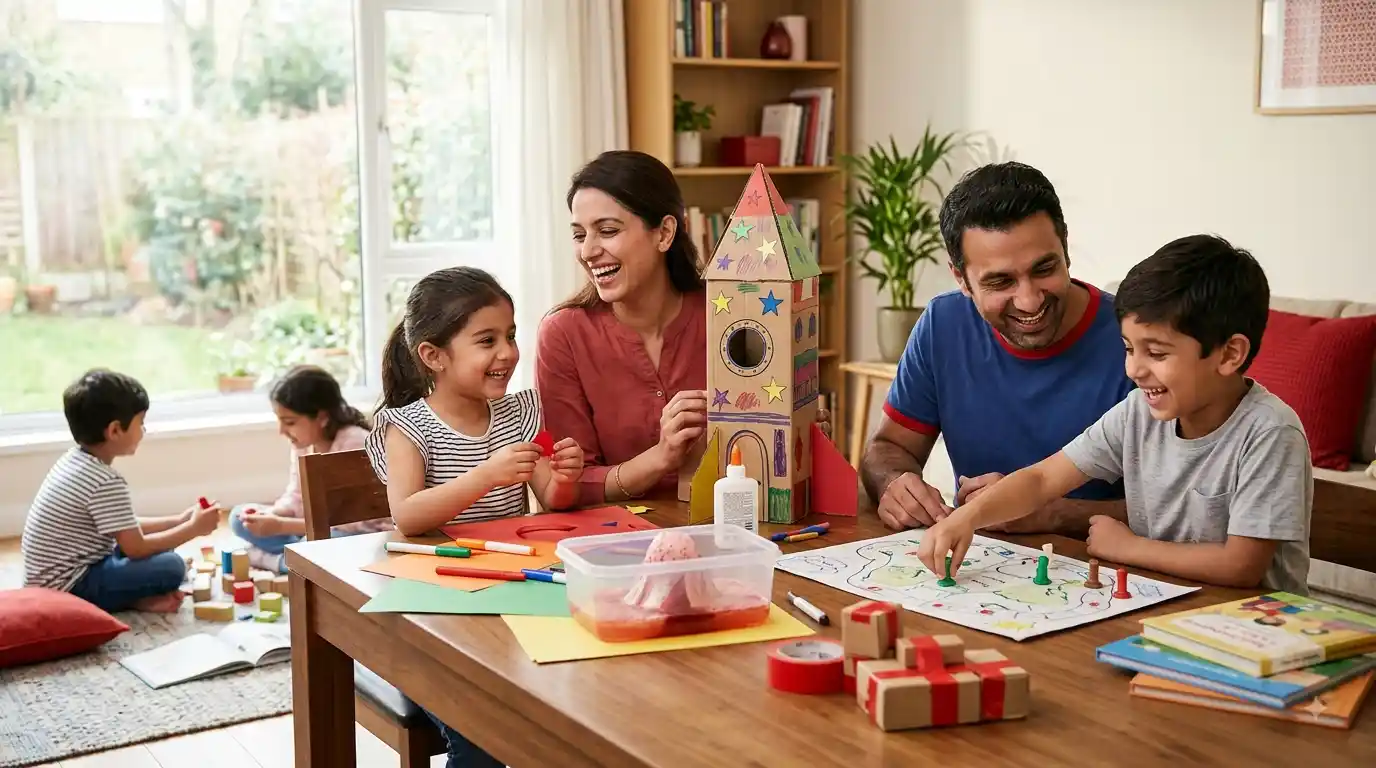




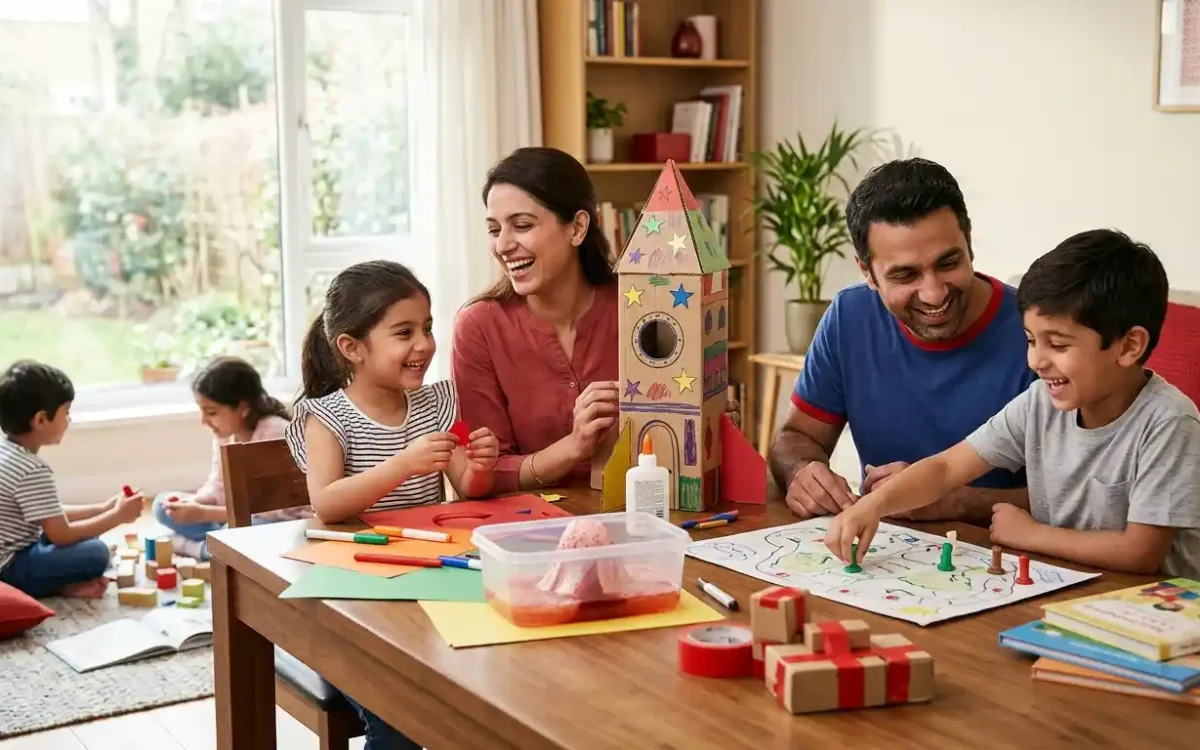
10 Budget-Friendly Kids Activities for Families
Keeping children entertained and learning doesn't have to be expensive. Discover 10 budget-friendly kids activities that families can enjoy using simple household items, creativity, and a little imagination.
Family time is valuable, but planning activities for children can sometimes feel expensive. Tickets, entertainment centers, toys, craft kits, and special outings can quickly add up.
The good news is that some of the most enjoyable kids activities for families cost very little—or absolutely nothing.
Children don't necessarily need expensive toys or elaborate entertainment. They need opportunities to explore, create, move, communicate, imagine, and spend meaningful time with the people around them.
With everyday household materials and a little creativity, parents can turn an ordinary afternoon into a memorable learning experience.
Why Choose Budget-Friendly Kids Activities?
Budget-friendly activities aren't just good for saving money. They can encourage children to use their imagination instead of relying on ready-made entertainment.
When children have limited materials, they often have to think creatively about how to use what is available.
Affordable family activities can help children develop:
- Creativity
- Problem-solving skills
- Communication
- Teamwork
- Confidence
- Fine motor skills
- Physical coordination
- Imagination
- Independence
- Early entrepreneurial thinking
10 Affordable Kids Activities Families Can Try
Create a Cardboard Box Adventure
Have an empty cardboard box at home? Don't throw it away just yet. Give it to your children and ask them what they can turn it into.
A box can quickly become a:
- Rocket ship
- Car
- House
- Castle
- Robot
- Shop
- Puppet theatre
Provide crayons, washable markers, paper, or stickers if you have them available.
The best part is that children get to decide what their creation becomes.
Have a Family Treasure Hunt
A treasure hunt can turn your home or backyard into an adventure without requiring expensive equipment.
Hide a few safe objects and create simple clues for children to follow.
Younger children can look for objects based on color or shape. Older children can solve simple riddles.
To make the activity more exciting, let children create a treasure hunt for the adults after finishing theirs.
Make a DIY Board Game
You don't need to purchase a board game to enjoy a family game night. Create your own.
Use a piece of cardboard or paper to draw a path with different spaces. Add simple rules such as:
- Move forward two spaces.
- Answer a question.
- Do a funny action.
- Go back one space.
- Take another turn.
Let children choose the game's theme and design the board.
Organize a Family Storytelling Night
Storytelling costs nothing and can become one of the most memorable family activities.
Choose a simple topic and let each family member add something to the story.
For example, begin with:
Each person adds one or two sentences before passing the story to the next family member.
Try a Kitchen Science Experiment
The kitchen can become a simple science laboratory with adult supervision.
Try safe experiments using common household ingredients, such as exploring what dissolves in water or comparing which objects float and sink.
Before each experiment, ask children what they think will happen. Then test their prediction.
Have a Family Art Challenge
Put some paper and crayons, pencils, or washable markers on a table. Give everyone the same creative challenge.
Try prompts such as:
- Draw your dream house.
- Create an imaginary animal.
- Design a futuristic city.
- Invent a new superhero.
- Draw a machine that helps families.
When everyone finishes, allow each person to explain their creation.
Go on a Free Nature Walk
You don't need to visit an expensive attraction to give children an interesting outdoor experience.
Take a walk around a safe local area, garden, or park and ask children to observe what they see.
Give them simple challenges:
- Find three different colors.
- Spot five different shapes.
- Listen for different sounds.
- Find different types of leaves.
- Look for insects from a safe distance.
Children can draw their favorite discovery after returning home.
Build Something From Recycled Materials
Save clean cardboard tubes, boxes, paper containers, and other safe recyclable materials for a creative building challenge.
Challenge children to create something useful or imaginative.
For example:
- A robot
- A pencil holder
- A toy vehicle
- A miniature house
- A bridge
- A new invention
This activity also gives parents an opportunity to talk about recycling and responsible use of materials.
Set Up a Pretend Family Shop
Turn a small area of your home into a pretend shop.
Use empty clean food packages, toys, paper signs, and homemade play money.
Children can take turns being the customer and shopkeeper. They can practice choosing products, counting pretend money, greeting customers, and explaining their products.
Parents can introduce simple questions such as: "Why would someone buy this?" or "How could you make your shop more interesting?"
Have a Family No-Screen Challenge
Choose an hour or an afternoon when everyone puts their screens away.
Use the time for conversation, games, drawing, reading, cooking, building, storytelling, or outdoor play.
Let children choose some of the activities so they feel involved in planning the family time.
How to Make Family Activities More Affordable
Creating a family activity budget doesn't mean you need to stop having fun. It simply means being more creative about how you spend your time.
Use What You Already Have
Before purchasing activity supplies, check your home. Paper, cardboard, books, toys, containers, crayons, and recycled materials can support many activities.
Rotate Activities
You don't need a new activity every day. Repeat popular activities with a different challenge.
For example, a cardboard box can become a rocket one week and a shop the next week.
Let Children Help With Preparation
Preparing an activity can be part of the activity itself. Let children gather materials, organize objects, create signs, or design the rules.
Family Activity Tip
Instead of asking, "What should we buy for the kids today?" try asking, "What can we create with what we already have?"
This simple question can encourage creativity while helping families avoid unnecessary spending.
Why Simple Activities Can Be Better Than Expensive Entertainment
Expensive entertainment can certainly be enjoyable, but it isn't the only way children can have meaningful experiences.
A homemade game often gives children something that ready-made entertainment cannot: the opportunity to participate in creating the experience itself.
When children design a board game, invent a story, build a cardboard robot, or create a pretend shop, they aren't simply consuming entertainment. They are actively creating something.
Budget-Friendly Activities Can Support Learning
Affordable activities can also become learning opportunities.
Counting play money introduces basic mathematics. Storytelling develops communication. Building with cardboard encourages problem-solving. Nature walks develop observation. Recycling projects introduce sustainability.
This means parents don't have to choose between "fun" and "learning." The two can happen together.
Encouraging Entrepreneurship Through Simple Family Activities
Children can begin exploring entrepreneurship through everyday play.
A pretend shop, for example, allows children to think about products, customers, prices, communication, and value.
Parents can take this one step further by asking children to design their own product.
Ask them:
- What problem does your product solve?
- Who would use it?
- What would you call it?
- How would you tell people about it?
- What makes it different?
These questions encourage children to think creatively and communicate their ideas.
Family Activities for Different Age Groups
The best activity depends partly on the child's age and developmental stage.
For Younger Children
Focus on simple sensory play, drawing, sorting, movement, storytelling, building, and pretend play.
For School-Age Children
Introduce puzzles, science challenges, board games, crafts, nature activities, invention challenges, and simple entrepreneurship games.
For Older Children
Give them more responsibility by allowing them to design activities, organize family games, create products, solve challenges, or teach younger siblings a skill.
Creating Meaningful Family Time
Family activities don't have to last for hours.
Even 20 or 30 minutes of focused family time can give children an opportunity to talk, laugh, create, and learn together.
Put away distractions when possible and give children your attention. Sometimes the most valuable part of an activity isn't the activity itself— it's the conversation that happens while doing it.
How Kidspreneur Encourages Creative Learning
At Kidspreneur, children are encouraged to learn through curiosity, creativity, practical experiences, and exploration.
Learning opportunities can introduce children to areas such as:
- Entrepreneurship
- STEM
- Artificial intelligence
- Innovation
- Creativity
- Communication
- Leadership
- Sustainability
These areas help children build skills that can support them both inside and outside the classroom.
A Simple Weekly Family Activity Plan
If you want to introduce more affordable activities into your family's routine, try a simple weekly plan.
- Monday: DIY building challenge
- Tuesday: Family storytelling
- Wednesday: Art challenge
- Thursday: Nature walk
- Friday: Pretend shop
- Saturday: Family board game
- Sunday: No-screen family afternoon
You can adjust the plan based on your family's schedule, children's ages, and interests.
Final Thoughts
Fun family experiences don't have to come with a large price tag. Some of the best kids activities can begin with a cardboard box, a piece of paper, a few household objects, or simply a conversation.
The goal isn't to entertain children every minute of the day. It is to give them opportunities to explore, create, communicate, move, think, and spend meaningful time with their family.
By choosing affordable activities, families can save money while creating experiences that children may remember for years.
Fun Doesn't Have to Be Expensive
The next time your child says, "I'm bored," look around before reaching for your wallet.
A box can become a rocket. A sheet of paper can become a board game. A walk can become a science adventure. And a family conversation can become a story.
With creativity, everyday moments can become meaningful learning experiences.
Frequently Asked Questions
1. What are some budget-friendly kids activities for families?
Families can try cardboard crafts, treasure hunts, DIY board games, storytelling, nature walks, recycled-material projects, family art challenges, pretend shops, simple science activities, and no-screen family games.
2. How can I keep my children entertained without spending money?
Use materials you already have at home and focus on creative activities such as drawing, building, storytelling, treasure hunts, nature walks, pretend play, and homemade games. Children often enjoy creating their own entertainment.
3. Are inexpensive kids activities also educational?
Yes. Affordable activities can develop creativity, communication, problem-solving, counting, observation, teamwork, confidence, scientific thinking, and other important skills.
4. What household items can be used for kids activities?
Families can use paper, cardboard boxes, crayons, books, clean recyclable containers, toys, cups, and other safe household items. Materials should always be suitable for the child's age and used with appropriate supervision.
5. How can family activities support children's future skills?
Family activities can help children practice creativity, communication, teamwork, problem-solving, decision-making, independence, and entrepreneurship. These skills can support learning and personal development as children grow.
Search
Recent Posts
13 August, 2026
12 Creative Kids Activities Using Household Items
13 August, 2026
10 Fun Kids Activities for Rainy Days