




Keeping a child entertained can sometimes feel like an actual job. After school, on weekends, during the long stretch of school holidays — that familiar phrase always shows up eventually: "I'm bored!"
Here's the good news, though: kids don't need expensive toys, constant outings, or hours glued to a screen to actually stay engaged. Simple, hands-on activities can genuinely hold their attention while quietly teaching them something useful along the way.
The best activities for keeping kids entertained are the ones that blend fun with creativity, movement, curiosity, and real interaction with other people. From building things to exploring the outdoors, the right activity can turn a completely ordinary afternoon into something they'll actually remember.
Here are five genuinely fun, practical activities worth trying — at home, over the weekend, or during a school break.
Why Do Activities Even Matter for Kids?
Children naturally learn by poking around and trying things out. When they're actually doing something instead of just watching or listening, they get real chances to practice skills that matter in the actual world.
Good activities help kids:
- Build creativity
- Get better at communicating
- Grow their confidence
- Sharpen their problem-solving
- Practice genuine teamwork
- Improve their focus
- Build independence
- Stay physically active
- Discover new interests
Fun and learning were never really separate things. A well-thought-out activity can genuinely deliver both at once.
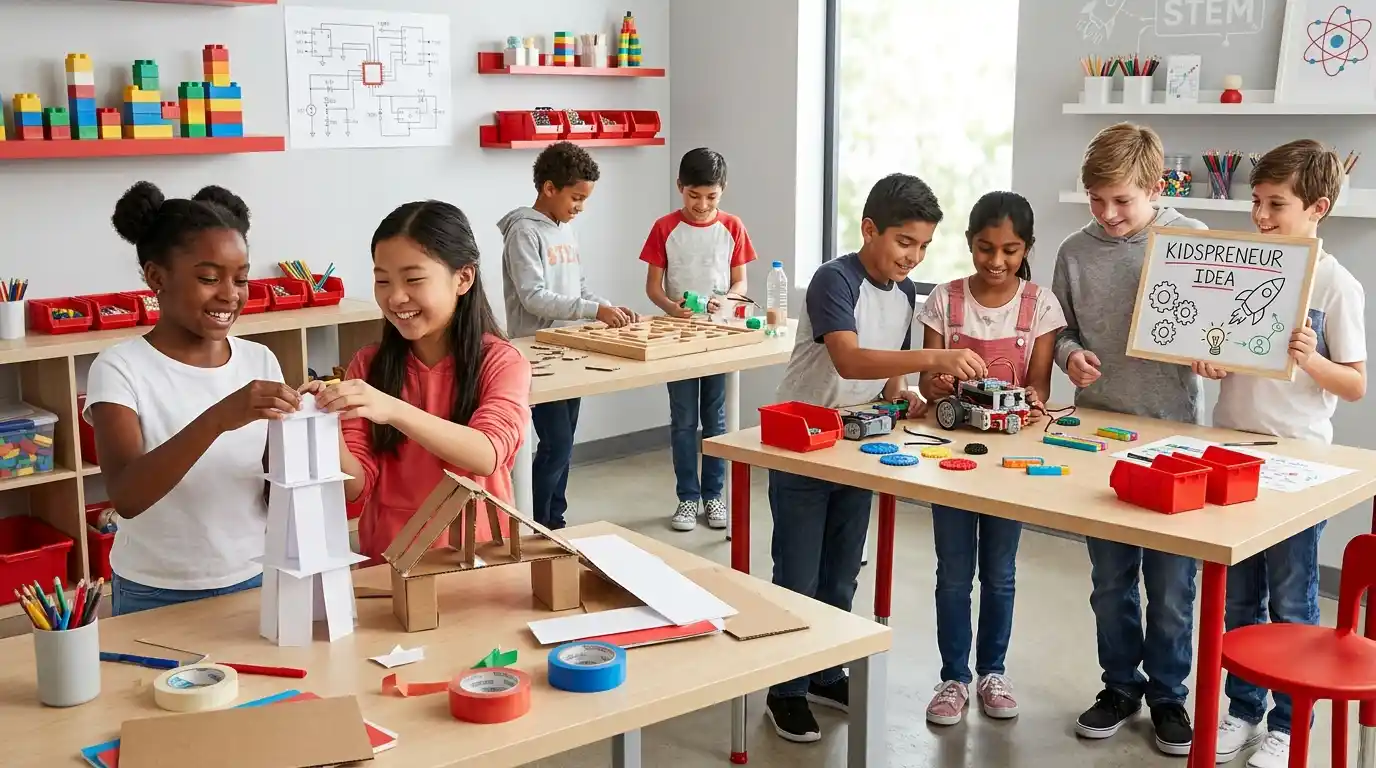
1. Set Up a DIY STEM Challenge
STEM activities are a genuinely great way to keep a curious kid busy.
You don't need a fancy science kit — most challenges can be pulled together with whatever's already lying around the house.
A few ideas to try:
- Build a bridge out of paper or cardboard
- Build a tower using drinking straws
- Design a paper airplane and test how far it actually flies
- Build a marble maze
- Make a balloon-powered car
- Put together a simple water filtration model
Rather than showing them exactly how to do it, hand them a genuine challenge instead.
Something like: "Can you build a bridge that holds 10 books?"
Suddenly, it's not a craft project anymore — it's a real problem to solve.
What kids actually learn: critical thinking, real engineering basics, creativity, experimentation, persistence, and problem-solving.
The best part is what happens when it fails. If the bridge collapses, that's not the end — it's a chance to redesign and try again. That's a genuinely valuable lesson on its own.
2. Turn Arts and Crafts Into an Actual Project
Arts and crafts are a classic go-to, but they can be a lot more than just coloring inside the lines.
Give the activity a real purpose. Ask them to design:
- A handmade greeting card
- A family poster
- A cardboard city
- A superhero character
- A sculpture made from recycled materials
- A bookmark collection
- A miniature shop
- A comic book
Instead of pushing for a "perfect" result, let them make their own creative calls.
Ask questions like: "Why did you choose that design?" or "What's the story behind your character?"
Those small conversations turn an art project into a genuine exercise in communication and storytelling.
What kids actually build: imagination, fine motor skills, self-expression, communication, confidence, and decision-making.
3. Plan an Outdoor Adventure
Kids genuinely need chances to move, explore, and experience the world beyond a screen.
An outdoor adventure doesn't need to mean a big, expensive trip. A local park, a garden, a playground, or just a safe patch of outdoor space can turn into a genuinely exciting learning environment.
Try a nature scavenger hunt. Put together a list of things to find, like:
- A yellow flower
- Three different types of leaves
- A bird
- Something shaped like a circle
- A smooth stone
- An insect
- A tree with unusual bark
Older kids can take photos or jot down what they notice as they go.
Other genuinely great options: bike rides, a family cricket match, football, an obstacle course, a nature walk, outdoor drawing, or a treasure hunt.
Why this actually matters: outdoor play gets kids moving physically while building real observation skills, independence, and social confidence. It's also a genuinely good excuse for parents to spend real, unhurried time with their kids.
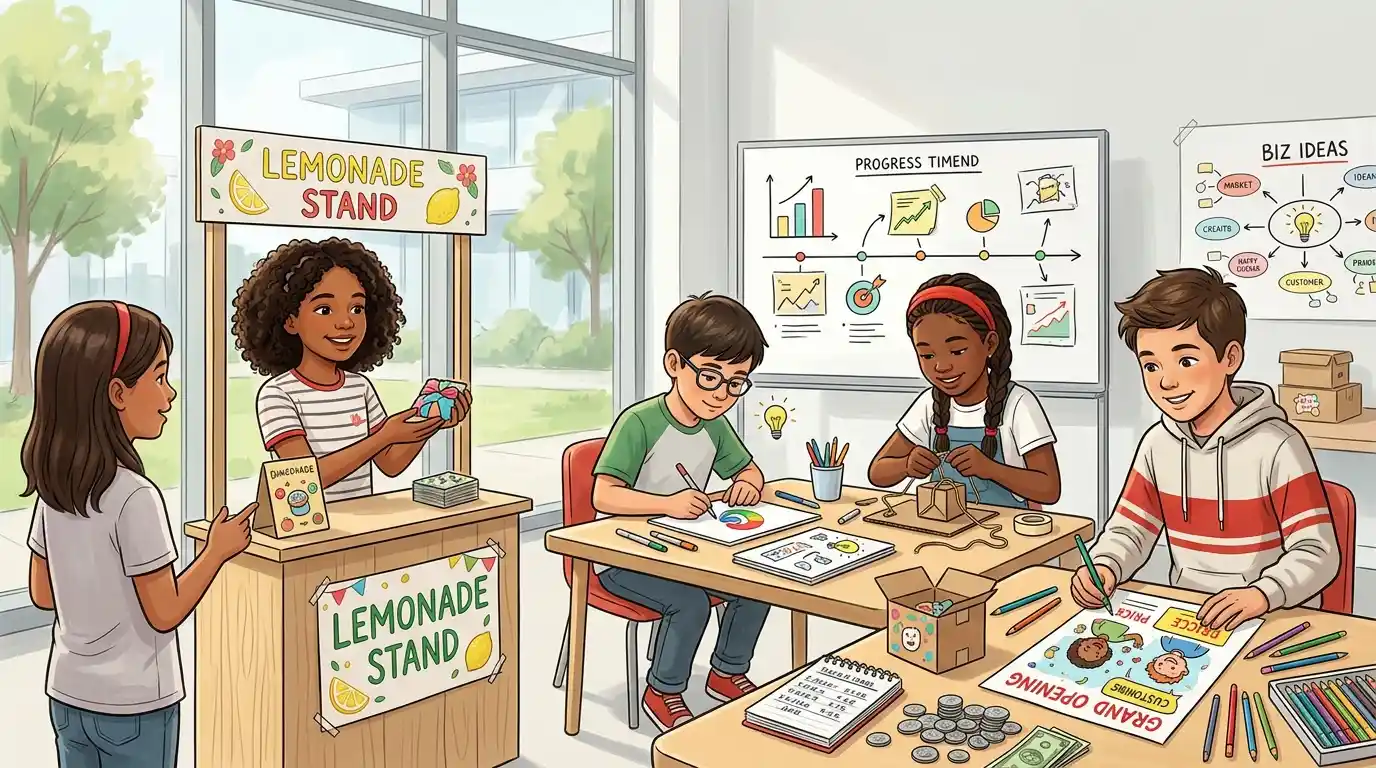
4. Start a Mini Business Challenge
Entertainment can also teach kids something real about how the world actually works.
A mini entrepreneurship challenge is a genuinely great fit for kids who love creating, selling, organizing, or just solving problems.
Give them a simple prompt: "Can you make something people would actually want to buy?"
They might come up with handmade bookmarks, greeting cards, simple crafts, artwork, baked treats (with a bit of adult supervision), gift bags, or plant pots.
Then walk them through a few real questions:
- What will you actually make?
- Who might genuinely buy it?
- How much will it cost you to make?
- What price should you actually charge?
- How will you tell people about it?
- What will you do with the money afterward?
Suddenly, play has turned into a genuinely practical first taste of entrepreneurship and financial thinking.
What kids actually practice: creativity, communication, budgeting, decision-making, leadership, customer service, and problem-solving.
They also pick up something genuinely important along the way — an idea only becomes valuable once it actually solves a problem or offers something people want.
5. Organize a Family Learning and Game Night
Sometimes the best activity really is just spending time together.
Set up a weekly family night where everyone genuinely takes part — games, challenges, a bit of learning, all mixed in.
Quiz Challenge
Put together questions on science, animals, geography, history, or general knowledge.
Storytelling Challenge
Give everyone three random words and have them build a story using all three.
Board Games
Pick something age-appropriate that genuinely rewards strategy and teamwork.
Family Debate
Choose a light, low-stakes topic and let the kids explain their opinions respectfully.
Puzzle Challenge
Work together on jigsaw puzzles, riddles, Sudoku, or logic puzzles.
Family activities give kids genuine chances to communicate and learn, all while actually enjoying time with parents and siblings — which, honestly, matters just as much as the activity itself.
How to Actually Pick the Right Activity for Your Child
Not every kid enjoys the same kind of fun.
Some genuinely love building things. Others would rather draw, read, play sports, or tell stories. That's completely normal, and worth working with rather than against.
When picking an activity, it's worth thinking about your child's:
Age
Match the activity to where they're actually at developmentally.
Interests
If they love animals, lean into nature activities. If they're into technology, introduce coding or STEM projects.
Personality
Some kids genuinely thrive in group activities; others do their best work solo.
Skill Level
The activity should be challenging enough to stay interesting, without tipping into genuine frustration.
The goal was never to keep a child busy every single minute. It's to help them stumble onto things they genuinely enjoy.
Cutting Down Screen Time Without a Fight
Screens have their place for both learning and fun, sure — but kids also genuinely need hands-on experiences that a screen can't replace.
Instead of just saying "no more screen time," offer something genuinely interesting instead.
- Playing a game on a tablet → Build your own board game instead.
- Watching a science video → Actually perform a simple science experiment.
- Watching cartoons → Create your own comic character and story.
Framed this way, stepping away from the screen feels like an upgrade, not a punishment.
Learning Doesn't Have to Announce Itself
Kids don't always need to know they're learning something for it to genuinely count.
A kid building a cardboard bridge is quietly picking up basic engineering. A kid running a pretend shop is genuinely learning financial literacy. A kid organizing a family game night is practicing real leadership. A kid telling a story is building genuine communication skills.
That's really the whole power of activity-based learning. When a child's genuinely curious and actively involved, learning just becomes part of the play — no lecture required.
How Kidspreneur Encourages Learning Through Activities
At Kidspreneur, kids are encouraged to learn through creativity, exploration, and genuinely hands-on experiences. Our activity-based approach touches on:
Entrepreneurship
Kids explore real ideas, business concepts, financial literacy, and problem-solving.
STEM
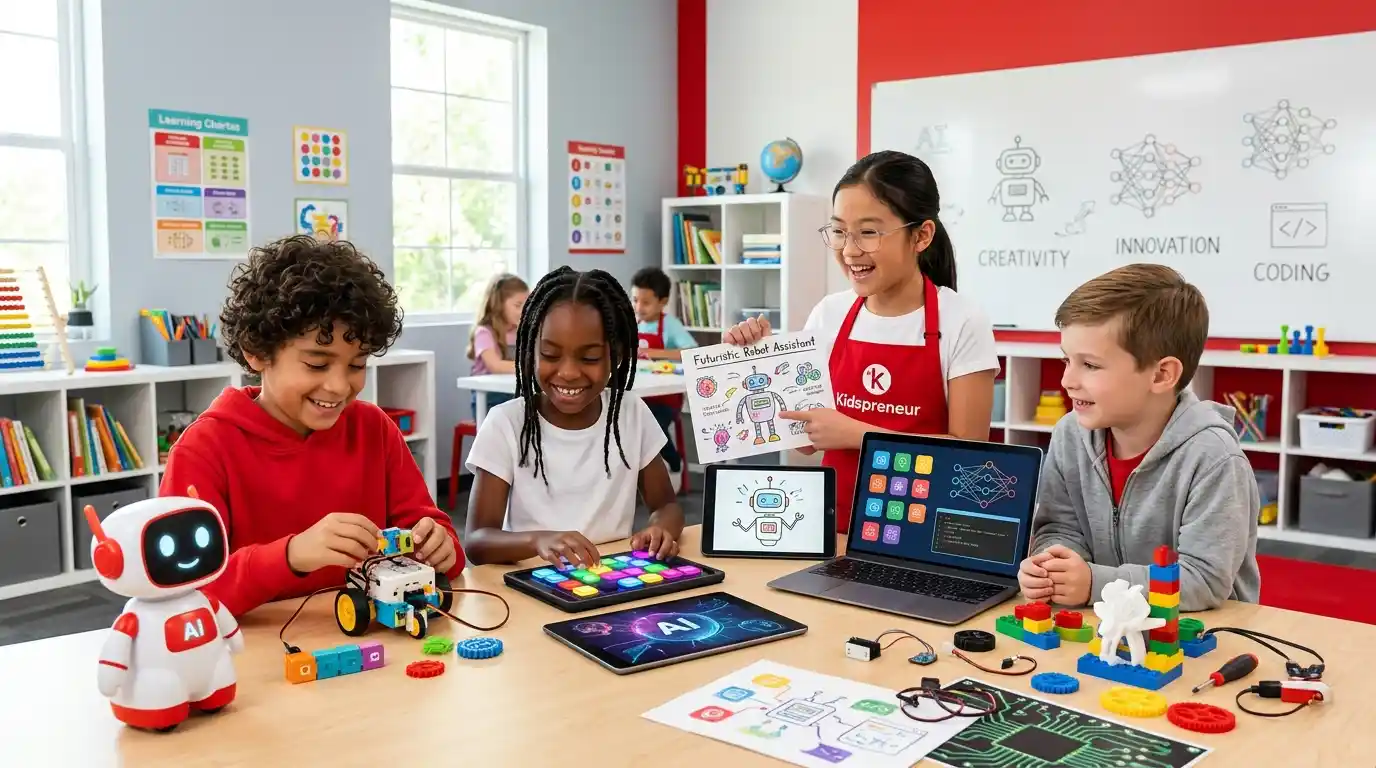
Hands-on projects build scientific thinking, experimentation, engineering, and genuine innovation.
Artificial Intelligence
Age-appropriate activities introduce kids to emerging technology and future-focused thinking.
Communication and Leadership
Presentations, teamwork, storytelling, and collaborative projects help build genuinely confident communicators.
Creativity
Kids are encouraged to develop their own original ideas and turn imagination into something real.
Sustainability
Eco-friendly activities build genuine awareness around using resources responsibly.
These experiences help kids build skills that go well beyond what a typical classroom covers.
A Simple Weekly Activity Plan
For parents wanting a bit of structure, here's a simple weekly rhythm worth trying:
| Day | Activity | Main Skill |
|---|---|---|
| Monday | DIY STEM Challenge | Problem-solving |
| Tuesday | Arts & Crafts | Creativity |
| Wednesday | Outdoor Adventure | Observation & Fitness |
| Thursday | Mini Business Challenge | Entrepreneurship |
| Friday | Family Game Night | Communication |
| Saturday | Sports or Nature Walk | Teamwork |
| Sunday | Reading & Storytelling | Language |
None of this needs to be followed rigidly. The real point is simply giving kids different chances to learn and genuinely have fun across the week.
Final Thoughts
Keeping kids entertained genuinely doesn't require expensive activities or a tightly mapped-out schedule.
These five ideas a STEM challenge, a creative craft project, an outdoor adventure, a mini business, or a family game night — can turn an ordinary afternoon into something genuinely memorable.
What actually matters most is giving kids the chance to create, explore, communicate, move, and solve real problems.
When parents turn everyday moments into genuine hands-on learning, kids get to have fun while quietly building skills that'll help them at school, at home, and well into the future.
So next time your child says "I'm bored," don't reach straight for the tablet.
Instead, just ask: "What can we create today?"
That one simple question might just lead to an afternoon of real discovery — and maybe even a brand-new passion.
Frequently Asked Questions
STEM experiments, arts and crafts, outdoor adventures, family games, storytelling, puzzles, and mini entrepreneurship projects are great activities to keep children entertained while helping them learn.
Try creative activities such as drawing, crafting, gardening, cooking, reading, nature walks, DIY projects, board games, and simple science experiments. Letting children choose the activity can make them more interested.
Arts and crafts, storytelling, DIY inventions, building projects, photography, creative writing, and designing their own games can help children develop imagination and creative thinking.
Parents can try STEM challenges, reading activities, puzzles, family quizzes, cooking, budgeting games, DIY projects, and mini business challenges. These activities combine learning with entertainment.
Kidspreneur uses hands-on activities to introduce children to entrepreneurship, STEM, AI, leadership, communication, creativity, and sustainability. These experiences help children build confidence and practical skills while learning through fun projects.