




10 Kids Activities for Kindergarten Students
Kindergarten is an exciting stage when children begin developing new academic, social, creative, and problem-solving skills. These 10 fun kids activities for kindergarten students make learning more interactive while encouraging children to explore, create, communicate, and have fun.
Kindergarten children are naturally curious. They want to know how things work, why things happen, and what they can create themselves. This curiosity makes the kindergarten years an ideal time to introduce learning through hands-on activities.
Fortunately, parents and teachers don't need expensive equipment or complicated lesson plans to keep young learners engaged. Simple materials, everyday objects, movement, stories, games, and creative challenges can become valuable learning experiences.
The best kids activities for kindergarten students balance learning and play. They allow children to practice important skills without making learning feel like a difficult task.
Why Activities Are Important for Kindergarten Students
Young children learn differently from older students. They benefit from opportunities to interact with their environment instead of simply listening to information.
Hands-on activities can support the development of:
- Early literacy skills
- Early mathematics skills
- Communication
- Creativity
- Fine motor coordination
- Gross motor skills
- Problem-solving
- Confidence
- Teamwork
- Independence
Activities also give children opportunities to learn from mistakes. When a child builds something that falls down or solves a puzzle incorrectly, they can try a different approach and discover that learning is a process.
10 Fun and Educational Activities for Kindergarten Children
Build a Colorful Block Tower
Building blocks are a simple but powerful learning tool for kindergarten students. Give children different-sized blocks and challenge them to build the tallest tower they can.
Once they have built their tower, introduce additional challenges. Ask them to create a bridge, house, school, or imaginary city.
You can also ask children to sort blocks by color or size before beginning their construction project.
Letter and Sound Hunt
Turn early literacy practice into a fun classroom or home treasure hunt. Choose a letter and ask children to find objects that begin with that sound.
For example, if the letter is "B," children might look for a ball, book, bag, or block.
Encourage them to say the word aloud and identify its beginning sound.
Counting and Sorting Game
Kindergarten is an important time for developing early mathematical understanding. Use safe everyday objects, toys, or classroom materials for a simple sorting game.
Ask children to group objects by color, shape, size, or type. Then encourage them to count each group.
You can make the activity more challenging by asking:
- Which group has more?
- Which group has fewer?
- How many objects are there altogether?
- Can you make two groups with the same number?
Create a Story From Pictures
Storytelling is an excellent activity for developing language and imagination.
Show children three or four simple pictures and ask them to create a story connecting the images.
The story could include a character, a problem, and a solution. Children can draw additional pictures to illustrate their story.
Don't worry about grammar or perfect sentences. The goal is to encourage children to express their ideas.
Paper Plate Creativity Challenge
Give children paper plates, crayons, washable markers, paper, and other safe craft materials.
Ask them to transform the plate into something imaginative. It could become an animal, character, planet, mask, sun, or completely new invention.
Once finished, ask each child to explain what they created and why they chose their design.
Simple Science Experiment
Kindergarten students love discovering what happens when they experiment with everyday materials.
Try a simple floating and sinking activity using safe household objects and a container of water.
Before placing each object in the water, ask children to predict whether it will float or sink.
After testing the objects, talk about what happened.
Music and Movement Game
Children need opportunities to move, especially after periods of quiet learning.
Play music and encourage children to dance, march, clap, or move like different animals.
You can also play a freeze-dance game. Children move while the music plays and freeze when it stops.
Nature Observation Walk
Take kindergarten students outside and encourage them to observe their surroundings.
Ask children to look for different colors, shapes, plants, insects, leaves, clouds, or sounds.
They can draw something they noticed when they return to the classroom or home.
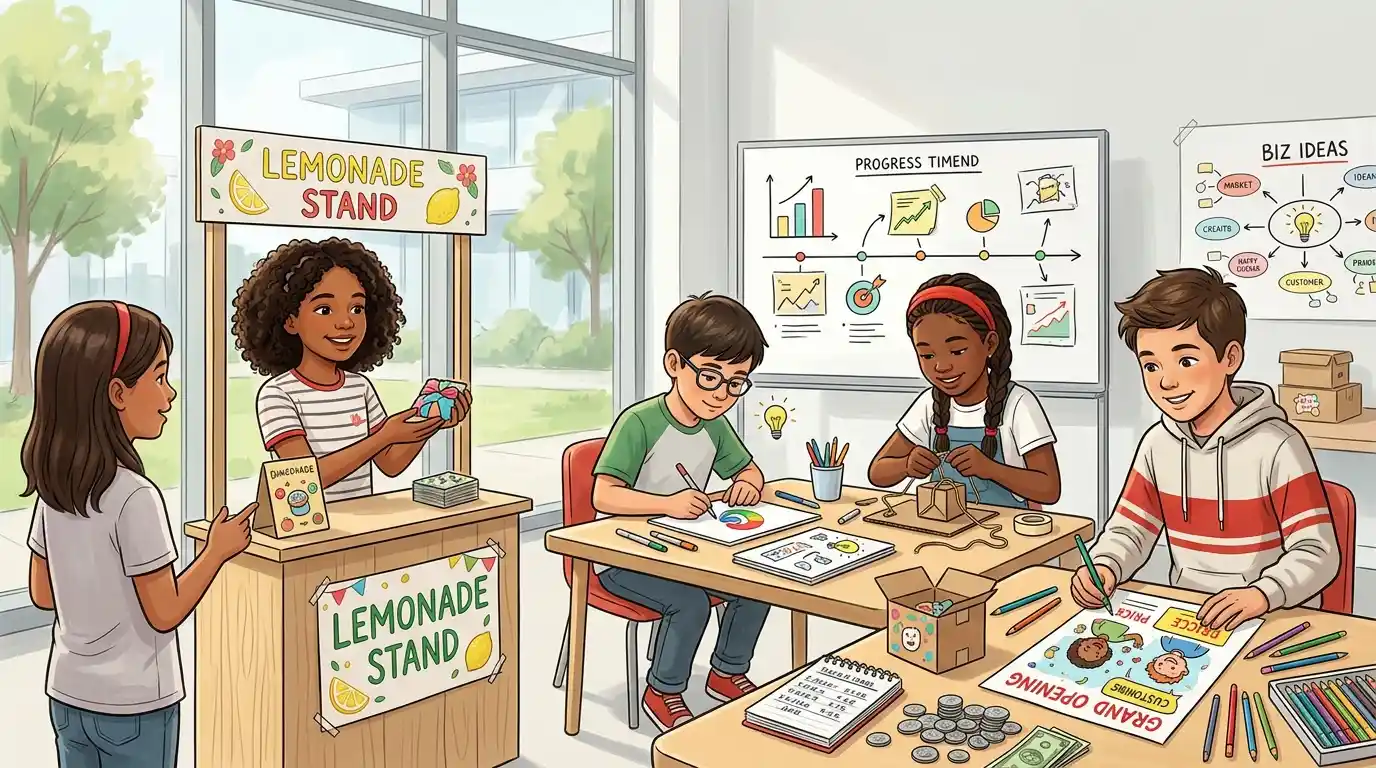
Mini Pretend Shop
Create a small pretend shop using toys, empty clean packages, paper signs, and play money.
Children can take turns being customers and shopkeepers. They can practice greeting customers, choosing products, counting pretend money, and explaining what they are selling.
This activity can introduce young children to basic concepts related to communication, money, decision-making, and entrepreneurship.
Design Your Own Invention
Give children paper, crayons, cardboard, or other safe craft materials and ask them to invent something new.
It could be a machine that cleans their room, a robot that helps families, a flying bicycle, or anything their imagination creates.
Ask them three simple questions:
- What does your invention do?
- Who would use it?
- Why would it be useful?
This activity teaches children that ideas can be turned into solutions.
How to Make Kindergarten Activities More Effective
A good activity doesn't need to be complicated. The way adults interact with children can make a simple activity much more meaningful.
Let Children Ask Questions
Encourage children to ask "why," "how," and "what if" questions. Curiosity is an important part of early learning.
Give Children Choices
Instead of deciding every detail, give children simple choices. For example, ask whether they would like to create an animal or a robot.
Encourage Experimentation
Children may not complete an activity exactly as expected. That's okay. Their unusual ideas can often become valuable learning opportunities.
Praise Effort, Not Just Results
Instead of focusing only on whether a child got the correct answer, recognize their effort, creativity, patience, and willingness to try.
Indoor and Outdoor Activities Can Work Together
Kindergarten students benefit from a mixture of indoor and outdoor experiences.
Indoor activities can include drawing, building, storytelling, sorting, crafts, puzzles, and simple science experiments.
Outdoor activities can include nature walks, movement games, scavenger hunts, sports, and observation challenges.
Combining both types of activities gives children opportunities to develop physical, cognitive, creative, and social skills.
Use Everyday Materials for Learning
Parents and teachers don't need to purchase new supplies for every activity.
Cardboard boxes, paper, crayons, plastic cups, books, safe recycled materials, blocks, and toys can all become useful learning resources.
What matters most is how children interact with the materials. An ordinary cardboard box can become a rocket, shop, house, or robot when a child is given the freedom to imagine.
Why Creativity Matters in Kindergarten
Creativity isn't limited to drawing or painting. It also involves finding new ways to approach a problem.
When children create an invention, build a structure, tell a story, or design a pretend shop, they are learning to express and develop their own ideas.
These experiences can help children become more confident in sharing their thoughts and exploring possibilities.
Connecting Kindergarten Activities With Future Skills
The skills children practice during early activities can continue to develop as they grow.
A simple building challenge can introduce engineering thinking. A pretend shop can introduce entrepreneurship. Storytelling can strengthen communication. A science experiment can develop curiosity. An invention challenge can encourage innovation.
This makes activity-based learning a useful way to introduce future-ready skills from an early age.
How Kidspreneur Supports Learning Through Activities
At Kidspreneur, learning is designed to encourage curiosity, creativity, exploration, and practical skill development.
Children can explore areas such as:
- Entrepreneurship
- STEM learning
- Artificial intelligence
- Innovation
- Creativity
- Communication
- Leadership
- Sustainability
By introducing these ideas through engaging learning experiences, children can begin developing confidence in thinking, creating, communicating, and solving problems.
A Simple Kindergarten Activity Routine
Parents and teachers can create a flexible routine that includes different types of activities throughout the week.
- Monday: Building and STEM activity
- Tuesday: Storytelling and literacy game
- Wednesday: Arts and creativity activity
- Thursday: Nature or science activity
- Friday: Pretend play or entrepreneurship activity
The routine doesn't need to be strict. The purpose is to give children variety while allowing them enough time to explore activities they enjoy.
Safety Tips for Kindergarten Activities
Safety should always come first when choosing activities for young children.
- Use age-appropriate materials.
- Supervise activities involving water or small objects.
- Avoid materials that may present choking hazards.
- Use child-safe scissors when appropriate.
- Keep hot surfaces and sharp objects away from children.
- Choose non-toxic art materials.
- Provide appropriate adult supervision during experiments.
Final Thoughts
Kindergarten is much more than learning letters and numbers. It is a time when children begin discovering how to communicate, create, cooperate, experiment, and solve problems.
Simple activities can make these learning experiences exciting.
From building towers and exploring nature to creating inventions and running a pretend shop, children can learn valuable skills while having fun.
Make Learning an Adventure
The best kindergarten activities don't feel like difficult lessons. They feel like adventures, challenges, games, stories, and opportunities to discover something new.
Give children the materials, the question, and the freedom to explore. You may be surprised by the ideas they create.
When children learn through play, every activity can become the beginning of a new discovery.
Frequently Asked Questions
1. What are the best activities for kindergarten students?
Building blocks, storytelling, sorting games, arts and crafts, simple science experiments, nature walks, music and movement games, pretend play, and invention challenges are excellent activities for kindergarten students.
2. How do activities help kindergarten children learn?
Hands-on activities allow children to practice skills such as communication, creativity, counting, observation, coordination, problem-solving, teamwork, and early literacy while actively participating in the learning process.
3. What are some easy kindergarten activities to do at home?
Parents can try drawing challenges, building with blocks, sorting household objects, storytelling, simple science experiments, pretend shops, paper crafts, nature observation, and counting games using materials already available at home.
4. Can kindergarten activities teach entrepreneurship?
Yes. Pretend shops, product-design challenges, invention activities, and simple buying-and-selling games can introduce young children to basic concepts such as creativity, communication, value, decision-making, and entrepreneurship.
5. How can Kidspreneur support kindergarten learning?
Kidspreneur encourages children to explore creativity, entrepreneurship, STEM, innovation, communication, leadership, artificial intelligence, and sustainability through engaging learning experiences designed to build practical and future-ready skills.
Search
Recent Posts
22 August, 2026
10 AI-Inspired Kids Activities That Make Learning Fun