




5 Easy Kids Activities You Can Set Up in Minutes
Need a quick way to keep children busy without spending hours preparing? These five easy kids activities require simple materials, little preparation, and can turn an ordinary afternoon into an opportunity for creativity, learning, and fun.
Parents don't always have time to prepare complicated crafts, organize elaborate games, or buy special activity kits. Sometimes, children simply need something interesting to do right now.
The good news is that some of the best kids activities can be prepared in just a few minutes. You can use paper, cardboard, household objects, toys, or materials you already have at home.
These activities are designed to be simple enough for busy parents while still giving children opportunities to create, explore, move, communicate, and solve problems.
Why Quick Kids Activities Are Useful
Children's attention can change quickly. One minute they may be happily playing, and the next they may announce that they're bored.
Having a few simple activities ready can make these moments easier for parents. Quick activities can also provide a healthy alternative to constant screen time.
Well-designed activities can help children develop:
- Creativity
- Problem-solving skills
- Communication
- Fine motor skills
- Concentration
- Confidence
- Teamwork
- Independence
1. Build a Paper Tower
What You Need
- Paper
- Tape
- A flat surface
- Optional: small lightweight objects for testing
This simple building challenge can be prepared almost instantly. Give your child several sheets of paper and some tape and challenge them to build the tallest tower they can.
How to Set It Up
- Place paper and tape on a table.
- Give your child a simple goal: build a tall tower.
- Let them decide how to fold or arrange the paper.
- Test whether the tower can stand on its own.
- Encourage them to redesign it if it falls.
This activity introduces children to basic ideas about balance, structure, design, and problem-solving.
Skills Children Practice
- Critical thinking
- Creativity
- Engineering thinking
- Persistence
- Problem-solving
2. Create a Quick Indoor Treasure Hunt
A treasure hunt can turn an ordinary room into an adventure. The setup takes only a few minutes.
How to Play
- Choose several safe objects around the house.
- Give your child clues about what to find.
- Ask them to search for each object.
- Give them a new clue after every discovery.
For younger children, keep the clues simple. For older children, make the clues into short riddles.
For example: "Find something that is blue." Or: "Find something you use when you are hungry."
What Children Learn
- Observation
- Listening
- Vocabulary
- Following instructions
- Problem-solving
3. Turn a Cardboard Box Into Something New
Never underestimate the entertainment value of an empty cardboard box. With a little imagination, it can become almost anything.
Ask your child:
They might turn it into:
- A house
- A rocket
- A car
- A shop
- A puppet theatre
- A robot
- A castle
Provide crayons, washable markers, paper, or stickers if available. Let children decide what their creation should look like.
This is more than a craft project. It gives children the opportunity to imagine, design, communicate, and create something from an ordinary object.
4. Try a Five-Minute Drawing Challenge
You don't need a large art setup to encourage creativity. Give your child paper and crayons or washable markers and introduce a quick drawing challenge.
Try These Drawing Prompts
- Design your dream house.
- Draw an imaginary animal.
- Create a superhero.
- Draw a city of the future.
- Design a new invention.
- Draw your perfect playground.
After five minutes, ask your child to explain their drawing. This turns an art activity into a communication and storytelling exercise.
Ask Questions Like:
- What is your invention?
- How does it work?
- Who would use it?
- Why did you choose these colors?
These questions encourage children to think about their ideas and communicate them clearly.
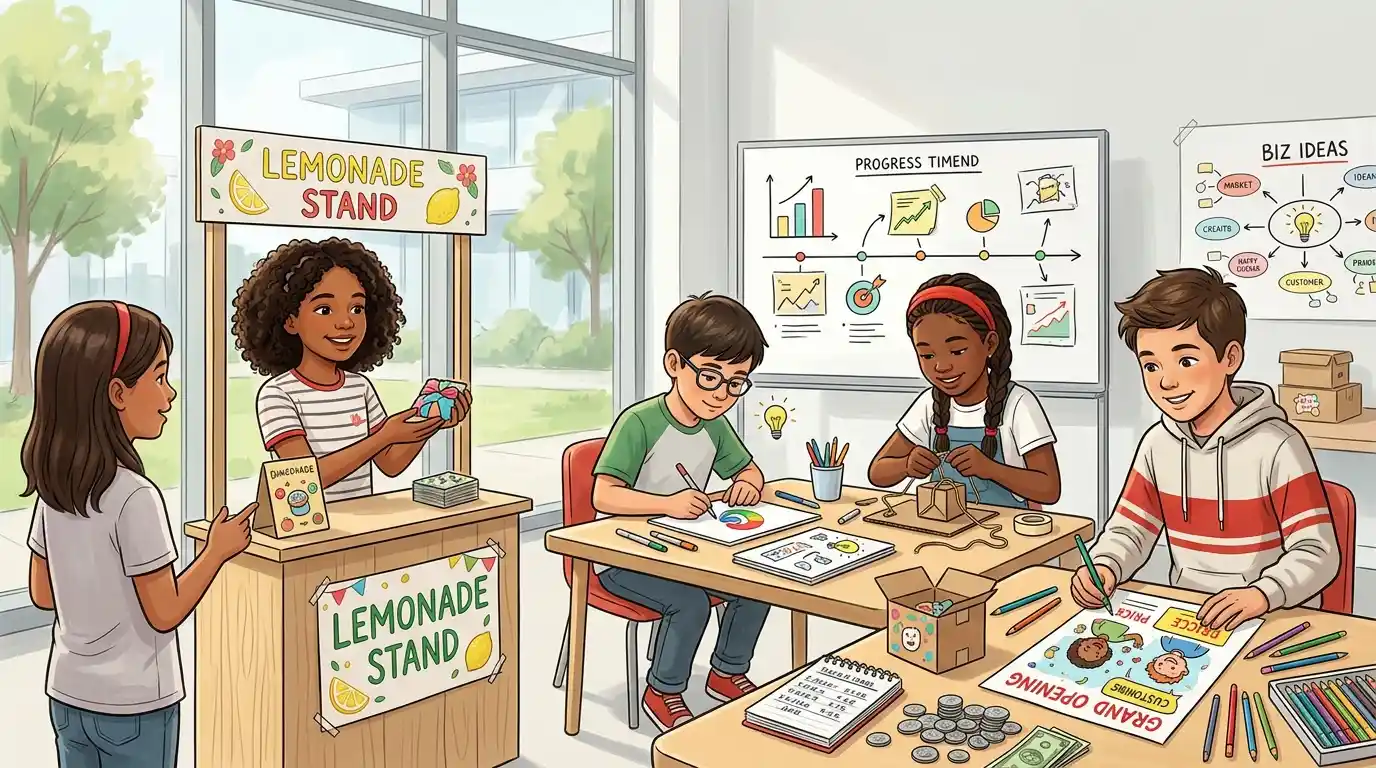
5. Start a Mini Business Challenge
Want an activity that combines creativity with real-world learning? Try a simple mini entrepreneurship challenge.
Give your child a few minutes to think of something they could create or offer to another person.
For example:
- A handmade bookmark
- A greeting card
- A drawing
- A simple craft
- A pretend food product
- A new toy idea
Then ask them some simple business questions.
What are you making?
Who would want it?
What would you charge?
How would you tell people about it?
This activity introduces children to basic ideas about entrepreneurship, creativity, value, communication, and decision-making.
How to Make Quick Activities More Engaging
The activity itself is only part of the experience. Parents can make simple activities much more engaging by changing the way they interact with children.
Give Children Choices
Instead of deciding everything for your child, offer two or three options.
For example: "Would you like to build a tower or create a treasure hunt?"
Giving children choices can encourage independence and make them more interested in participating.
Ask Open-Ended Questions
Instead of questions that only require "yes" or "no," ask questions that encourage children to explain their thinking.
Try: "What could we change?" or "What do you think will happen?"
Don't Correct Everything
Children don't always need adults to show them the "right" way. Give them time to experiment.
If their idea doesn't work, encourage them to try another approach. Learning through trial and error can build resilience.
Quick Activities Don't Need Expensive Supplies
One of the biggest advantages of these activities is that they can be created using things you already have.
Paper, cardboard, crayons, boxes, household objects, books, and toys can become the starting point for countless activities.
The value of an activity comes from what children do with the materials, not necessarily how expensive those materials are.
Quick Kids Activities and Screen-Free Time
Screens are a normal part of modern childhood, but children also benefit from activities that involve movement, creativity, social interaction, and hands-on exploration.
Instead of simply telling children to stop using a device, give them something interesting to do.
A five-minute challenge can be enough to shift their attention from passive entertainment to active participation.
How Activity-Based Learning Supports Children
Children can learn valuable skills without sitting through a formal lesson.
Building a tower can introduce engineering concepts. Drawing an invention can encourage creative thinking. A treasure hunt can develop observation and communication. A mini business can introduce entrepreneurship.
This is the idea behind activity-based learning: children learn by doing, experimenting, discussing, and discovering.
How Kidspreneur Encourages Learning Through Activities
At Kidspreneur, children are encouraged to explore ideas through engaging and practical learning experiences.
Activities can introduce children to areas such as:
- Entrepreneurship
- STEM
- Artificial intelligence
- Creativity
- Communication
- Leadership
- Innovation
- Sustainability
These experiences help children become curious, confident, creative, and comfortable with exploring new ideas.
A Simple 5-Minute Activity Plan
If you are short on time, try this simple routine:
- Minute 1: Choose an activity.
- Minute 2: Gather simple materials.
- Minute 3: Explain the challenge.
- Minute 4: Let your child experiment.
- Minute 5: Ask them to explain what they created or discovered.
Of course, your child may want to continue for much longer—and that's great. The five-minute setup simply means parents don't need a long preparation period.
Final Thoughts
Keeping children engaged doesn't always require elaborate preparation. Sometimes, the simplest ideas can create the most memorable experiences.
A sheet of paper can become a building challenge. A cardboard box can become a rocket. A few household objects can become a treasure hunt. A blank page can become a new invention.
The key is to give children opportunities to create, explore, communicate, move, and solve problems.
Make Every Few Minutes Count
You don't need hours of preparation to create a meaningful activity. Start with what you already have, give your child a simple challenge, and let their imagination take over.
Sometimes, all it takes is five minutes to turn "I'm bored" into "Look what I made!"
Frequently Asked Questions
1. What are some easy kids activities that can be set up quickly?
Easy activities include paper-building challenges, indoor treasure hunts, cardboard crafts, drawing challenges, puzzles, simple STEM experiments, and mini entrepreneurship activities. Many can be prepared in just a few minutes.
2. What can I do with my child when they say they are bored?
Give your child a simple choice between two or three activities, such as building something, drawing an invention, going on a treasure hunt, or creating a craft. Giving children choices can make them more interested in participating.
3. Can quick kids activities also be educational?
Yes. Simple activities can develop creativity, communication, problem-solving, observation, fine motor skills, teamwork, and early entrepreneurship concepts while children are having fun.
4. What household items can I use for kids activities?
Paper, cardboard boxes, crayons, books, safe household objects, cups, recycled materials, and building blocks can be used for many creative activities. Always choose materials appropriate for the child's age and supervise younger children.
5. How can Kidspreneur help children learn through activities?
Kidspreneur encourages activity-based learning through areas such as entrepreneurship, STEM, artificial intelligence, creativity, communication, leadership, innovation, and sustainability, helping children explore ideas while developing practical future-ready skills.
Search
Recent Posts
22 August, 2026
10 AI-Inspired Kids Activities That Make Learning Fun